
Last updated September 20, 2026
Full 25-point door and opener safety check with every visit - springs, cables, rollers, tracks, and your LiftMaster or Chamberlain opener included
You get a price before we start. It does not change when the truck arrives.
LiftMaster openers
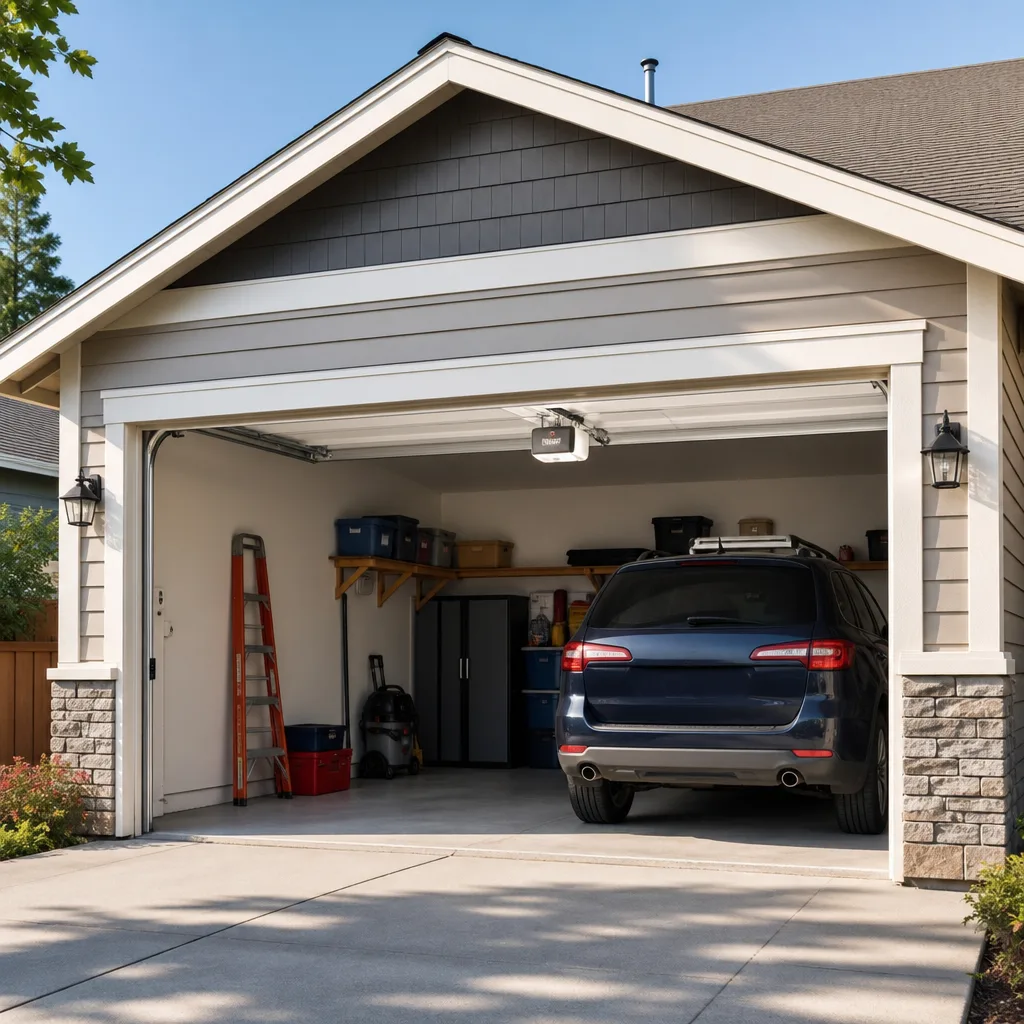
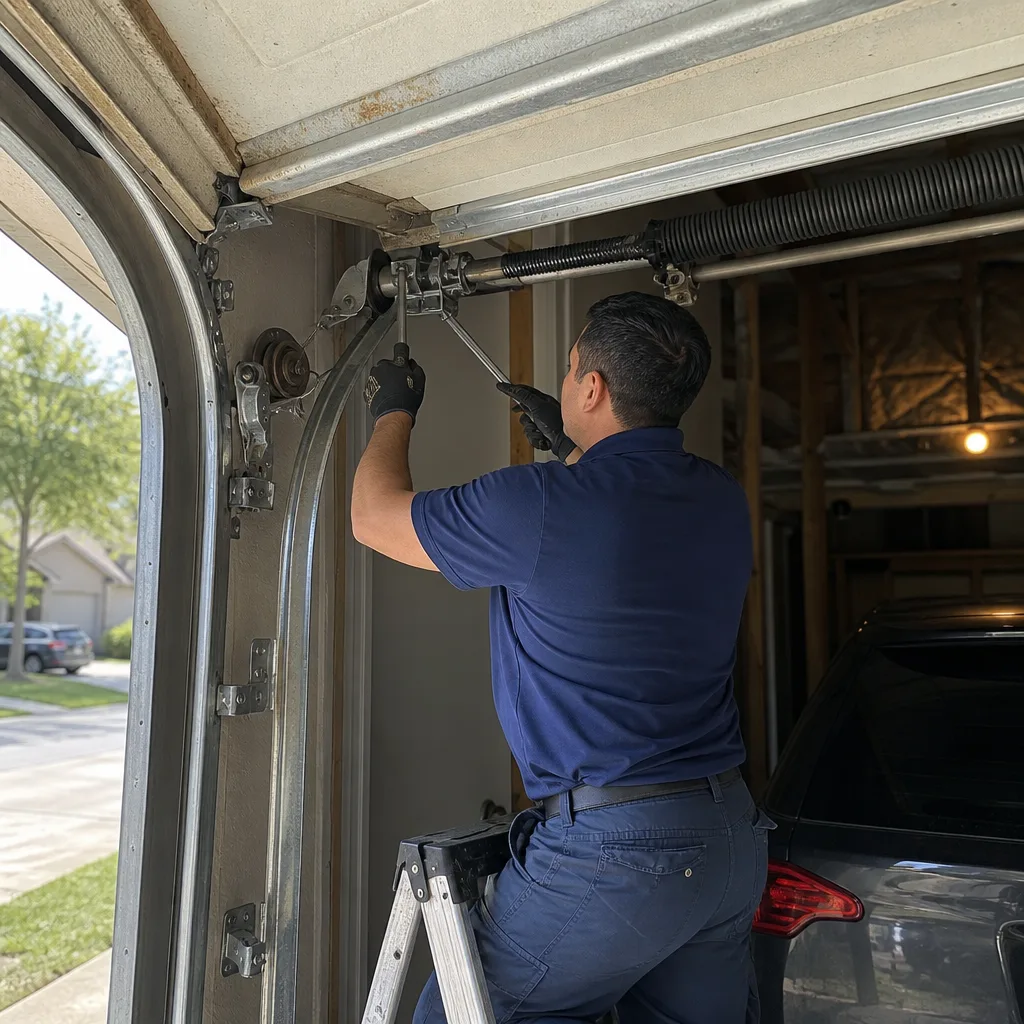 Before
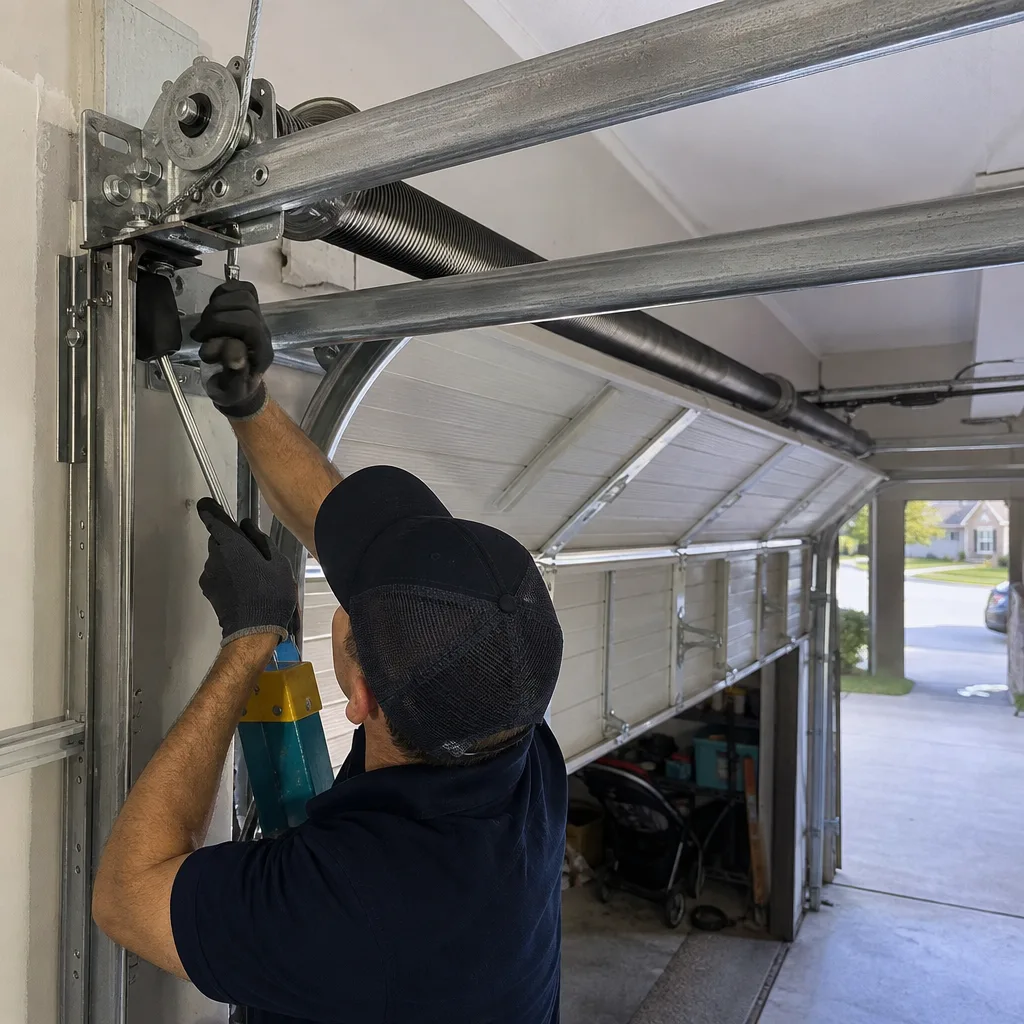 After
After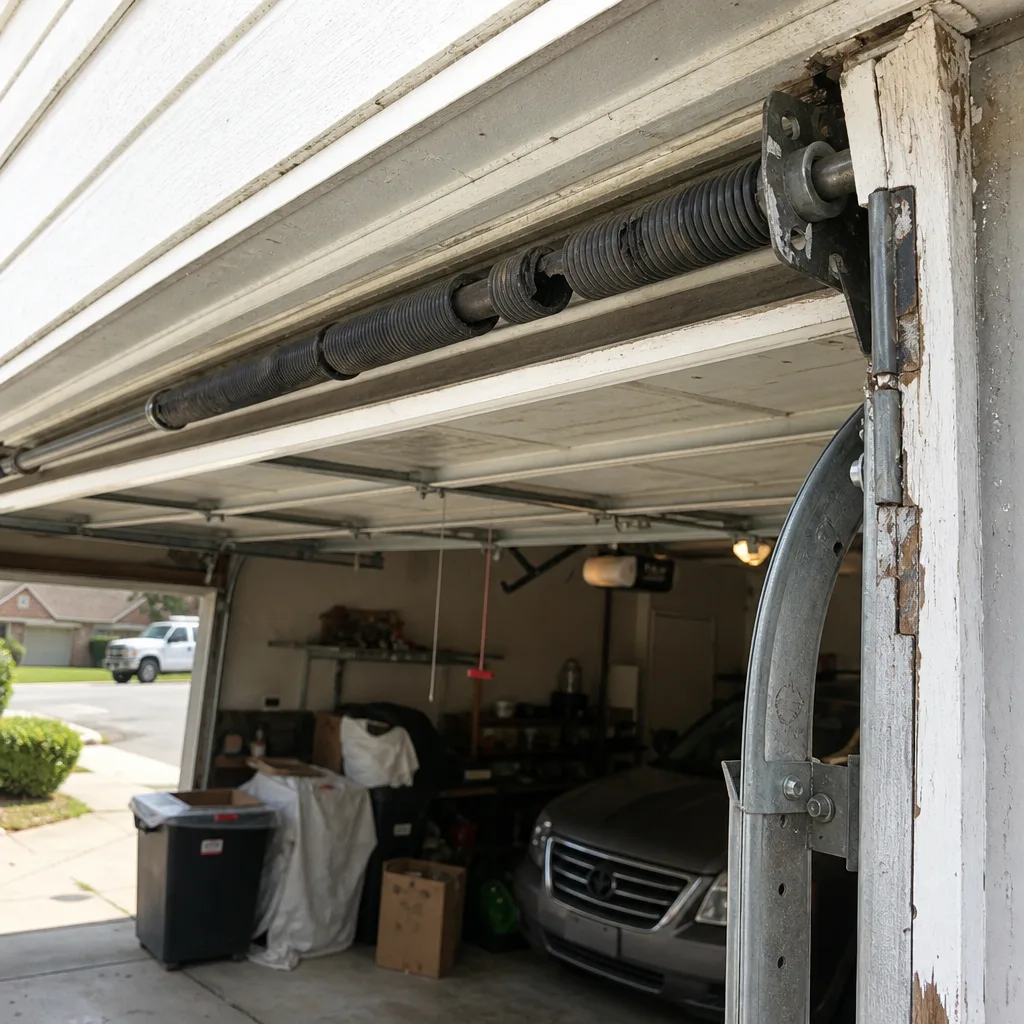 Before
 After
After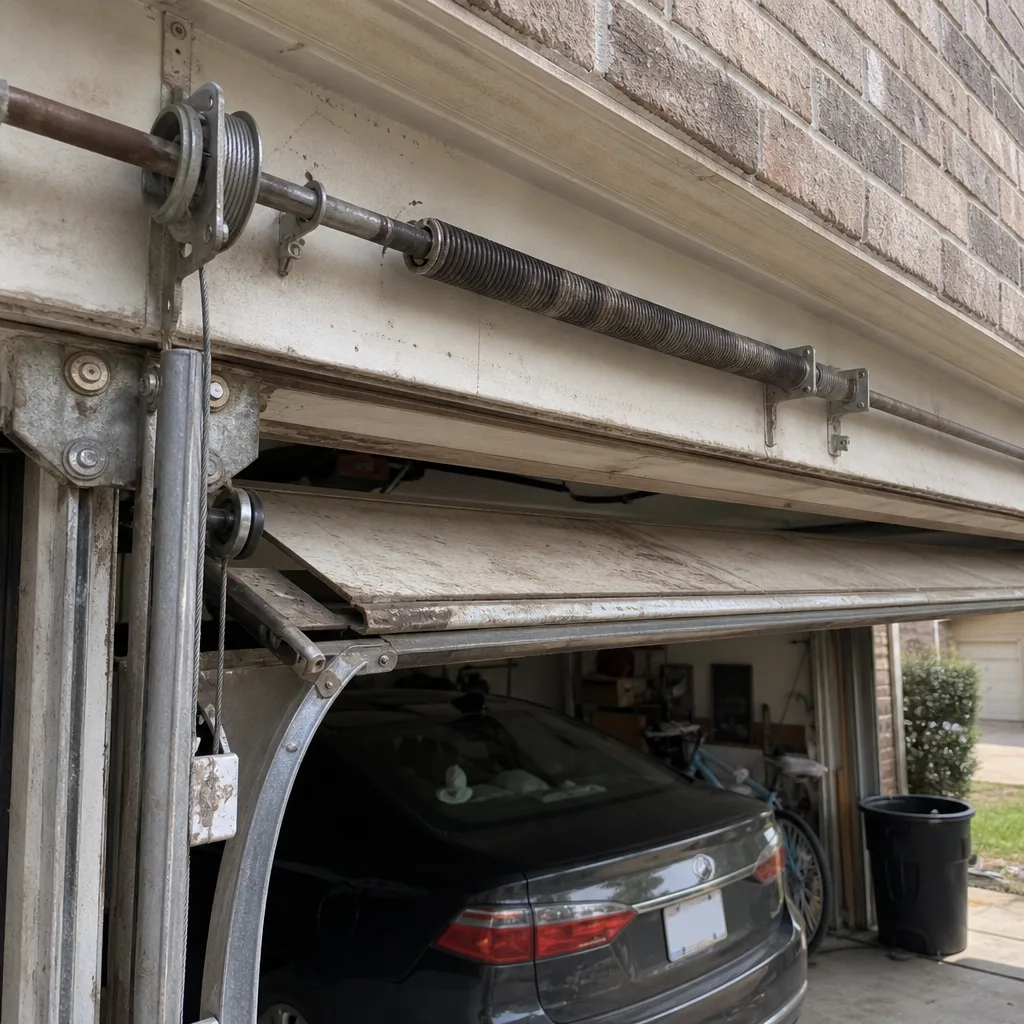 Before
 After
AfterGarage Door Warning Signs: A Carrollton Homeowner’s Reference Guide
The most expensive garage door warning sign is the one that looks like a minor nuisance. A door that takes two button presses to respond isn’t an opener quirk. It’s a logic board or capacitor degrading under heat stress, typically six to eighteen months before total failure. This guide maps specific symptoms to specific components, assigns realistic failure timelines, and gives Carrollton homeowners a framework for distinguishing between a door that needs five minutes of attention and one that needs to stay closed until a technician arrives. For more, see The Complete Guide to Garage Door in Carrollton. Our service area runs from downtown Carrollton through Hebron, Castle Hills, and Indian Creek, so the examples here reflect what we actually see on job sites in this city.
Quick Answer
Garage door warning signs in Carrollton fall into three timeline categories: immediate-stop problems (broken torsion springs, snapped cables, bent tracks), thirty-day windows (worn rollers, stripped drive gears, fraying cables), and monitor-and-schedule items (slow close, minor weather seal gaps, surface rust on panels). The single most important diagnostic step is separating door problems from opener problems, because replacing an opener on a door with a balance issue destroys the new unit within months. If you hear a sound that wasn’t there last week, photograph it, timestamp it, and get a written diagnosis.
Table of Contents
- The Symptom-to-Component Diagnostic Map
- Failure Timelines: Stop Now, Schedule This Month, Monitor
- Opener Problems vs. Door Problems: The Critical Separation
- A Visual Inspection Guide for Carrollton Homeowners
- The Photo Documentation Protocol
- How Carrollton’s Climate Accelerates Specific Failures
- Common Mistakes to Avoid
- When to Call a Professional
- Frequently Asked Questions
- The Bottom Line
BeforeAfterThe Symptom-to-Component Diagnostic Map
Most garage door advice online stops at “it might be the springs or the tracks.” That hedge is useless to a homeowner standing in a driveway trying to decide whether to stay home from work. Here is what specific sounds, motions, and behaviors point to, based on the failures we’ve documented across thousands of Carrollton service calls since 2015.
Sounds and What They Mean
- A sharp bang from above the closed door, like a gunshot. That’s a torsion spring breaking. The spring is under tension and releases all of it at once. The door will not open manually or with the opener after this happens. Do not try to lift it. The door now weighs between 150 and 300 pounds with no counterbalance.
- A grinding noise in the first foot of travel, then it quiets down. That’s a roller bearing failing. The bearing grinds when the roller first leaves the radius of the track curve, then smooths out on the straight section. This is a thirty-day item, but not an ignore-it item. A seized roller can flatten and derail.
- A rhythmic squeak that matches the door’s speed. Usually an ungreased hinge or a roller stem that’s gone dry. This is the least urgent sound on this list and often resolves with a shot of white lithium grease on the hinge pins, not the track.
- Chatter or rattling when the door moves. Loose hardware. Bolts on the track brackets, hinge screws, or the bolts holding the opener rail together. Tighten what you can reach with a socket. If the rattle persists, the roller stems have wallowed out their holes in the hinges.
- A pop at the end of the close cycle. The bottom edge is hitting something, or the close limit on the opener is set too far down. Check for an obstruction first. If the concrete settled at the threshold, that’s a different conversation about whether the track mount has shifted.
Motions and What They Mean
- The door starts to open, hesitates, and reverses. This is almost never the springs. It’s the opener’s force setting reading resistance and backing off, which means the door is binding somewhere: a track that’s out of alignment, a failed roller, or a bent section. The opener is doing its job, which is why the garage door opener repair diagnosis has to start with the door itself.
- The door jerks to one side as it moves. A snapped cable on one side. The torsion spring is still counterbalancing, but only one cable is pulling. This is an immediate-stop condition. The remaining cable is now carrying double the load and will fail.
- The door closes too fast for the last two feet, then slams. The springs have lost tension or one of two springs has broken. A door that’s properly balanced should hold position halfway up with no opener attached. If it drifts down on its own, the springs are failing.
- The door opens six inches and stops. You’ve got a broken spring, a broken cable, or an obstruction. Openers don’t stall on a healthy door.
Behaviors and What They Mean
- Two button presses to get a response. The wall console signal isn’t being read the first time, or the logic board in the opener is degrading. This is the false-calm sign. It works often enough that you forget about it until a morning when it doesn’t work at all.
- The remote works from inside the garage but not the driveway. The receiver antenna is failing, or you’re fighting interference from a new device in the neighborhood. LED bulbs in the opener itself are a known source of signal noise on some LiftMaster and Chamberlain models.
- The opener runs but the door doesn’t move. The trolley carriage has come disconnected from the rail, or the drive gear has stripped. On belt and chain units, inspect the carriage. On a screw drive, look for plastic shavings under the unit, which means the gear teeth are gone.
Failure Timelines: Stop Now, Schedule This Month, Monitor
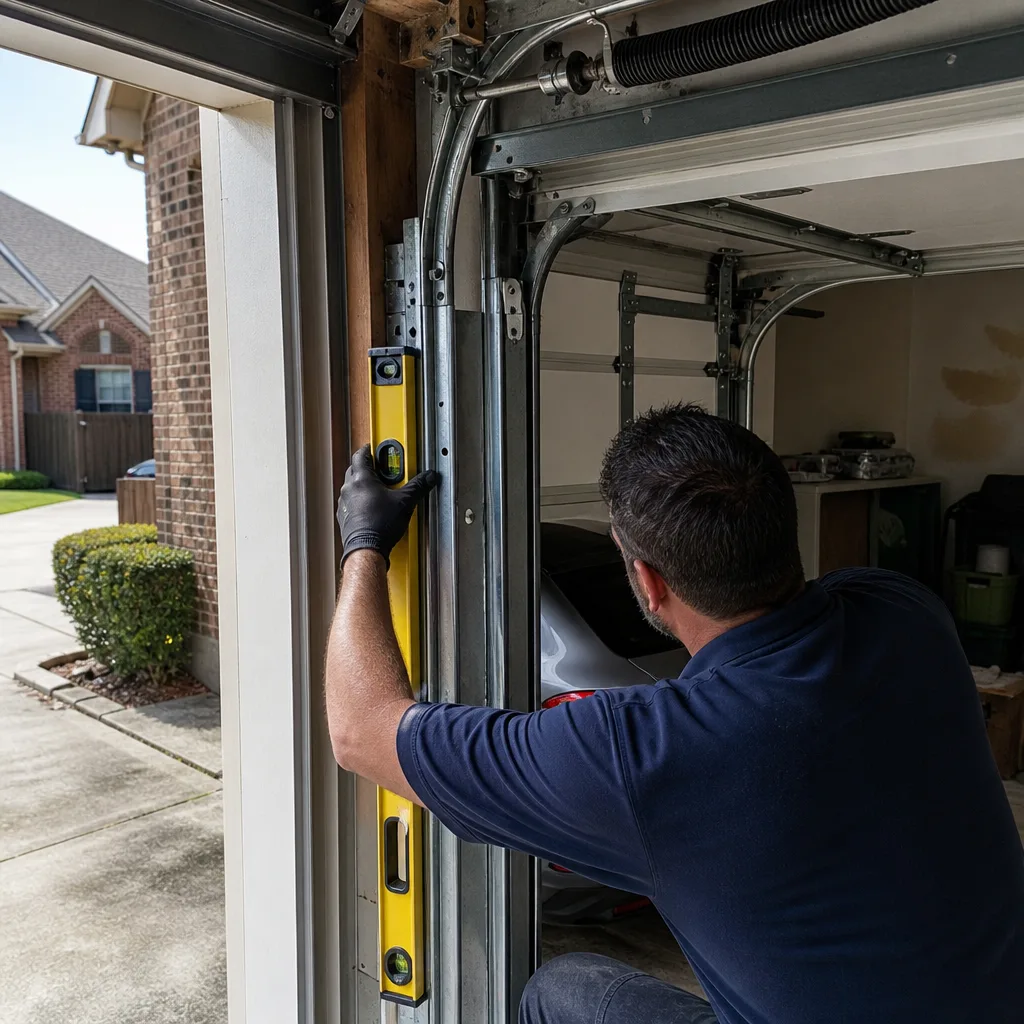
Warning signs only help if you know how much time you have. A roller bearing that grinds on the first foot of travel has a different replacement window than a torsion spring that pops at the end of the cycle, and conflating them produces either panic or false calm. Here’s how we categorize failures when a Carrollton homeowner calls us with a description of the problem.
Immediate Stop: Do Not Operate the Door
- Broken torsion spring. You’ll know. The bang is unmistakable. The door will not open, and trying to force it risks injury and track damage. The fix is a spring replacement matched to the door’s weight and cycle rating. Expect to pay between $180 and $340 in Carrollton for a standard single-spring replacement, depending on the spring’s wire size and cycle count rating.
- Snapped cable. Cables don’t break on healthy doors. They break because the spring failed, the door rusted through at the bottom bracket, or a cable drum seized. The cable itself is $30 to $60 in material, but the labor and the underlying cause have to be addressed or you’ll replace it again.
- Bent track in the travel path. If a track is bent where the rollers pass through it, the door will bind and the opener will fight it. The repair is track straightening or a track section replacement, and this is not a job to put off. A track that bends while the door is moving can throw the door off its path entirely.
Thirty-Day Window: Schedule It This Month
- Worn rollers. Grinding, flat spots, or wobble. Replacement cost for a full set of nylon rollers on a standard Carrollton door runs $85 to $150 installed, and it’s one of the best-value repairs in the trade. Nylon rollers run quieter and last longer than the steel ones that come standard on builder-grade doors.
- Stripped drive gear. Common on Genie and Chamberlain units that are ten-plus years old. The door works until it doesn’t, and the fix is a gear kit. In our area, a drive gear replacement runs $140 to $220. If the opener is older than twelve years, the better money is usually in a new operator.
- Fraying cable. You’ll see individual strands poking out along the cable’s length. It hasn’t snapped yet, but it will. Cable replacement on a healthy door is $70 to $120. You want to catch it here, before it becomes a snapped-cable call that takes your door out of commission.
Monitor and Schedule: Cosmetic or Slow-Developing
- Slow close without resistance. If the door closes smoothly but noticeably slower than it used to, the opener’s force and speed settings may be failing, or the door’s balance is borderline. Watch it for a week. If it gets slower, call.
- Minor weather seal gaps. Light visible around the bottom corners of the door. In Carrollton, this means dust, leaves, and in July, hot air coming into the garage. A bottom seal replacement is $60 to $100 and takes twenty minutes.
- Rust spotting on panels. Not structural until it’s through the panel skin. If the rust is surface-level, sand and paint it. If it’s on the bottom panel near the concrete, watch it closely. Bottom panel rust spreads fast in Texas humidity.
Opener Problems vs. Door Problems: The Critical Separation
There are two systems on your garage: the door, which is a paneled slab on springs, cables, and rollers, and the opener, which is a motor that pulls the door along a rail. They fail in different ways, at different costs, and on different timelines. Mixing them up is the most expensive diagnostic error a homeowner can make. Here’s the problem: if a door is out of balance and you replace the opener, the new opener grinds itself apart against a door it was never built to move. We’ve seen Carrollton homeowners spend $400 on a new opener installed, only to have the door’s spring fail a month later and take the new opener’s drive gear with it.
The rule: diagnose the door first. Disconnect the opener from the door using the red release handle. Lift the door manually to the halfway point and let go. A balanced door holds in place. If it drops, the springs are failing and no opener on the market will fix that. If it’s heavy to lift but holds, the springs are weak. If it moves freely and holds position, the door is fine and the problem is in the opener itself.
On the opener side, separate the signal problem from the motor problem. If the lights on the unit respond to the wall button but the motor doesn’t move, it’s a motor or logic board issue. If nothing responds, check the outlet first. Garage circuits in older Carrollton homes, especially those from the 1970s and 1980s, are sometimes wired into the same GFCI as the bathroom or laundry room, and that GFCI trip kills the opener silently. The opener repair and installation page covers this in more depth, but the diagnostic step takes thirty seconds and costs nothing.
A Visual Inspection Guide for Carrollton Homeowners
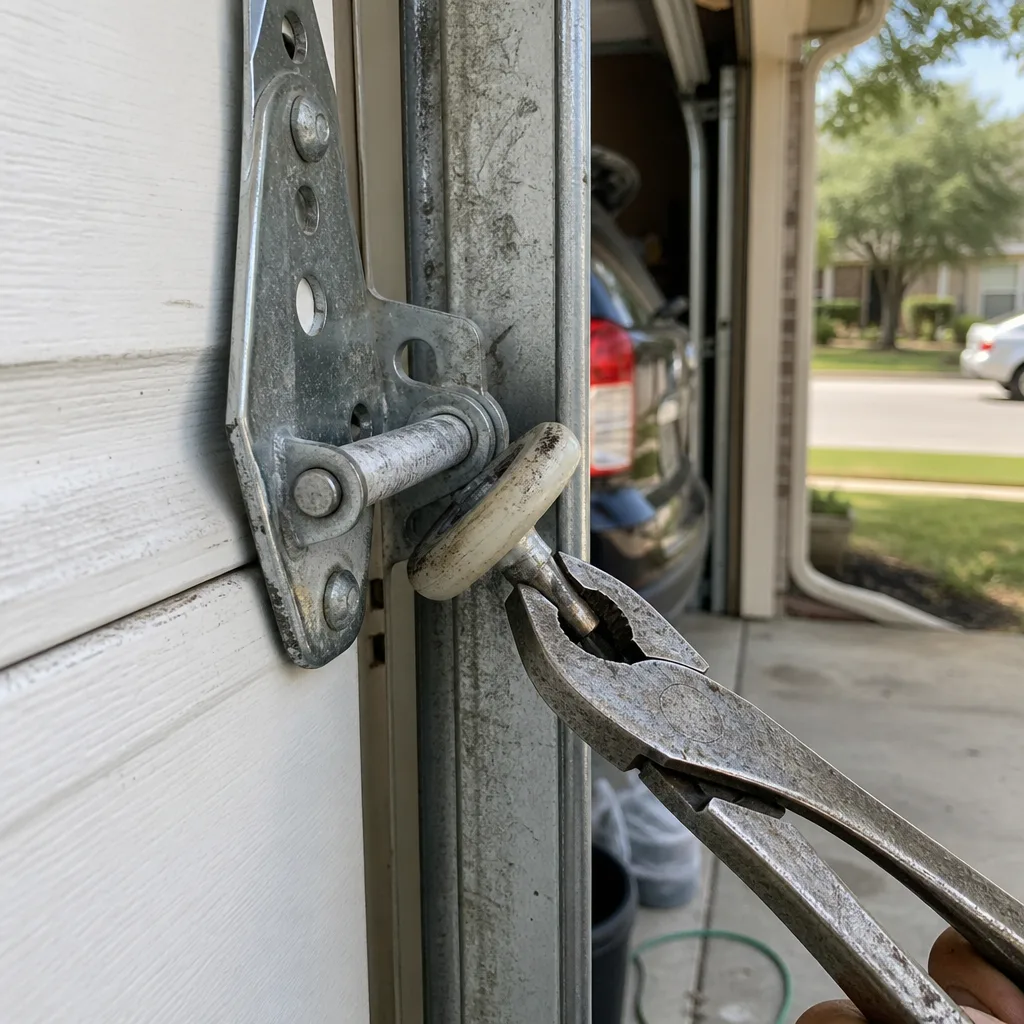
You don’t need tools and you don’t need to disassemble anything. You need a flashlight, a step stool if the car isn’t out of the garage, and this list. Run through it once every six months. It takes five minutes and catches the things that don’t make noise until they fail.
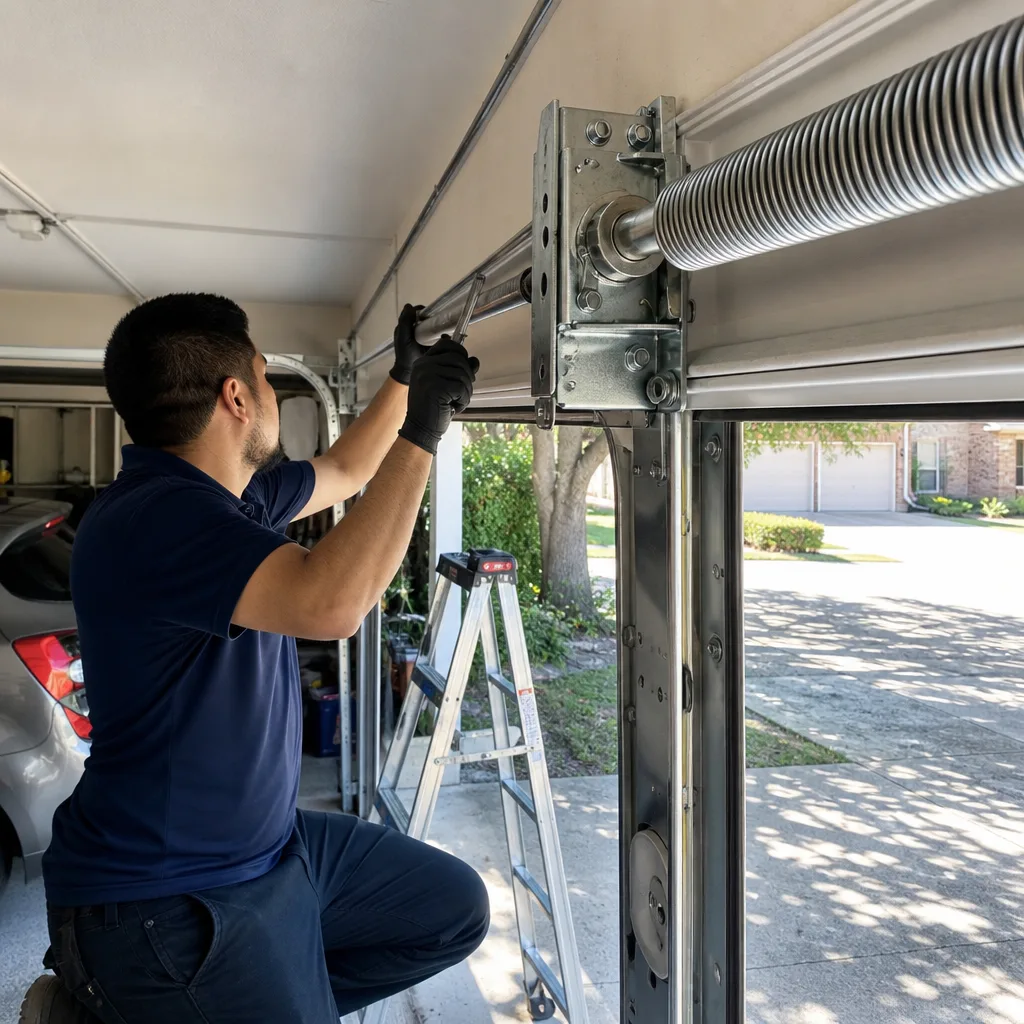
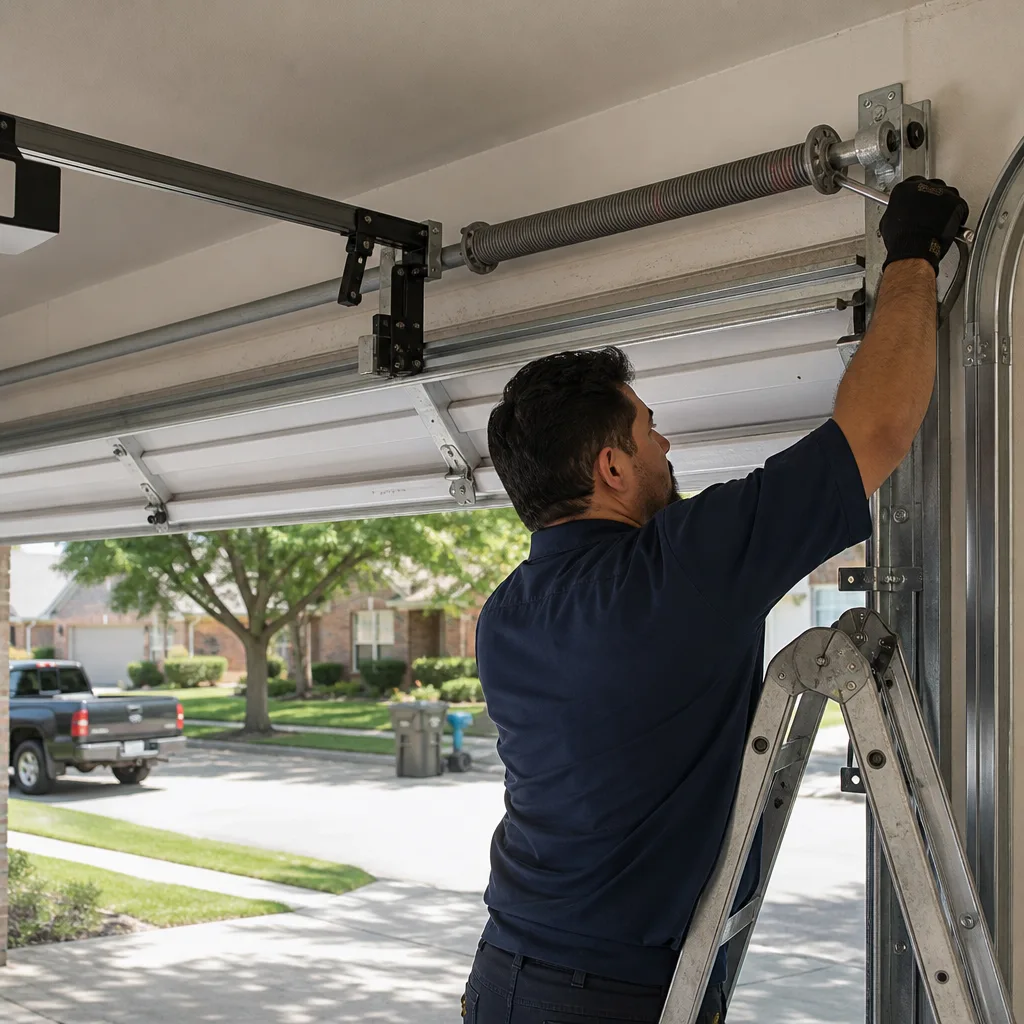
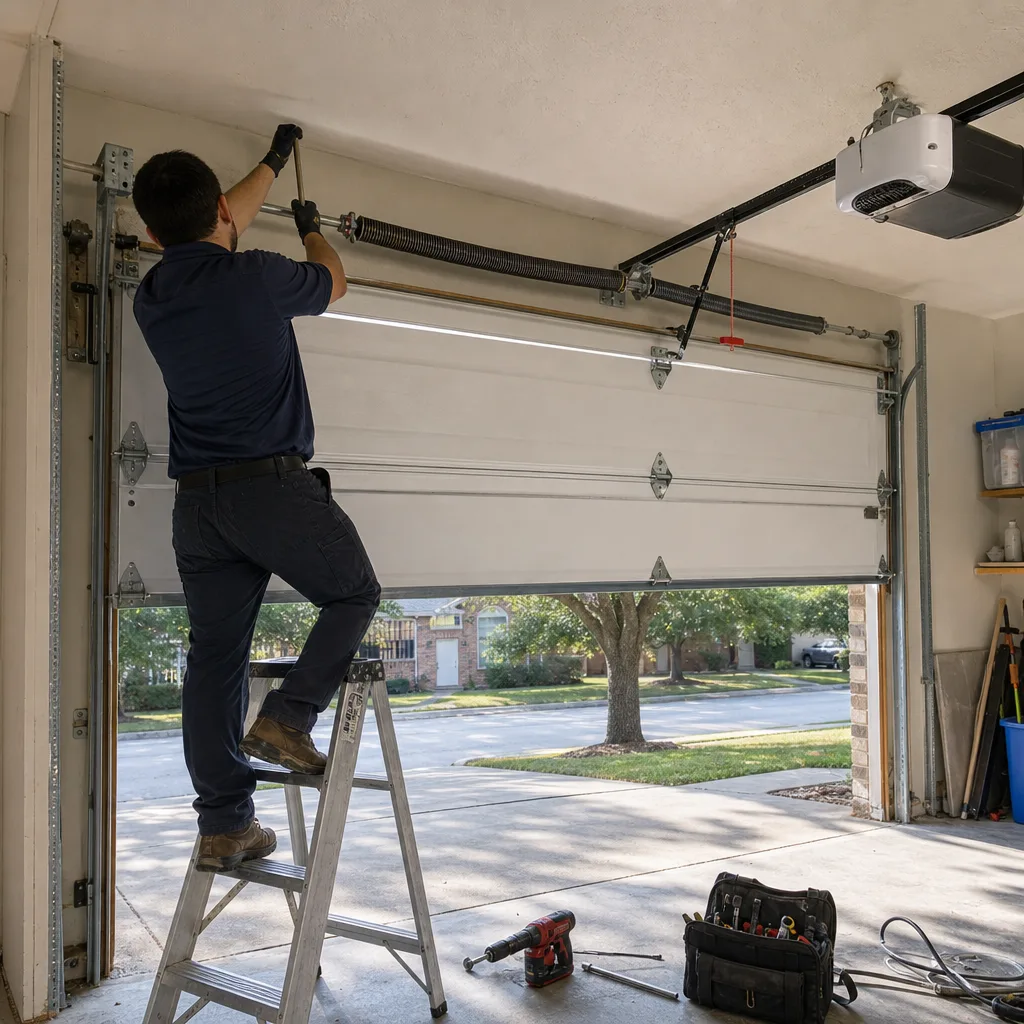
- Look at the torsion bar. That’s the shaft above the door opening, with the springs wrapped around it. Surface rust is fine. Pitting is not. If you see a gap in the coil, where one section of the spring separates from the next, that’s a break. Don’t touch it. Call someone.
- Look at the cable drums. At each end of the torsion bar, the cable wraps around a grooved drum. If the cable is riding on top of another wrap, or if you see slack, the door has shifted or the spring has lost tension. If the cable is frayed or you see individual strands sticking out, schedule the replacement in the thirty-day window.
- Look at the roller stems. On each hinge, the roller sits on a stem that goes through the hinge. If the stem looks skinny compared to the hole, or the roller can move side to side in the hinge, the hinge is egged out. Worn hinges and wallowed stems are a $30 part, but they cause door wobble that beats up the tracks.
- Look at the bottom brackets. At the bottom corners, where the cables attach to the door. These brackets are under full spring tension when the door is closed. If you see rust through, cracks, or the bracket pulling away from the panel, step back and call. Bottom bracket failures are the most common cause of cable snapping in Carrollton, and they fail without warning sounds.
- Look at the track alignment. The vertical tracks should be plumb, and the horizontal tracks should run level. If there’s a gap between the track and the wall at any point, or if the track has a visible kink, that’s a binding point waiting for the door to hit it.
- Look at the opener rail. Is the rail bowing? Is there slack in the belt or chain? Does the trolley carriage sit straight or does it wobble? A bent rail or a carriage that’s come unseated explains why an opener that works fine sounds terrible.
For a full breakdown of what happens during a professional service call in Carrollton, along with what to expect on pricing and documentation, see our Garage Door Repair in Carrollton page.
The Photo Documentation Protocol
This is the section that most homeowners skip, and it’s the one that saves them the most money. Before you call a technician, before you schedule anything, take a photo of the warning sign. Here’s why: when the technician arrives, the door may behave perfectly. Heat, humidity, and load shift. A spring that popped once at the end of the close cycle may not pop again for a day. A roller that grinds at 7 a.m. may be silent at 2 p.m. If you have a timestamped photo or video of the problem, the diagnosis isn’t a guessing game. And in a market where “the spring failed” gets quoted at $450 by one company and $280 by another, being able to show what you saw protects you from a misdiagnosis.
What to capture in the frame:
- The specific component, not the whole door. Don’t photograph the garage. Photograph the spring, the cable, the roller, the bracket. A close-up of the failed part at an angle that shows its position on the door.
- A wide shot after the close-up. One photo of the specific component, one photo of the whole door or opener so the technician can orient themselves before they arrive.
- A video if the behavior is the issue. A door that hesitates, reverses, or jerks is best shown in motion. Ten seconds is enough. Narrate nothing; just hold the phone steady and let the door move.
- The data plate if you can reach it. The sticker on the side of the track or the door section, with the manufacturer and model. For opener issues, the model number on the motor head. This lets the technician bring the right parts on the first trip.
This is the same principle behind Clause 4 of The Haven Standard, the founding rule at Servo Garage Doors Carrollton home: the technician photographs the failed part before quoting a replacement, and you get a documented photo record of what was found and what was done before the technician leaves. The customer sees the evidence. “Trust us” never enters the conversation.
How Carrollton’s Climate Accelerates Specific Failures
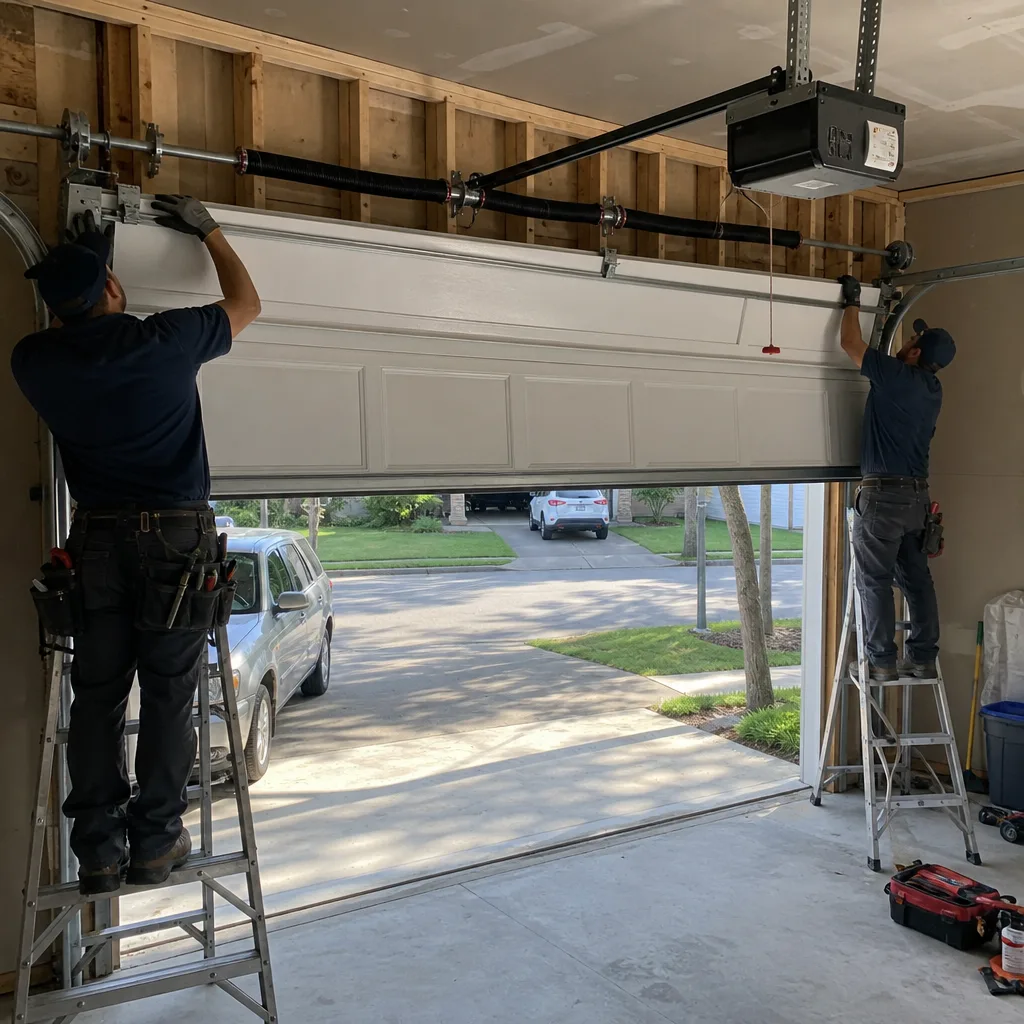
Carrollton sits in a climate band that does specific, predictable things to garage door hardware. If you live in Castle Hills or Indian Creek, you’re dealing with the same conditions as homeowners in Hebron and downtown: hot summers that push garage interior temperatures past 120 degrees, spring storm fronts that swing humidity and pressure inside a week, and a winter that’s mild enough that doors get opened and closed through every season without a break.
Heat and the Opener Logic Board
Opener logic boards are rated for operating temperatures that most Texas garages exceed every afternoon from June through September. Heat doesn’t kill a logic board instantly. It kills it slowly, through thermal cycling that weakens solder joints on the board. If your opener gets flaky in August and fine in January, that’s heat stress. The fix isn’t necessarily a new opener; a new logic board can extend the unit’s life by years. But the six-to-eighteen-month window on the two-button-press symptom is shorter in Carrollton than in cooler markets, because our heat loads the board harder and faster.
Humidity and Bottom Panel Rust
The bottom panel on a steel garage door is the canary in the climate. It sits an inch from the slab, catches splashback from rain, and stays damp longer in our humidity. Once the paint film is breached, the steel underneath corrodes. If the bottom bracket is rusted through, that’s not a panel problem, it’s a structural failure waiting to release the cable. This is the most common cause of cable snapping we see in Carrollton, more common than spring failure, because a rusted bottom bracket gets ignored until it lets go.
Storm Wind and Track Stress
A garage door is a big, flat sail. When a spring storm pushes 40 mph gusts against a closed door, the door flexes, and the flex goes into the tracks, the panel joints, and the hardware. If your tracks are already slightly out of alignment, a storm will make it worse. If your insulation panels are loose, wind will work them further out. In our area, after a storm front moves through, we see a measurable uptick in track alignment calls, particularly on older wood doors and on steel doors that have never been strutted. The Garage Door Installation in Carrollton page covers why strut placement matters on new doors in our wind load zone, but the short version: if your door flexes visibly in a gust, don’t ignore it.
Common Mistakes to Avoid
- Lubricating the tracks. Garage door tracks are not supposed to be lubricated. Grease on the tracks collects dust, creates sludge, and makes the rollers work harder. The rollers themselves, the hinges, and the torsion spring get lubrication, not the track. If a technician lubricates your tracks, find another technician.
- Replacing the opener before checking the door balance. A new opener on a door with failed springs is a $400 lesson in misdiagnosis. The door comes first, always. Disconnect the opener, test the balance, then decide where the problem lives.
- Ignoring the two-button-press symptom. It feels like a minor annoyance. It is not. It’s a logic board or capacitor under heat stress, and it will fail at the worst possible moment, which in Carrollton is usually the first cold morning after a hot summer.
- Tightening a torsion spring themselves. Torsion springs hold hundreds of pounds of stored energy. The winding bars, the procedure, and the experience all matter. This is the one repair where a wrong move can be genuinely life-altering. Do not attempt it.
- Not getting the price in writing before work starts. This is the single most common homeowner complaint in the garage door trade. A technician gives a verbal estimate, does the work, and the invoice comes in higher. A flat, written price before any work starts is the bare minimum standard. If the company won’t put it on paper, walk away.
- Waiting for the weather seal to fall off completely before replacing it. Once the bottom seal has torn, dust, dirt, and moisture are already getting into the garage. In Carrollton’s clay soil, the dust load is real, and it settles on the rollers and the opener rail. A $70 seal replacement saves more money than it costs.
- Replacing one spring when there are two. When a two-spring door breaks one spring, the second is the same age, the same cycle count, and the same fatigue. Replacing both at once costs less than doing it twice and resets the door’s cycle clock. Most Carrollton homes with double-wide doors have two springs, and they should be replaced as a set.
When to Call a Professional
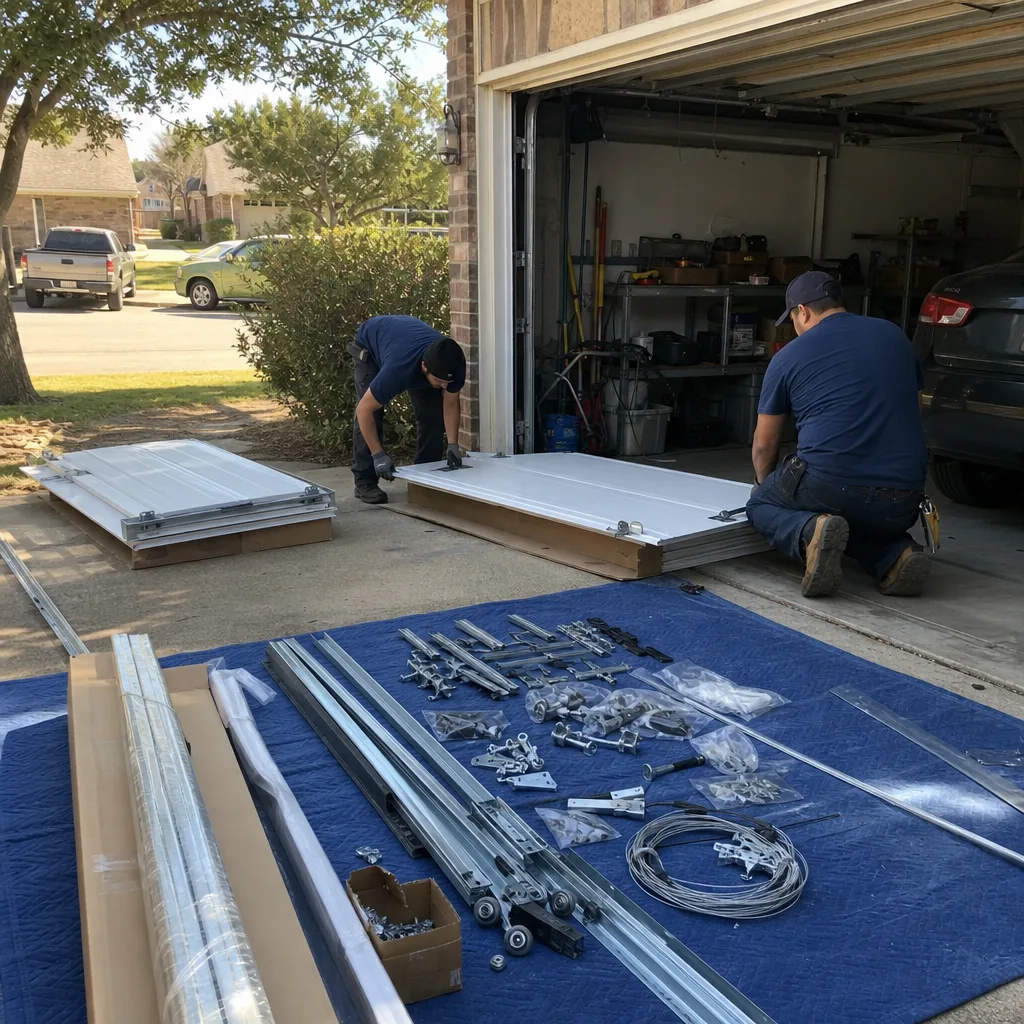
Call when the symptom is a broken torsion spring, a snapped cable, a bent track in the travel path, or a bottom bracket that’s pulling away from the panel. These are not DIY repairs, and some of them carry real safety risk. Call when the door balance test fails, when you hear a grinding you can’t localize, when the opener runs but the door doesn’t move, or when you’ve had a symptom for a month and it hasn’t resolved itself, because symptoms don’t resolve themselves. Servo Garage Doors Carrollton offers free estimates in Carrollton, including Castle Hills, Indian Creek, Hebron, and downtown. Call (817) 527-9864 and we’ll send a technician with the parts to diagnose it on the first trip.
Frequently Asked Questions
Garage door repair in Carrollton typically runs $85 to $340 depending on the component. A roller replacement set costs $85 to $150, a drive gear replacement $140 to $220, a cable replacement $70 to $120, and a single torsion spring replacement $180 to $340. These are the prices you should expect from a company that quotes upfront, and they’re the ranges we work within. Call (817) 527-9864 for an exact quote on your specific door. The estimate is free, and it’s in writing before any work starts.
A broken torsion spring sounds like a gunshot or a heavy object hitting the garage floor. It’s sudden, loud, and unambiguous. You’ll hear it echo through the house if you’re inside. After the bang, the door will not open, either with the opener or manually, because the counterbalance is gone. Do not try to lift the door by hand after this happens.
In most cases, yes. We carry standard torsion springs, cables, rollers, safety sensors, and circuit boards on the trucks, and we answer our phones with a live person 24 hours a day, including weekends and holidays. Emergency calls get a named technician and an on-the-way text, not a callback window. The Garage Door Opener Repair & Installation in Carrollton page covers the opener side of emergency calls. For door problems, call (817) 527-9864 and tell the dispatcher what you’re hearing or seeing.
No. The flat, written price you receive is the price you pay. That’s Clause 1 of The Haven Standard, and it’s the reason Servo Garage Doors was built this way. If the diagnostic turns up an additional issue, the technician shows you the photo of the problem, explains what it is, and gives you a separate written price for that repair. Nothing gets added to the invoice that wasn’t on paper first.
Yes. Standard torsion springs in multiple wire sizes, cable sets, bottom brackets, nylon and steel rollers, hinges, safety sensors, and common opener parts including logic boards, drive gears, and remote controls. For less common components on older doors, we order same-week and schedule the install once the part arrives. On the first visit, you’ll get a written scope and a written price regardless of whether the part is on the truck.
Disconnect the opener using the red emergency release handle, then lift the door manually to the halfway point and let go. If the door holds position, the door is balanced and the problem is in the opener. If it drops or is heavy to lift, the door has a balance issue, and fixing the opener won’t fix the door, and sometimes the door problem will damage the opener. This test takes thirty seconds and tells you which of the two systems is failing. If you’re not comfortable running it, call us and we’ll do it on site.
The Bottom Line
Garage door warning signs are only useful when they’re mapped to a timeline and a specific component. A grinding roller is not a broken spring, and a broken spring is not an opener issue. Carrollton’s climate pushes failures in predictable directions: heat stresses logic boards, humidity eats bottom panels, and storm winds work on track alignment. The photo documentation protocol costs nothing and protects you from misdiagnosis. The written-price standard costs you nothing to ask for, and it’s the fastest tell on whether a company is going to treat you fairly. Watch the door, photograph what you see, and call (817) 527-9864 when the timeline says stop. Browse more guides & resources for additional homeowner tips.
Written by Marcus Deller, Owner at Servo Garage Doors Carrollton, serving Carrollton since 2015.