
Last updated September 20, 2026
Full 25-point door and opener safety check with every visit - springs, cables, rollers, tracks, and your LiftMaster or Chamberlain opener included
You get a price before we start. It does not change when the truck arrives.
LiftMaster openers
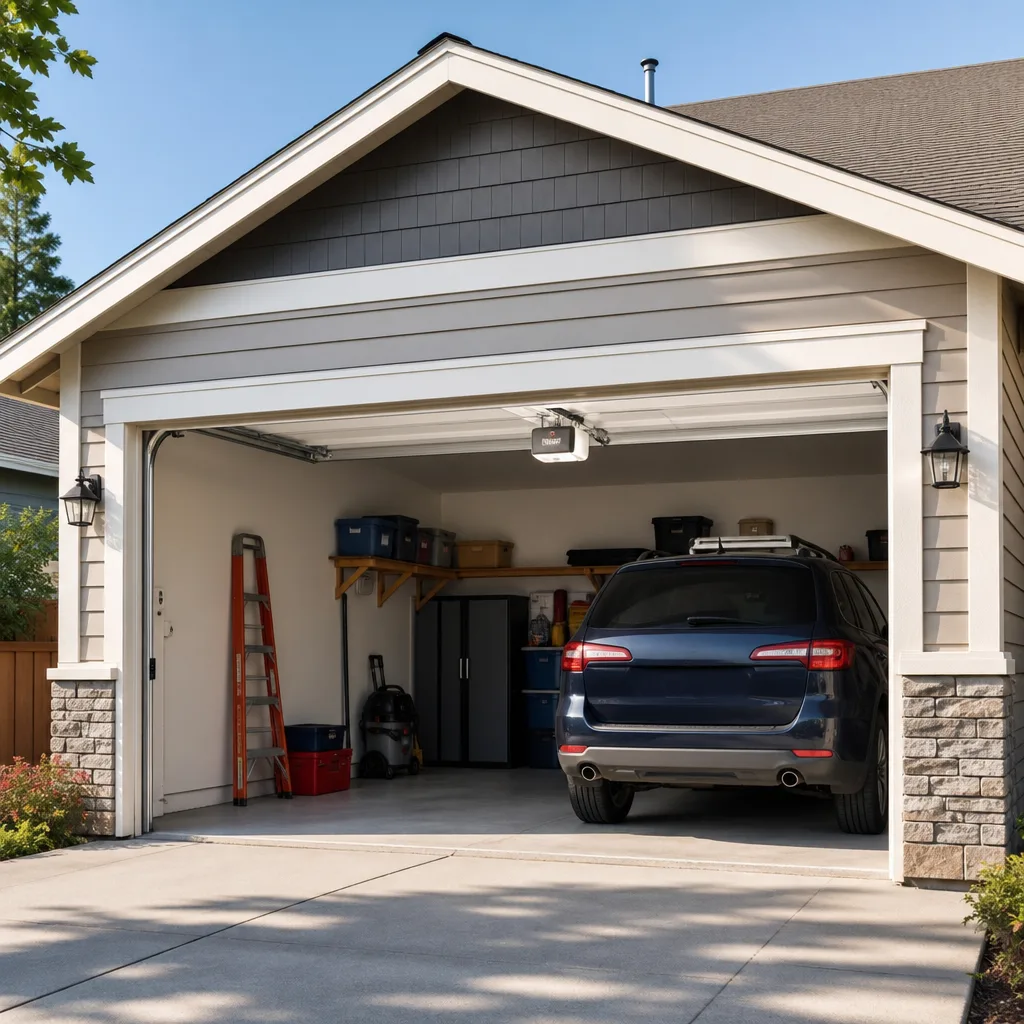
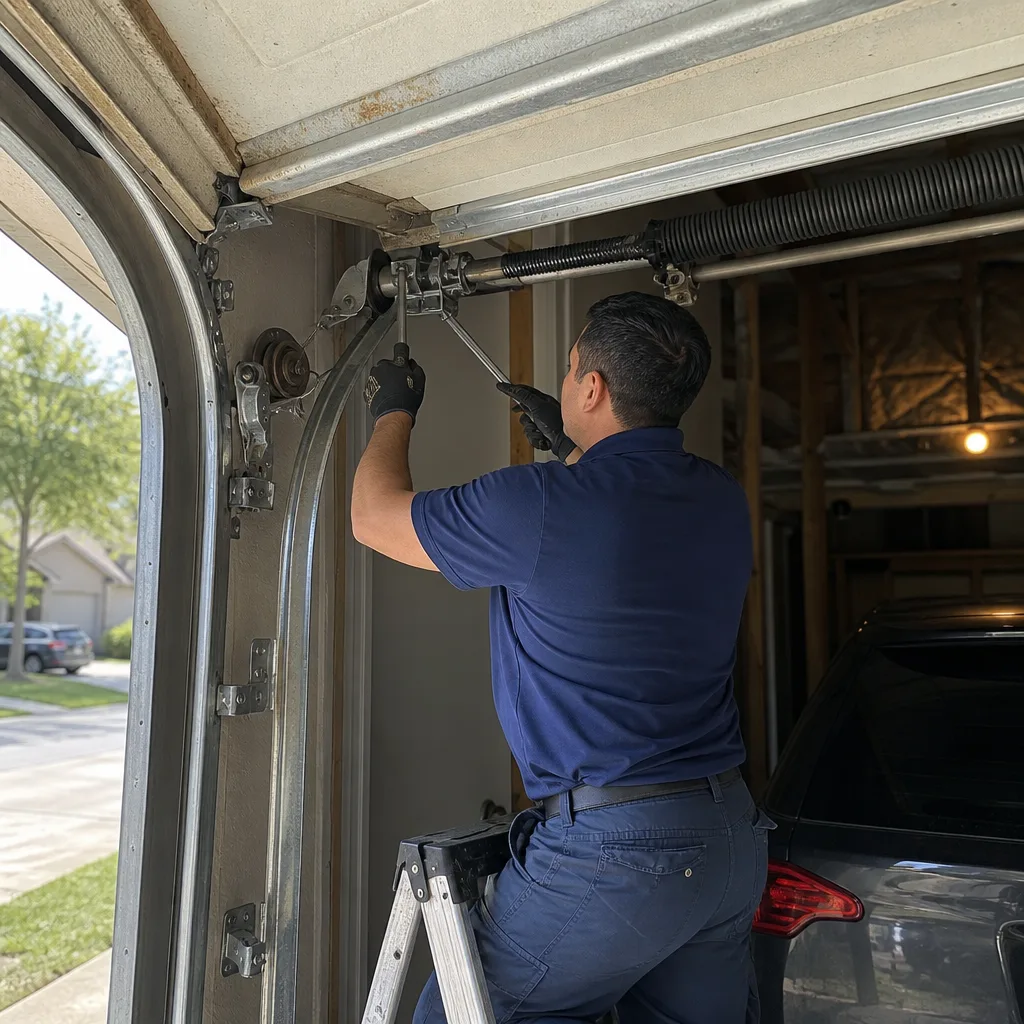 Before
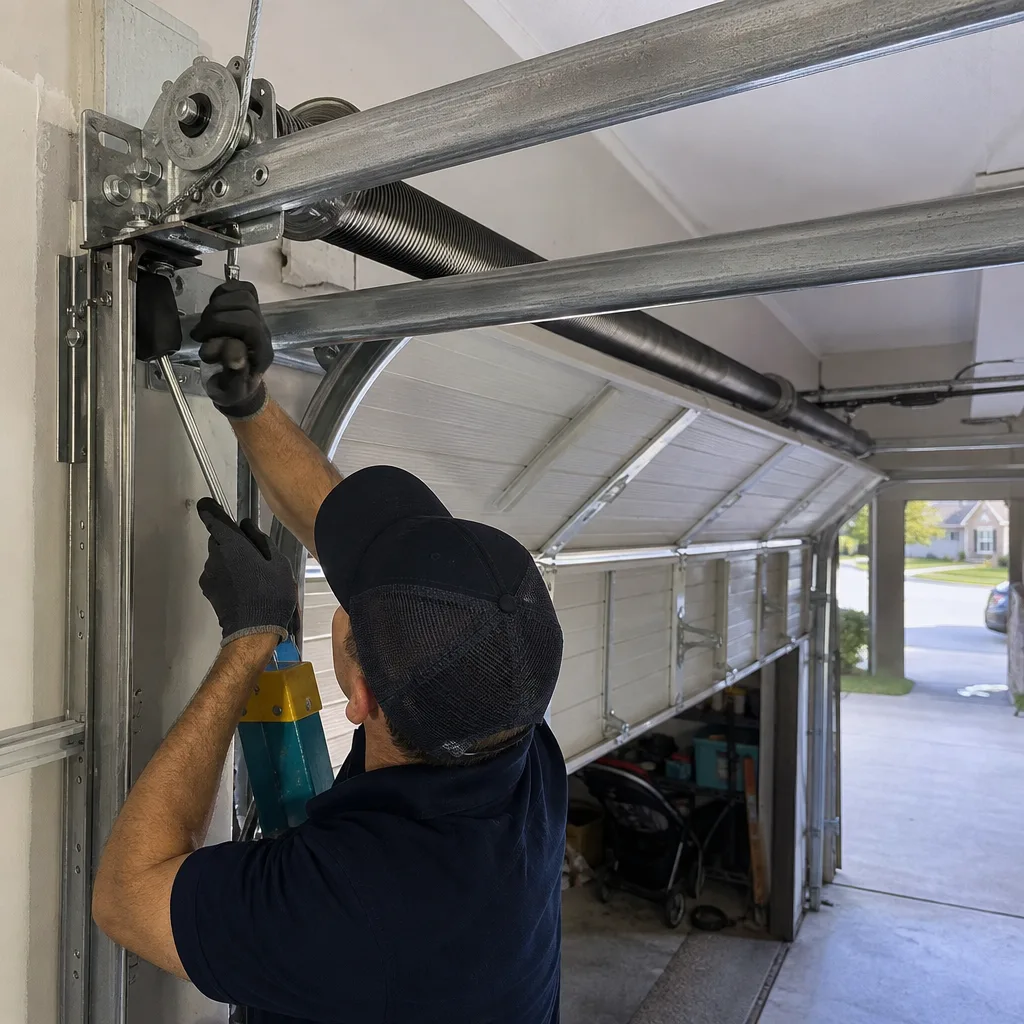 After
After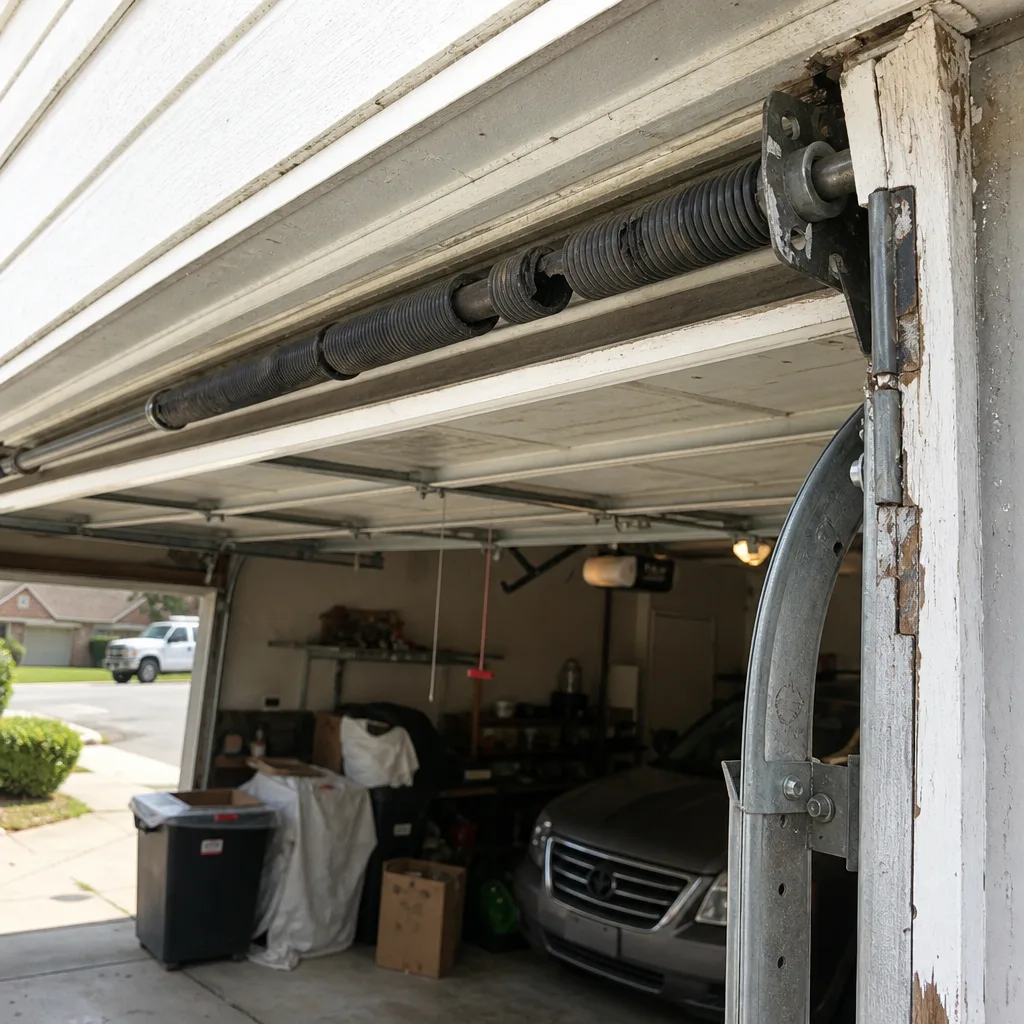 Before
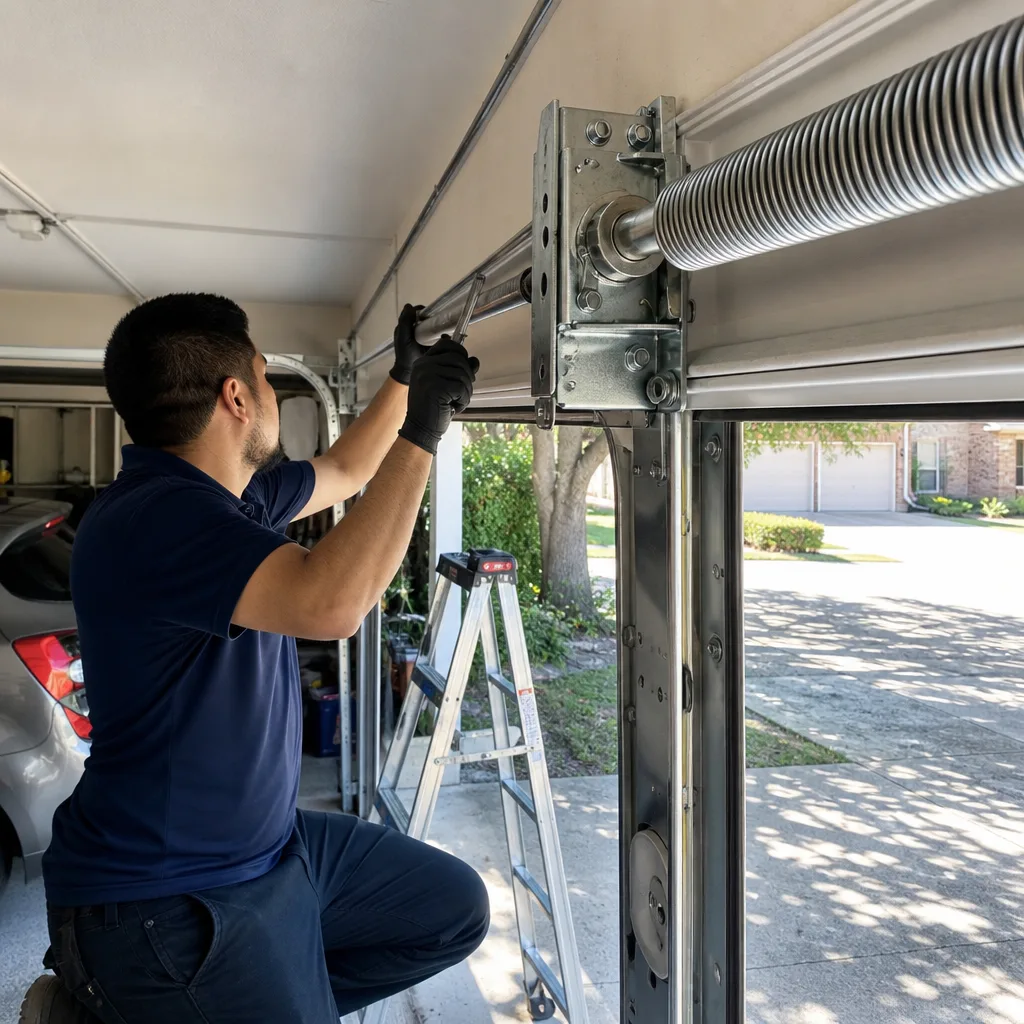 After
After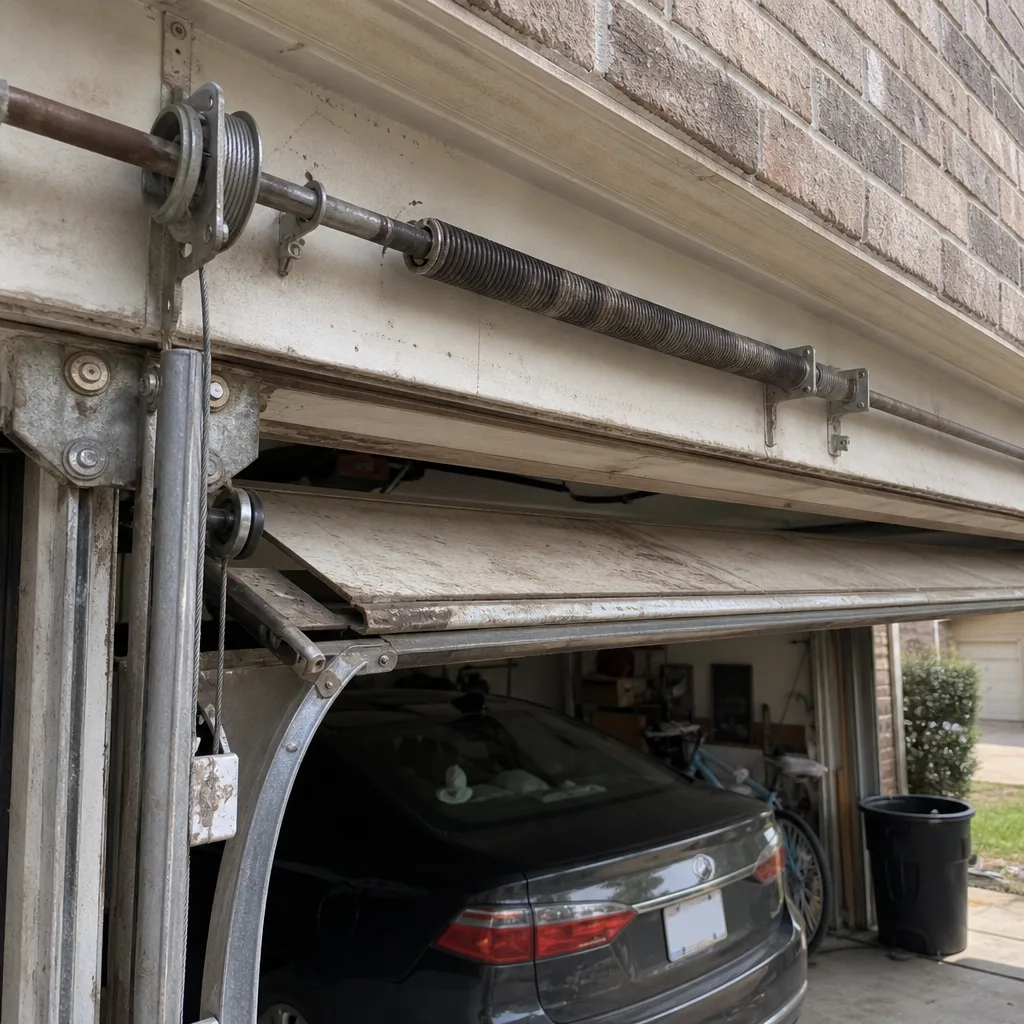 Before
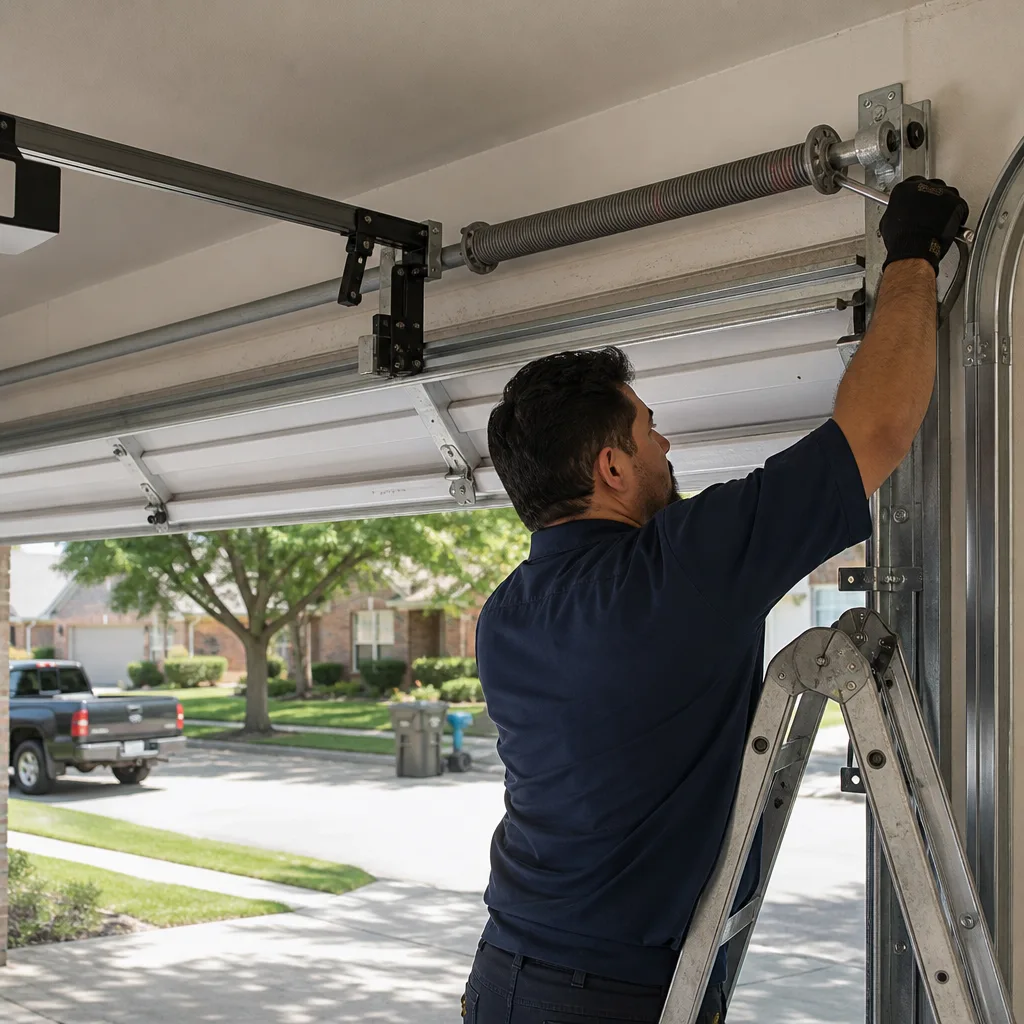 After
AfterThe Complete Guide to Garage Door in Carrollton
Most garage door regrets in Carrollton have nothing to do with color. The most common one we hear starts the same way: someone bought a 1/2 HP chain-drive opener for a 16-foot wide door on a street with HOA quiet-hour rules, and now every 7 a.m. departure sounds like a freight train crossing the living room. Our more guides & resources exist so you don’t become that neighbor. You’ll learn which garage door decisions are permanent the moment they’re installed, which ones you can reverse for under $200, and how to read a spec sheet like the technician who’ll eventually stand in your driveway. We’ll cover everything through the lens of Carrollton specifically, because our climate, our HOAs, and our housing stock create a different set of rules than a generic guide from Ohio would suggest.
Quick Answer
A garage door in Carrollton is a system of four decisions: the structural opening (permanent), the door panel design and material (mostly permanent), the spring configuration (semi-permanent), and the opener drive system (replaceable at any time). The guide below maps each decision to what it costs in Carrollton, what you can’t change later, and what you can fix for a few hundred dollars. If you remember one thing: get the spring cycle rating and drive type right the first time, and the rest is recoverable.
Table of Contents
- The Permanent vs. Reversible Decision Hierarchy
- How Carrollton HOAs Constrain Your Choices Before You Shop
- Drive Systems Compared for Carrollton Garage Orientations
- Why R-Value Means Something Different in North Texas
- How to Read a Garage Door Spec Sheet: The Four Numbers That Matter
- Spring Cycle Rating: The Number Nobody Asks About Until It Breaks
- What Each Decision Costs in Carrollton
- Common Mistakes to Avoid
- When to Call a Professional
- Frequently Asked Questions
- The Bottom Line
BeforeAfterThe Permanent vs. Reversible Decision Hierarchy
Every garage door purchase is a set of layered commitments, and most buyers treat them as equals. They are not. Understanding which choices lock in forever and which ones you can change on a Saturday afternoon is the single most valuable piece of education you’ll get before spending $1,500 to $6,000 in Carrollton.
Tier 1: Permanent (decided for you or by framing)
The rough opening width and height are set by your home’s framing. In Carrollton’s 1980s and 1990s subdivisions like Woodgate and Indian Creek, most single doors are 8 feet wide by 7 feet tall, while newer builds in Castle Hills and Hebron Valley often run 9 feet wide or 16 feet wide for double doors. You cannot widen a rough opening without structural work that costs more than the door itself. Header height, the space above the door where the spring and track live, is equally fixed. If you want a high-lift track setup to clear a vehicle lift, you need 12 to 15 inches of headroom above the opening. Many Carrollton homes have exactly 12, which the original builder used for a standard-lift track. A spring conversion can sometimes help, but the header is the header.
Tier 2: Mostly Permanent (changeable, but expensive)
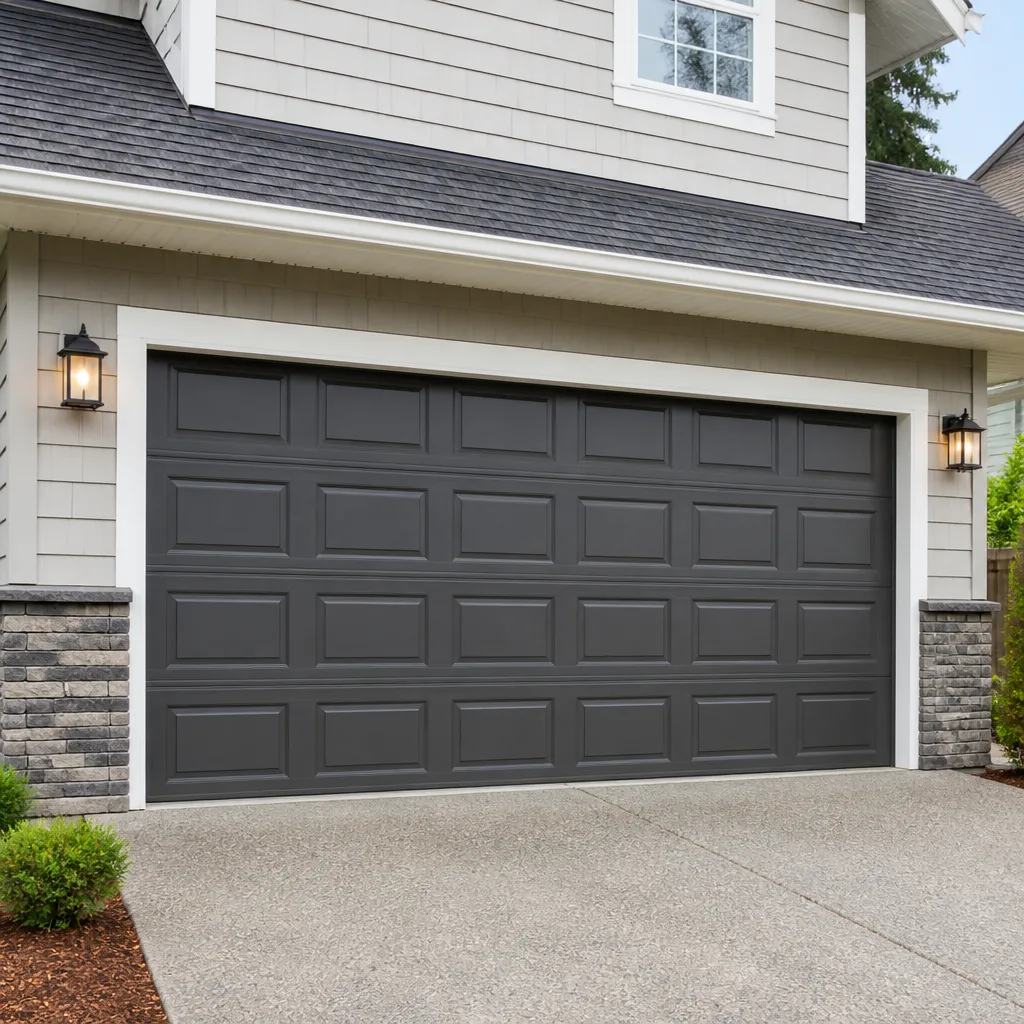
Panel material and style are technically replaceable at any time, but in practice you’ll live with your choice for 15 to 25 years. Steel gauge, insulation type, window placement, and panel profile are all baked into the door you order. You can repaint a steel door in Carrollton, but you cannot reasonably convert a non-insulated door to an insulated one without replacing the sections. Color choice matters less than you think here, because a quality door can be repainted; what you cannot fix later is the way the door handles North Texas wind load. Garage door installation in Carrollton starts with getting the structural measurements right, because everything after that is negotiable.
Tier 3: Semi-Permanent (replaceable, but with planning)
The spring configuration, torsion versus extension, and whether you can convert between them depends on your headroom and the door weight. Torsion springs dominate in Carrollton because they are safer and fit the standard 12-inch header clearance on most local homes. Extension springs still exist on older doors in the Meadow Bluff and Oak Hills corridors, and converting them to torsion is a straightforward job when the door is replaced. This is a decision you make once and rarely revisit, but it is not permanent in the way your rough opening is.
Tier 4: Fully Reversible (change it any day for under $500)
Your opener’s drive system, horsepower rating, smart features, and even the brand are all replaceable without touching the door itself. A chain drive opener can become a belt drive in under two hours. A LiftMaster can become a Chamberlain if that’s what makes sense. The opener mounts to the ceiling, not the door, so it is the easiest decision to fix later. This is also true for garage door opener repair in Carrollton, which is typically a one-visit job with a written price before the technician starts.
The hierarchy matters because of where regret concentrates. When a homeowner calls us six months after a bad install, the problem is almost never the door’s color. It’s a drive system that’s too noisy for the street, a spring that was under-cycled for the door’s weight, or a panel gauge that dents in a Carrollton hailstorm. Two of those three were fixable decisions that got locked in because the seller treated every line item as permanent.
How Carrollton HOAs Constrain Your Choices Before You Shop
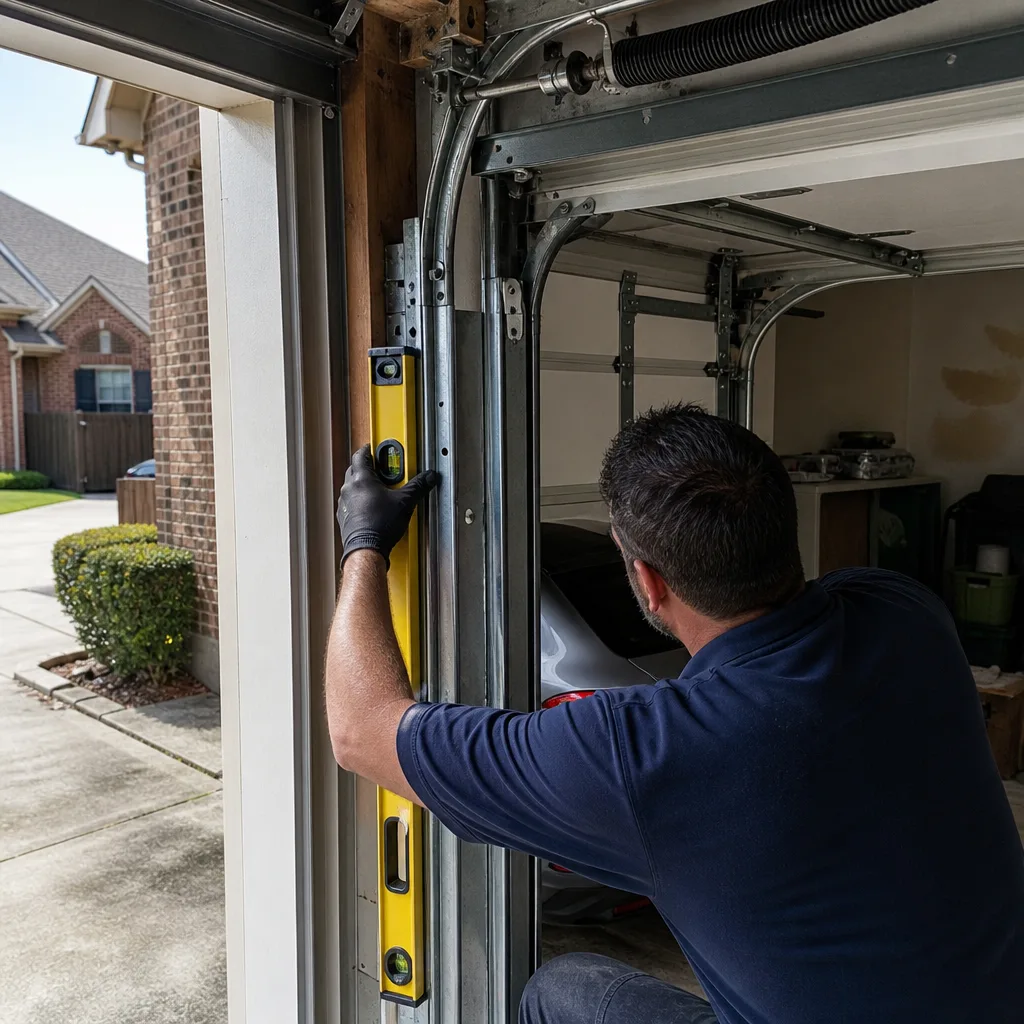
Before you pick a panel design, your HOA may have already picked it for you. Carrollton has some of the highest HOA density in the Dallas-Fort Worth metro, particularly through the Mustang Creek corridor, Hebron Valley, and the master-planned sections of Castle Hills. These associations regulate not just color, but material, window count, and sometimes the direction your door faces.
Here is what a typical Carrollton HOA garage door covenant reads like in practice:
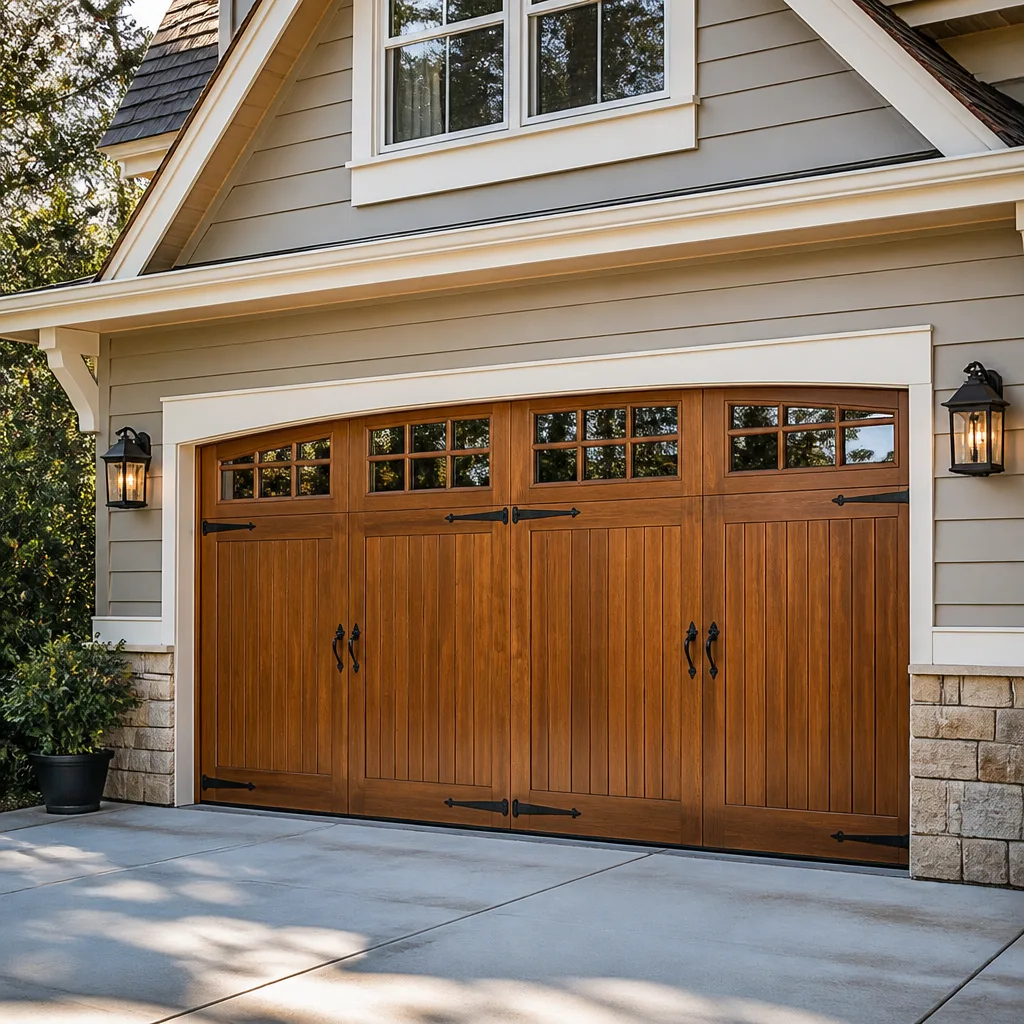
- Color and finish: Most require a door color drawn from the builder’s original palette. In Castle Hills, that typically means a neutral tan, sandstone, or carved-wood finish. Repainting without approval is a covenant violation, not just a design choice.
- Material restriction: Some HOAs require steel or steel-composite doors and prohibit wood, even on the side of the house that doesn’t face the street. Wood doors require yearly maintenance in North Texas heat and humidity, and HOAs have learned this through decades of neglected cedar doors.
- Window count and placement: This is the restriction most buyers miss. An HOA may limit you to two windows per door, or none at all, or only obscured glass. Windows add cost and reduce insulation, but if the covenant allows them, they also change how the door handles Texas sun on a west-facing garage.
- Side-entry restriction: If your garage faces the side yard rather than the street, some HOAs in Hebron Valley still apply the same appearance standard to a door most people never see. This matters because a side-entry garage is a different thermal and noise environment than a front-facing one.
The practical takeaway is this: get your HOA’s architectural guidelines before you get attached to a door style. The document is usually available from your HOA management company, and our technicians see a copy of it on most Carrollton quotes because we ask about it during the measure. A door that violates a covenant isn’t just a fine; it’s a reorder and a reinstallation, which doubles the cost of what should have been a one-day job.
Drive Systems Compared for Carrollton Garage Orientations
The drive system is how the opener converts motor rotation into the motion that moves your door along the track. Four primary types exist: chain, belt, screw, and direct-drive (sometimes called jackshaft). Each has a specific behavior in North Texas garages, and the right choice depends on where your garage sits in relation to your living space and your neighbors.
Chain Drive
A metal chain runs along a rail above the door, pulling a trolley carriage that lifts the door. Chain drives are the least expensive to buy, typically the loudest to run, and also the most common in Carrollton because builders install them by default. They work. The problem in the attached two-car garage that fronts a quiet street is that a chain drive transmits vibration through the ceiling joists into bedrooms above the garage. In Mustang Creek, where garages face the street with master bedrooms above them, a 16-foot door run by a 1/2 HP chain drive at 6:45 a.m. is audible in every room of the house, and next door. For a detached garage or a side-entry garage separated from living space by a breezeway, chain drive’s noise becomes a non-issue and its lower cost becomes the deciding factor.
Belt Drive
A belt drive uses a reinforced rubber or polyurethane belt instead of a chain. The belt absorbs the vibration that makes chain drives loud, which is why belt drives dominate in Carrollton homes with bedrooms above the garage. The price premium is real, typically $100 to $200 more on the opener itself, but it is a one-time cost on a reversible decision. We install more belt drives in Castle Hills and the newer Hebron Valley builds than any other type, because those homes put living space directly above the garage as a matter of floor plan.
Screw Drive
A screw drive threads a steel rod through the opener motor itself, moving the carriage directly. There is no chain and no belt to wear out, which makes screw drives appealing on paper. In practice, the metal-on-metal interface runs hotter and louder in a Texas summer than a belt drive, and screw drives have mostly fallen out of favor in Carrollton for new installs. They still appear on some Genie openers. We service them regularly, but we rarely recommend them for an attached garage where noise matters.
Direct Drive (Jackshaft)
A direct-drive opener mounts to the wall beside the door, not to the ceiling. It turns the torsion shaft itself rather than pulling a trolley along a rail. This frees the entire ceiling above the door, which matters in a garage with a vehicle lift, high-storage racks, or an unusually low ceiling. Direct drives are quiet and powerful, but they cost more than a belt drive and require a torsion spring setup to work. In Carrollton, they make the most sense for detached workshops, garages with lifts, and side-entry garages in Hebron Valley where the ceiling is already being used for something else.
The table below maps the four drive types to Carrollton’s most common garage configurations.
- Attached, two-car, front-facing, bedrooms above: Belt drive. The noise differential is the entire argument, and the $150 premium is the cheapest soundproofing you can buy.
- Attached, single-car, side-facing with breezeway: Chain drive if budget matters, belt drive if you can stretch it. The noise separation is enough to make chain acceptable.
- Detached garage, any size: Chain drive or screw drive. Noise doesn’t carry, so spend the savings on a better spring.
- Garage with a lift, high storage, or low ceiling: Direct drive. The ceiling clearance is worth the premium when the alternatives force you to reconfigure the space.
Why R-Value Means Something Different in North Texas
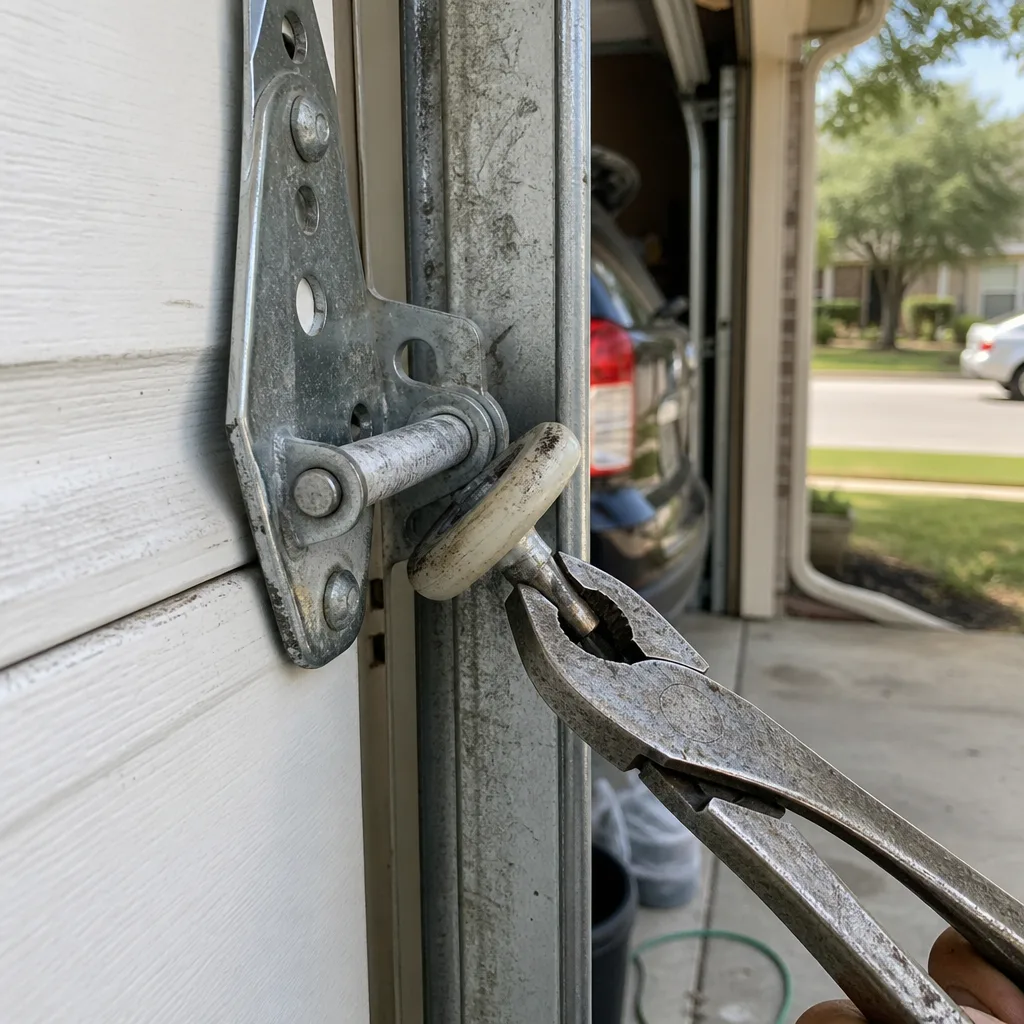
R-value measures thermal resistance: how well a material slows the transfer of heat. In Minnesota, a higher R-value means your garage stays warmer in February and your heat bill drops. In Carrollton, the math changes, because the dominant thermal load is not heating, it is cooling. Your garage door in August is absorbing direct sun on a surface that can reach 130 degrees. That heat radiates into your garage, into the shared wall with your house, and eventually into your HVAC load.
The insulation industry’s standard R-value guidance assumes a heating-dominated climate. A garage door rated R-9 with a single-layer steel panel is adequate if the door faces north and never takes a direct sun hit. The same door on a west-facing garage in Carrollton turns your garage into an oven from 3 p.m. to 8 p.m. every day from May through September. For a west-facing or south-facing attached garage, we recommend a minimum of R-12 to R-16, achieved with a polyurethane or polystyrene core sandwiched between steel layers. The door’s air sealing matters as much as its R-value, because a door with good insulation but a 1/4-inch gap at the top jamb leaks conditioned air all year.
What the insulation data does not typically say: in a hot climate, the door’s exterior color matters more than in a cold one. A dark bronze door on a west-facing Carrollton garage absorbs enough solar energy to raise the surface temperature 20 to 30 degrees above a white or sandstone door of the same R-value. This is where HOA color covenants and physics collide. If your HOA allows it, a lighter door with the same insulation performs measurably better. If your HOA restricts you to a darker palette, you compensate with a higher R-value core, not with a lighter color you’re not allowed to have.
For detached garages in Carrollton that are not conditioned space, high R-value is largely a waste of money. Insulating a detached structure that only stores cars and yard equipment changes nothing about your home’s energy load. A basic R-6 door is sufficient, and the money is better spent on a higher-cycle spring or a heavier gauge steel that survives a Texas hail season.
How to Read a Garage Door Spec Sheet: The Four Numbers That Matter
Every garage door comes with a specification sheet, and most of it is marketing. Four numbers on that sheet actually determine whether the door performs in Carrollton’s climate and your garage configuration. If you learn to read these four, you can ignore the rest of the brochure.
- Steel gauge (the lower, the better). Door panels are typically 24-, 25-, or 27-gauge steel. A 24-gauge door resists hail denting better than a 27-gauge, and in Carrollton, hail is not a hypothetical. The difference in cost between 24-gauge and 27-gauge is significant, but so is the difference in dents after a spring storm. We recommend 24-gauge for any door that faces open sky rather than a covered porch or tree canopy.
- Section thickness (the insulation driver). A 2-inch section with a polyurethane core delivers R-12 or better. A 1-3/8-inch section with a polystyrene core delivers R-6. Section thickness drives insulation, which matters for attached west- and south-facing garages in Carrollton and matters less for detached or north-facing garages.
- Wind load rating (the local code one). Carrollton falls within the design wind speed region for North Texas, which means garage doors need to meet a minimum wind load rating in pounds per square foot. A door that is not rated for the local wind zone can deflect in a storm and pull out of its tracks. This is not a location-specific luxury; it’s what the building code in Texas already requires. Most national brands sell Texas-compliant versions of their doors, but it’s worth confirming on the spec sheet rather than assuming.
- Spring cycle rating (the cost-of-ownership number). This is the number nobody reads, and the one that costs the most when it’s wrong. A standard spring is rated for 10,000 cycles: about seven to nine years of normal use in a Carrollton household that cycles the door two to three times daily. An upgraded spring rated for 30,000 to 50,000 cycles lasts 20 years or more for a modest premium at install time. The cycle rating is the difference between a spring you replace once in the life of the door and a spring you replace three times.
Everything else on the spec sheet, panel profile, window count, hardware finish, decorative strapping, is a matter of appearance and preference. The four numbers above are the technical skeleton. If any of them is missing or buried, ask the seller to produce it. Garage door repair estimates in Carrollton from Servo include the spring cycle rating on the written scope, because that’s the number that determines whether the repair lasts a decade or a lease term.
Spring Cycle Rating: The Number Nobody Asks About Until It Breaks
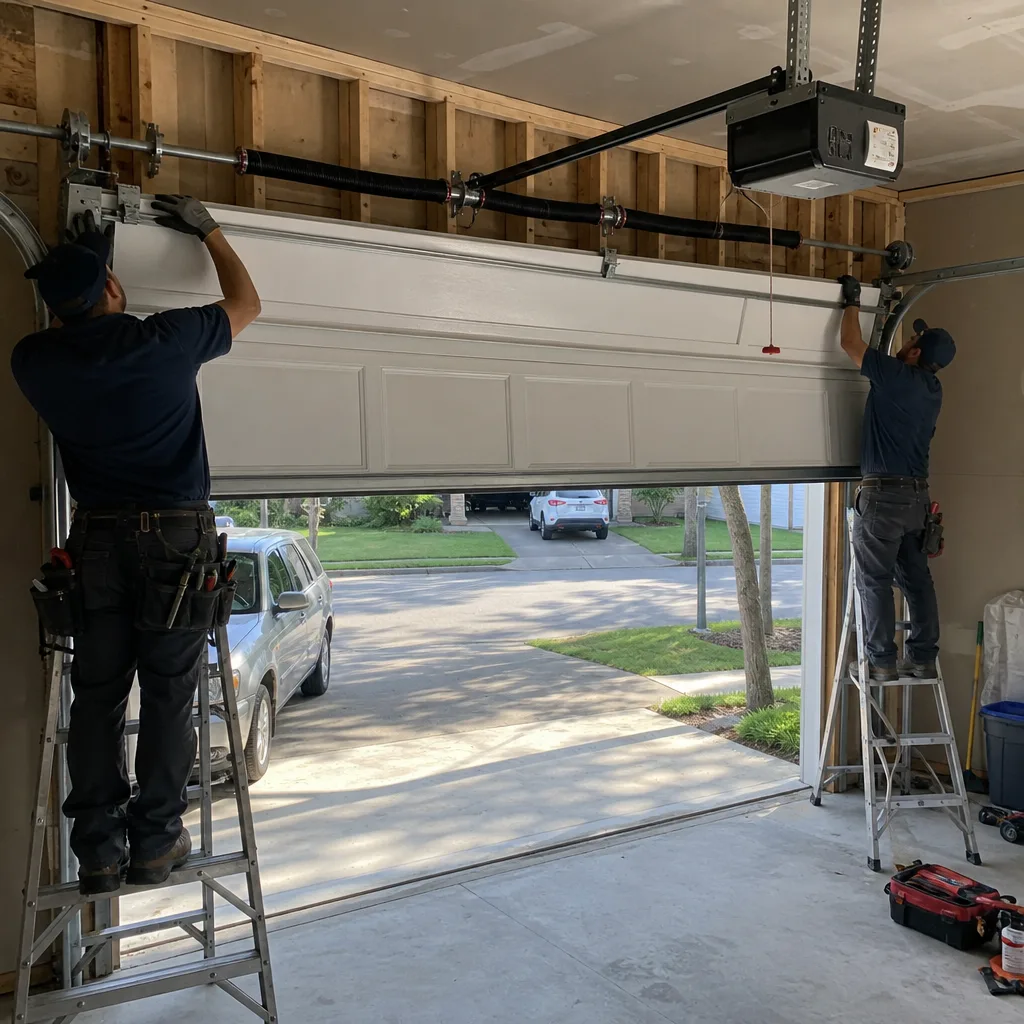
A garage door spring has a rated lifespan measured in cycles, not years. One cycle is one full open and one full close. If your household opens and closes the door two times for every commute and school run, you accumulate roughly 1,000 cycles per year. A builder-grade 10,000-cycle spring fails in seven to nine years. A 30,000-cycle spring lasts through two decades of the same routine.
The reason this number drives so much regret in Carrollton is that builders install the cheapest spring that will meet the door’s weight requirement, and that is almost always a 10,000-cycle spring. When the spring breaks, which it will, the failure is sudden and familiar to anyone who has heard it: a sound like a gunshot from the garage, followed by a door that will not open even an inch. The repair is straightforward but not optional, and the replacement spring you choose determines whether you will make that repair call again in eight years or not in your lifetime of owning the home.
An upgraded spring costs more at installation, but not proportionally to its lifespan. A 30,000-cycle spring typically costs $80 to $150 more than a 10,000-cycle spring at the point of install. Spread across the extra 20 years of service, that is a negligible annual cost. If you are buying a new door in Carrollton, the spring upgrade is the single highest-value upgrade on the entire order sheet. If you are repairing an existing door, the same logic applies: the technician will offer you both ratings, and the higher cycle rating is almost always the smarter buy for a home you plan to keep.
Torsion springs are under high tension and are genuinely dangerous to service without the proper tools and training. We say this not to discourage you from understanding your door, but because the tension in a wound torsion spring is enough to break bone. The safety caveat is not a sales tactic; it is the same warning every serious garage door professional gives. Our technicians inspect the spring cycle stamp during every garage door repair service in Carrollton and photograph the failure before quoting a replacement, per Clause 4 of The Haven Standard. You see what broke, and why, before you agree to the fix.
What Each Decision Costs in Carrollton
Our Garage Door Cost Breakdown: The Carrollton Homeowner’s Reference for 2026 breaks down pricing by the decision you are making, not by a single lump sum. Understanding the component costs helps you evaluate a quote and understand why two doors that look identical can be $3,000 apart. These ranges reflect what we see across Carrollton neighborhoods, from older single-doors in Woodgate to new-build doubles in Castle Hills.
- Single-car door, builder-grade steel, no insulation: $700 to $1,400. A basic 8×7 door with a 10,000-cycle spring and chain-drive opener. This is the entry point for a rental or a detached garage where thermal and noise performance don’t matter.
- Single-car door, insulated steel, belt-drive opener: $1,600 to $2,400. R-12 or better, 24-gauge steel, 30,000-cycle spring. This is the right spec for an attached garage in a home you’ll keep.
- Double-car door, builder-grade, chain-drive opener: $1,400 to $2,200. A 16×7 door with standard spring and chain opener. Common in Carrollton’s 1990s and 2000s subdivisions, and the most common door we replace.
- Double-car door, insulated, belt-drive opener, upgraded spring: $2,800 to $4,500. The full-spec configuration for a front-facing attached garage with bedrooms above. In Castle Hills or Hebron Valley, this is the default for a quality replacement.
- Direct-drive opener conversion (adding jackshaft to a torsion setup): $700 to $1,200. The ceiling clearance and noise isolation are uniquely valuable for lifts and low-ceiling garages, but the premium is real.
- Spring replacement only, 10,000-cycle: $180 to $300 for a standard single torsion spring. The most common single repair we perform in Carrollton, usually same-day.
- Spring replacement only, 30,000-cycle: $280 to $450. The longer-rated spring, offered at quote time and worth the difference for an owned home.
Every number above is a written, flat price quoted before work begins. There is no ‘call for a quote’ at Servo, because the quote is the document you receive before a technician touches anything, per Clause 1 of The Haven Standard. The price on the written scope is the price on the invoice, and if the technician discovers something new during the visit, they photograph it, show you the finding, and re-scope in writing before proceeding. The customer sees the failed part before anyone quotes a replacement.
Common Mistakes to Avoid
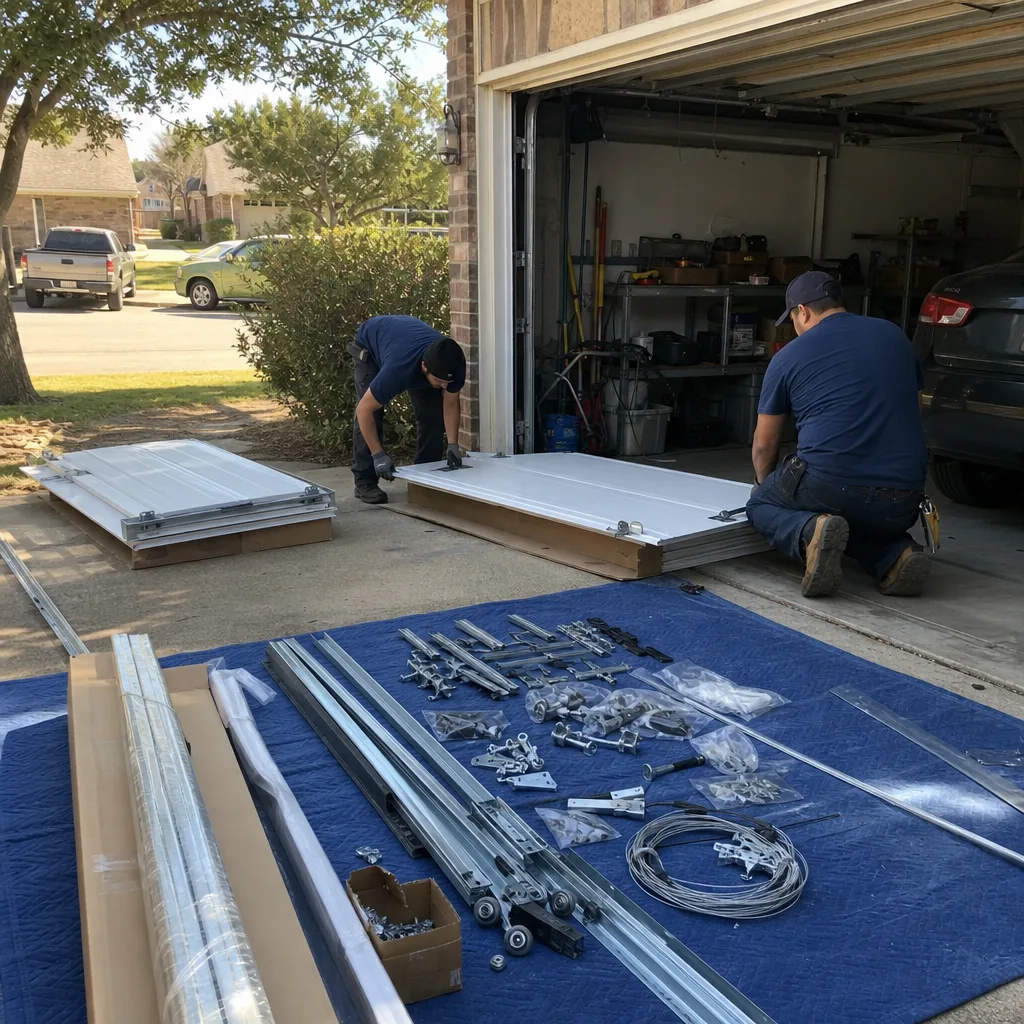
- Buying the opener before understanding the drive type. A chain-drive opener on an attached front-facing garage in Carrollton with a bedroom above will be a daily annoyance, and the fix is another $300 when you replace it with a belt drive. The drive type decision costs $150 to make correctly the first time.
- Ignoring the spring cycle rating. The difference between a 10,000-cycle and 30,000-cycle spring is small at installation and enormous over the life of the home. If you plan to own the house for more than ten years, the upgrade pays for itself in one fewer service call.
- Choosing a door color before checking HOA covenants. In Castle Hills and Hebron Valley, the architectural committee has already narrowed your options. Checking after you order means a reorder, a restocking fee, and a delay of several weeks.
- Opting for the thinnest steel to save money. 27-gauge panels dent easily in North Texas hail. If your door faces open sky without tree cover, spend the extra for 24-gauge. The cost difference is less than the first repair or repaint.
- Overspending on insulation for a detached garage. A detached structure that is not conditioned space does not benefit from R-16. The insulation premium is wasted money better spent on a higher-cycle spring or stronger steel.
- Skipping the wind load check. Carrollton’s wind zone requires a specific minimum rating. A national-brand door without the Texas-compliant version of the door can deflect and fail in storm conditions, and the failure is not covered as a defect.
- Replacing the door instead of the spring. A broken torsion spring does not mean the door is dead. A spring replacement is $180 to $450 in Carrollton. A new door is $1,400 to $4,500. If the door panels are sound, replace the spring.
When to Call a Professional
A garage door professional in Carrollton is not needed for every task. Inspection, lubrication, and sensor alignment are within a confident homeowner’s ability with the right guidance. The line you don’t cross is anything involving torsion spring tension or cable rewinding. A torsion spring under tension carries enough stored energy to cause serious injury if the winding bar slips, and cable work under load is similarly unforgiving. If your spring has snapped, cables are fraying or off the drum, or the door is hanging unevenly at rest, stop using it and call a technician. That’s not an upsell; that’s the standard safety practice in the trade. Servo Garage Doors Carrollton offers free estimates in Carrollton, and our technicians arrive with a flat written price before any work starts. Call (817) 527-9864.
Frequently Asked Questions
A new garage door in Carrollton typically costs $1,400 to $4,500 installed, depending on door size, insulation level, spring cycle rating, and opener drive type. The range spans a builder-grade 16×7 double door with a chain opener at the low end to a fully insulated door with a belt drive and 30,000-cycle spring at the high end. Call (817) 527-9864 for a written, flat-price quote with no obligation.
Carrollton generally does not require a permit for a like-for-like garage door replacement on an existing opening, but any work that modifies the opening size or header, such as converting a single door to a double door, does require structural approval and a permit. See our guide to Garage Door Permits, Codes & Inspections in TX: What You Need to Know for full details. Most direct replacements are completed the same day without any municipal filing. Your installer should know precisely which side of that line your project falls on before the measure is done.
Yes, most garage door repairs in Carrollton are completed the same day, including spring replacements, cable repairs, sensor alignment, and opener malfunctions. Servo Garage Doors Carrollton answers every call with a live person 24/7, including holidays and weekends, and we dispatch a named technician with an on-the-way text, not a callback window. Call (817) 527-9864 and we’ll tell you when someone will be there and what it will cost before they arrive.
The best garage door opener brand for a Carrollton home is the one that matches your ceiling clearance, noise tolerance, and drive-type preference, but in practice we install more belt-drive LiftMaster and Chamberlain openers in attached Carrollton garages than any other combination. Genie, Craftsman, and Raynor all make solid openers as well; the brand matters less than the drive type and the horsepower rating for your door weight. A 1/2 HP belt drive is the right default for a standard 16×7 double door with a bedroom above it.
A standard 10,000-cycle torsion spring in Carrollton lasts 7 to 9 years for a typical household that opens and closes the door two to three times a day. An upgraded 30,000-cycle spring lasts 20 to 25 years under the same routine. The cycle rating is the number stamped on the spring or listed on the spec sheet, and it’s the single most important durability number to check before accepting any quote. Call (817) 527-9864 for a spring inspection and written pricing on both options.
Most Carrollton HOAs allow insulated garage doors because insulation is internal and does not change the door’s exterior appearance, which is what the covenant restricts. The HOA-regulated factors are color, material, panel style, and window count, which are visible from the street. An insulated steel door in the HOA’s approved color typically requires no more approval than a non-insulated door. Always pull the architectural guidelines before you order, because the approval process takes longer than the installation.
The Bottom Line
Garage doors in Carrollton split cleanly into what you can’t change and what you can. The rough opening, header height, and HOA covenant restrictions are fixed before you ever look at a brochure. The door panel material, spring cycle rating, and opener drive type are decisions you make once, with real consequences for a decade or more if you make them wrong. The drive system you can fix anytime for a few hundred dollars, which makes it the safest place to save money. If you learn to read the spec sheet’s four numbers, confirm the wind load rating, and upgrade the spring, you’ll own a garage door in Carrollton that performs through every August and every April hailstorm for as long as you live in the house. Start with Servo Garage Doors Carrollton home for a free estimate, and we’ll bring the written price before anything touches your door.
Written by Marcus Deller, Owner at Servo Garage Doors Carrollton, serving Carrollton since 2015.