
Last updated September 20, 2026
Full 25-point door and opener safety check with every visit - springs, cables, rollers, tracks, and your LiftMaster or Chamberlain opener included
You get a price before we start. It does not change when the truck arrives.
LiftMaster openers
 Before
 After
After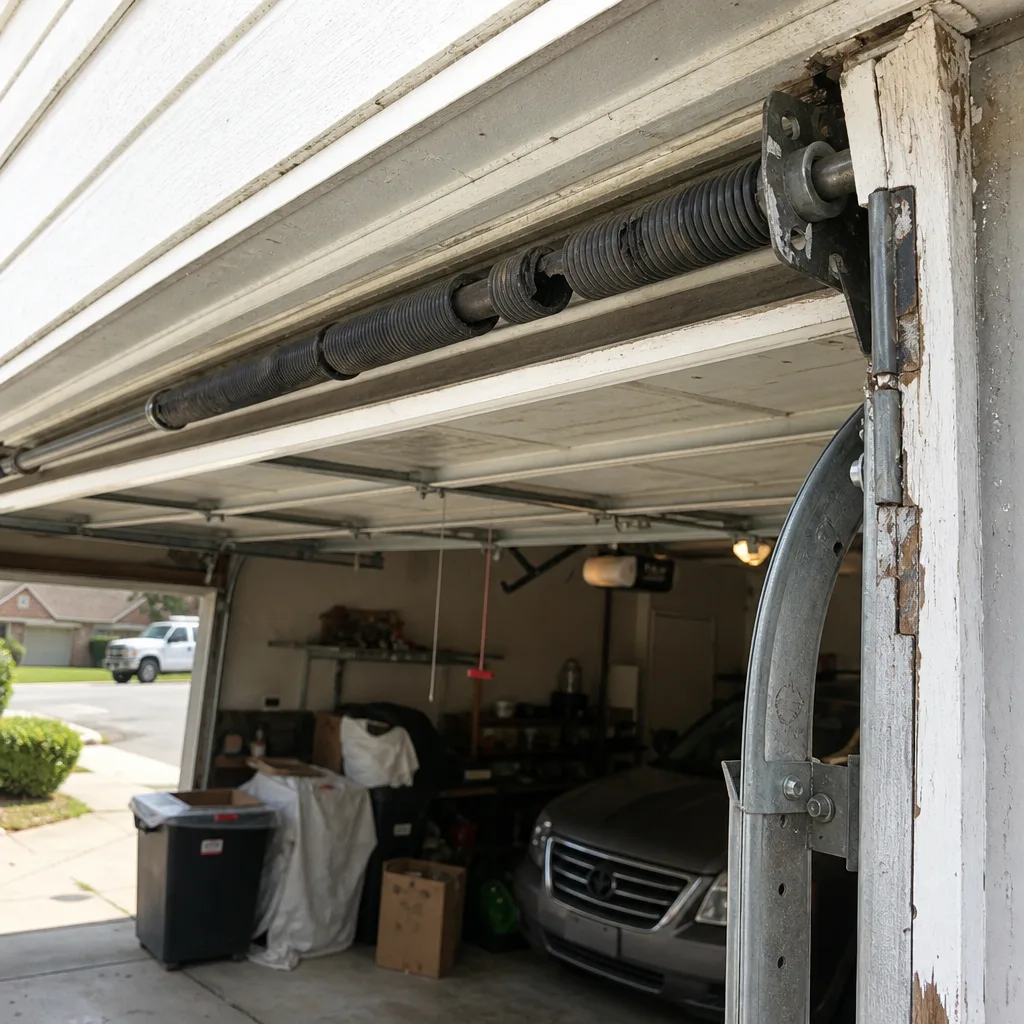 Before
 After
After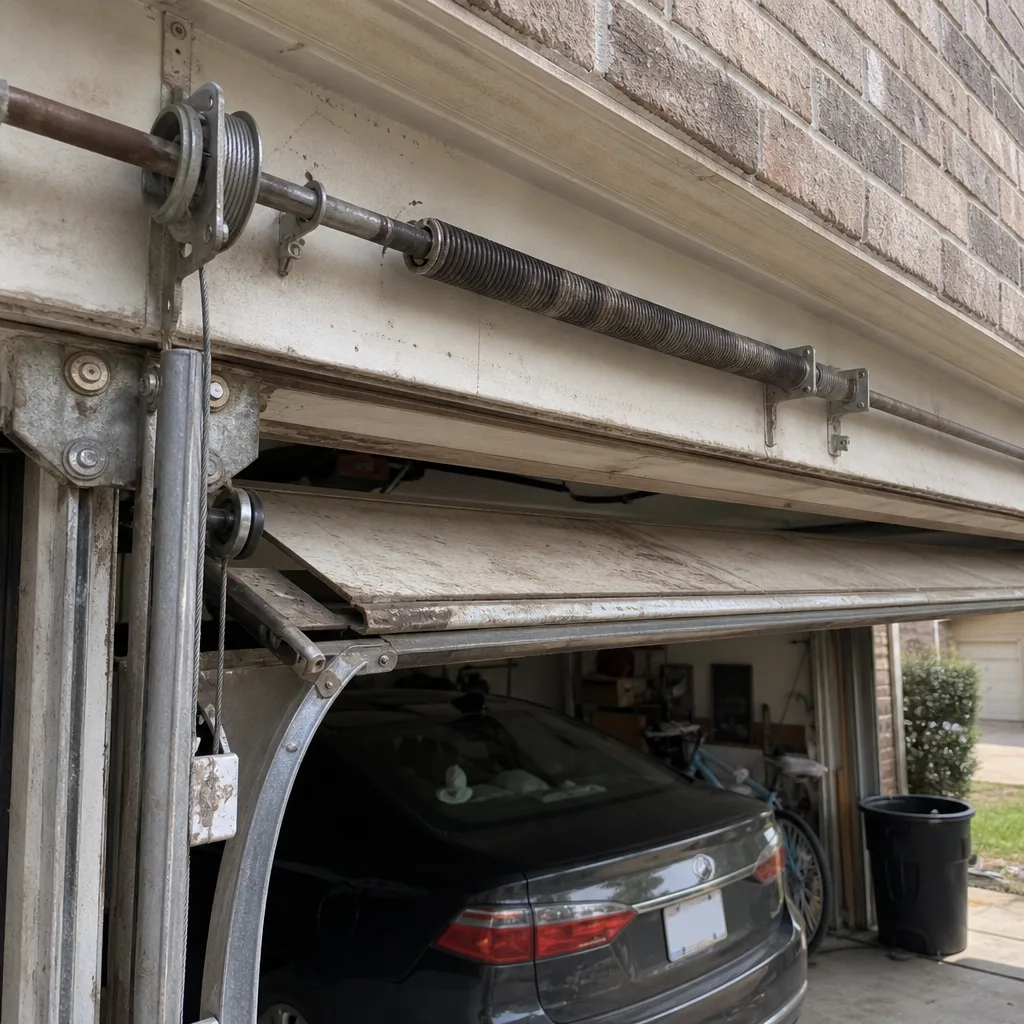 Before
 After
AfterSeasonal Garage Door Care for Carrollton: Year-Round Homeowner’s Guide
North Texas doesn’t have the garage door freeze problems that Minnesota homeowners write about, but it has something harder to anticipate: thermal expansion stress from 105°F summer highs that loosens hardware incrementally until the first cold snap reveals what the heat already broke. In Carrollton, a garage door is exposed to a 90-degree temperature swing between August and February, and that swing doesn’t fail doors the way ice does. It fails them the way a thousand small impacts fail a weld: slowly, then all at once. This guide walks through what actually breaks in our climate, when it breaks, and what to do about it before the door decides for you. For a deeper dive, see The Complete Guide to Garage Door in Carrollton.
Quick Answer
Seasonal garage door maintenance in Carrollton means concentrating real work in one window: late September through early November, when you’re correcting summer heat damage before the freeze arrives. The rest of the year is watching for the consequences of what you didn’t fix then. The four things that fail most in our climate are vinyl bottom seals (sun and slab movement), torsion spring coil gaps (thermal cycling), operator logic boards (non-climate-controlled garage heat), and paint adhesion on west-facing doors (solar exposure).
Table of Contents
- The Fall Transition: Carrollton’s Real Maintenance Season
- Winter Readiness for North Texas Ice Events
- Spring Maintenance: What Freeze-Thaw Actually Did
- Summer Preparation: Solar Exposure on South- and West-Facing Doors
- Month-by-Month Lubrication Schedule for Carrollton’s Temperature Range
- A Garage Door Component Checklist for Every Season
- Common Mistakes to Avoid
- When to Call a Professional
- Frequently Asked Questions
- The Bottom Line
BeforeAfterThe Fall Transition: Carrollton’s Real Maintenance Season
If you do one thing this year, do it between late September and early November. That window is when Carrollton garage doors either get corrected or get condemned to a winter of compounding failures. Here’s what we mean.
From June through August, the air inside a non-climate-controlled Carrollton garage routinely exceeds 120°F. That sustained heat does three specific things to your door assembly:
- Vinyl bottom seals lose elasticity. The vinyl weatherstrip along the bottom of the door gets baked against a concrete slab that can reach 140°F. By September, the vinyl has lost plasticizers and begun to harden and crack. It still looks fine from a distance. It isn’t.
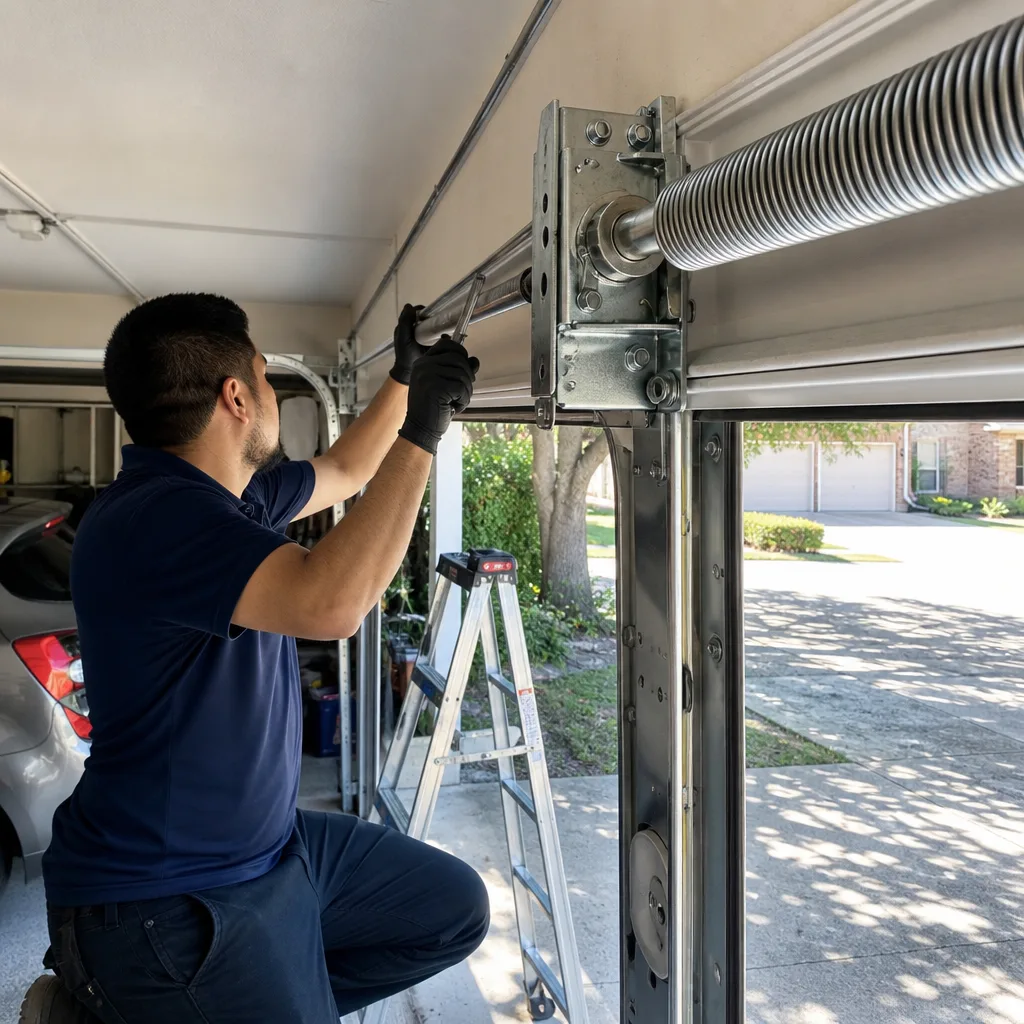
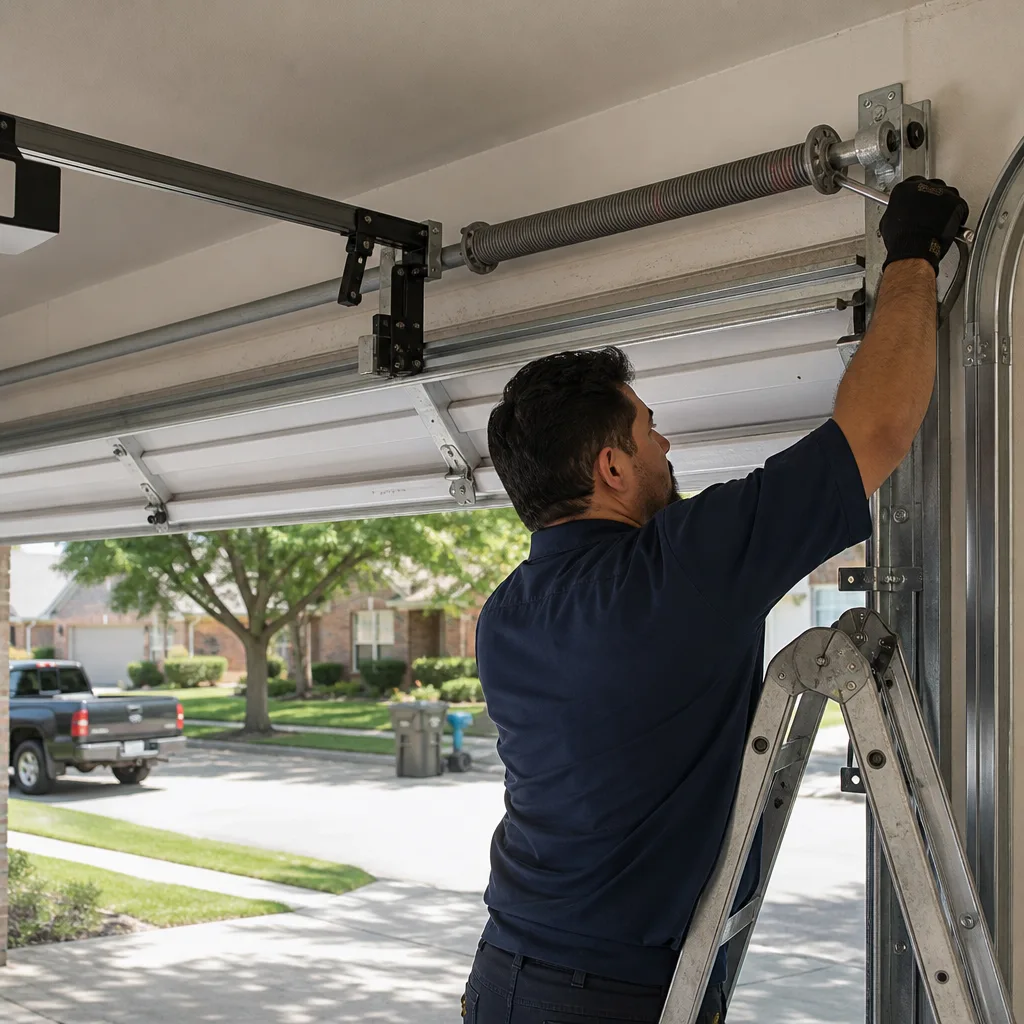
- Torsion spring coil gaps open up. Springs expand and contract with temperature. After a Carrollton summer, springs on older doors often show visible gaps between coils where they should sit flush. A gap doesn’t mean imminent failure by itself, but it means the spring has lost set length and is operating outside its rated cycle range.
- Operator logic board capacitors degrade. Genie and LiftMaster openers installed in non-climate-controlled garages run their logic boards at temperatures that shorten capacitor life. The failure mode is usually intermittent: the opener works in the morning, refuses to respond at 4 p.m., then works again after sundown. That’s not a ghost. It’s a heat-degraded capacitor finally showing its age.
The fall inspection exists to catch all three before the first freeze adds another variable. A typical fall correction in Carrollton costs $120 to $280 if we’re replacing a seal and adjusting spring tension, and $180 to $400 if the logic board needs replacing. For detailed pricing on all components, see our Garage Door Cost Breakdown: The Carrollton Homeowner’s Reference for 2026. That’s a fraction of what a January emergency call costs when the door won’t open at 6 a.m. on an ice morning.
One thing we tell every Carrollton homeowner in September: walk into the garage at 3 p.m. on a sunny day. Feel the wall opposite the door. If it’s radiating heat, your garage is cooking every component in it. That’s the garage where fall maintenance matters most. We’ve documented this pattern in neighborhoods across Carrollton, from Indian Creek to North Carrollton, and the garages that bake are the ones that call us first in December. Our Servo Garage Doors Carrollton home page has more on how we approach pre-winter inspections, but the short version is this: the fall window is not a suggestion for our climate. It’s the schedule.
Winter Readiness for North Texas Ice Events
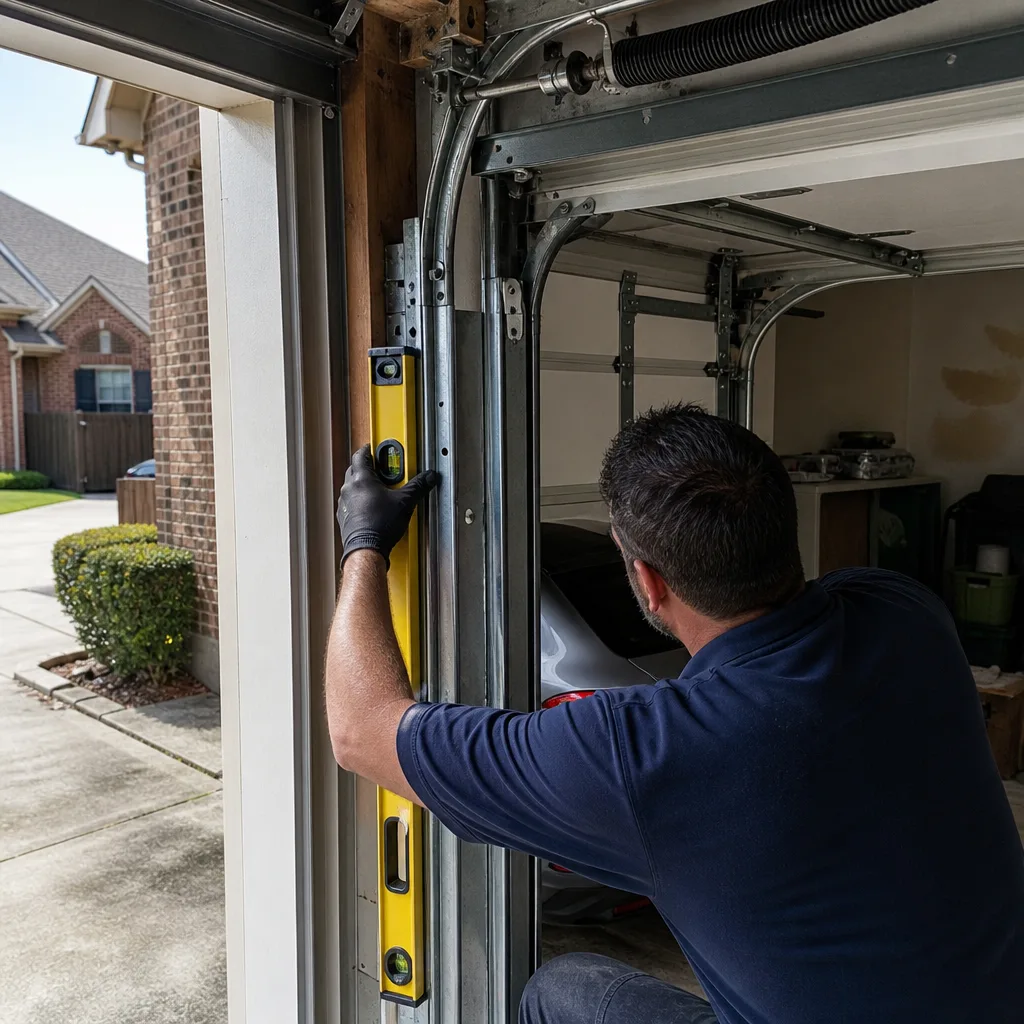
Carrollton doesn’t get Minnesota winters. It gets something worse for garage door hardware: long dry cold stretches punctuated by ice storms that arrive fast, load every outdoor component with frozen precipitation, and then melt into a refreeze cycle by nightfall. The 2021 February event was the reference case. Doors that had never been serviced failed in ways that weren’t visible until the door was under load.
What actually happens during a Carrollton ice event:
- Bottom seals freeze to the slab. When melted ice refreezes overnight, the vinyl seal bonds to the concrete. The opener then yanks the door upward against a bonded seal. One of two things fails: the seal tears out of its retainer track, or the operator rail flexes and strips the trolley carriage. We replace far more trolley carriages in February than any other month.
- Lock mechanisms ice over. Sliding bolt locks on older doors collect condensation, then freeze solid. A homeowner turns the handle with a wrench, shears the lock cylinder, and suddenly the door is both locked AND unlocked in the worst possible configuration.
- Extension spring cables stretch unevenly. On older extension-spring systems, ice loading on the door face adds weight that cables weren’t rated for. When the ice melts, the cable has permanently stretched and the door hangs uneven on one side.
Winter prep in Carrollton is mostly fall work done correctly. Here’s the specific sequence we use:
- Replace the bottom seal in October if it shows any cracking. A $40 to $90 seal replacement prevents the frozen-bond failure mode entirely.
- Verify opener auto-reverse force sensitivity. The door should reverse with light hand pressure on the way down. If it doesn’t, the opener will keep pulling on a frozen seal rather than reversing, and that’s what destroys trolley carriages. Force settings matter more in cold weather, not less.
- Lubricate lock hardware in November. A dry-film lubricant applied to lock cylinders before cold weather gives you a fighting chance when ice forms.
- Check the balance manually. Disconnect the opener and lift the door by hand in early November. It should stay where you put it at knee height. If it drops or rises, the springs are out of tension and ice loading will make it worse. This is a test you can do in 30 seconds, and it’s the single best predictor of winter performance.
When the ice does hit, resist the urge to test the door repeatedly. Every failed open attempt under ice load adds cumulative damage. If the door won’t open, it’s not warming up enough to make a difference doing it again. Our Garage Door Repair in Carrollton page covers emergency ice damage repair, but the short answer to winter is: do the October work, then let the door rest during an ice event unless you have no choice.
Spring Maintenance: What Freeze-Thaw Actually Did
Between January and March, Carrollton’s concrete slabs do something visible if you look for it: they heave. Freeze-thaw cycles at the garage threshold create micro-lifts in the slab edge, and the door that closed perfectly in December suddenly leaves daylight under one corner in March.
The spring maintenance window matters because it’s when slab movement, not hardware wear, is your primary variable. Here’s what to check between March and May:
Slab Heave and Door Alignment
Close the door and look at the gap along the bottom. If you see daylight under one side but not the other, the slab has moved. A door installed to follow a dead-level slab now sits askew. The fix is usually not slab work; it’s resetting the bottom seal track with a tapered shim to compensate for the new slab angle. In Carrollton, a standard bottom seal replacement with slab-shim correction runs $90 to $180 depending on door width.
Threshold Seal Damage
If you have an aluminum threshold strip instead of a direct slab seal, check the rubber insert for freeze cracks. These cold-weather cracks start as hairline splits and open up with every door cycle. By April, a cracked threshold seal is letting water, insects, and unconditioned air in under the door. The rubber insert itself is a $20 to $50 part; the labor to remove the old one and fit the new one is straightforward.
Track Alignment Drift
Vertical tracks can shift slightly when the wall framing they’re bolted to expands and contracts through winter. Check the gap between the door edge and the track. If it’s visibly different at knee height than at the top of the track, the track has drifted and should be re-shimmed before the rollers start wearing unevenly. Uneven roller wear is a slow, quiet problem that eventually ruins rollers and then the hinges they ride in.
Opener Noise Assessment
Run the door once in March and listen. A bolt or chain-driven LiftMaster or Chamberlain opener that’s newly noisy usually has a dry rail or a wearing sprocket. A belt-driven opener that’s newly loud is more often a trolley carriage issue. Spring is the right time to address either, before summer heat adds another stressor. For opener-specific maintenance, start with our Garage Door Opener Repair & Installation in Carrollton page.
The spring message is the same as fall, but for a different reason: catch slab movement before summer heat bakes the misaligned components into a worse state. A door that’s out of alignment going into a Carrollton summer will have eaten a set of rollers by Labor Day.
Summer Preparation: Solar Exposure on South- and West-Facing Doors
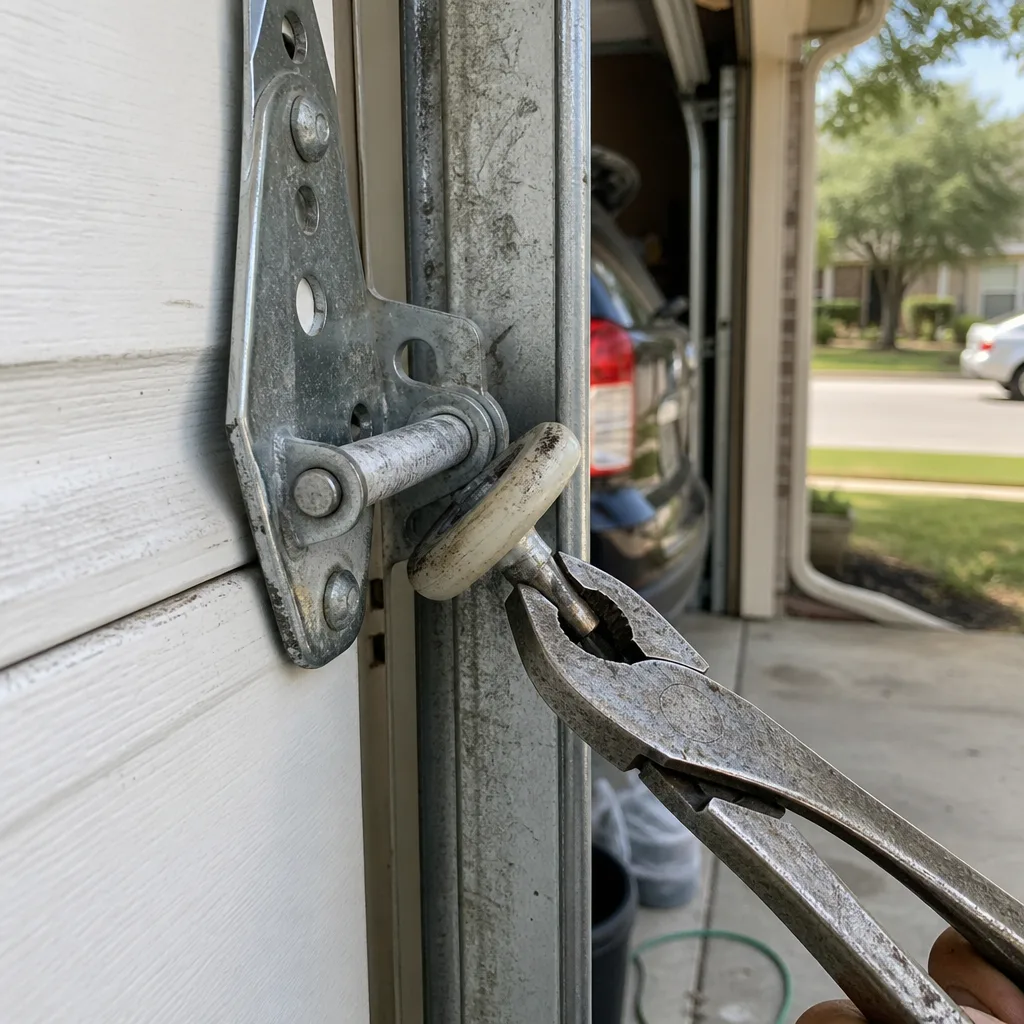
There’s a pattern we’ve observed across Carrollton that doesn’t show up in generic garage door maintenance guides: door orientation predicts paint failure. South- and west-facing doors in our climate fail faster than north- and east-facing doors, and they fail in a specific way.
The mechanism is simple. A west-facing door takes direct solar load from roughly noon to sunset, with peak intensity between 3 p.m. and 6 p.m. Surface temperatures on a dark-colored metal door can exceed 160°F. That sustained heat does two things to steel doors:
- Paint adhesion fails at the panel edges. The thermal expansion of steel under direct sun is enough to micro-crack the paint film where panels meet. Moisture enters through those micro-cracks, and the paint begins lifting in sheets within two to three years. We routinely see Clopay and Amarr steel doors with this pattern on the west side of Carrollton homes.
- Panel delamination accelerates on certain steel gauges. Single-layer steel doors with no insulation backing flex more under thermal load, and the flexing separates the panel skin from its frame. By the time delamination is visible as a wave in the panel, the structural integrity is already compromised.
What to do before June:
- Inspect for hairline paint cracks, especially at panel edges. A $40 touch-up kit now prevents a $300 panel refinish in two years. The critical zone is the top edge of each panel, where rainwater accumulates then gets baked by afternoon sun.
- Clean and treat the weatherstripping. The side and top seals on south- and west-facing doors degrade from UV exposure faster than bottom seals degrade from slab heat. A silicone-based rubber protectant applied in May extends their life by one to two seasons.
- Consider a heat-reflective coating if you have a dark door and no trees. A quality heat-reflective exterior coating on a dark steel door can meaningfully lower surface temperature and slow panel degradation. It won’t make a dark door white, but it reduces peak temperature by enough to matter.
And one counterintuitive summer point: the door itself expands. A door that closes fine at 7 a.m. may bind slightly at 3 p.m. simply because the steel has expanded into the opening. If you notice the door scraping mid-afternoon but fine in the morning, note it. The fix is usually a small track adjustment, not a new door. If it’s left alone, the scrape polishes a flat spot into the roller over one summer, and then you’re replacing rollers and hinges. For door replacement decisions of any kind, see Garage Door Installation in Carrollton for how we scope and quote.
Month-by-Month Lubrication Schedule for Carrollton’s Temperature Range
Carrollton’s 15°F to 105°F range means no single lubricant is right year-round. Silicone and lithium behave differently at temperature extremes, and using the wrong product in the wrong season is almost as bad as not lubricating at all.
Here’s how the two main types behave in our climate:
- Silicone lubricant retains viscosity down to about -20°F and remains stable up to 400°F. It’s the right choice for rollers, hinges, and springs from November through March. It doesn’t attract dust, which matters in drier months.
- White lithium grease is heavier and better at staying on metal surfaces, but it thickens noticeably below 40°F and can make a door sluggish on January mornings. It’s the right choice for track surfaces and lock mechanisms from April through October, when you want staying power and aren’t fighting cold-temperature viscosity.
What to lubricate by month:
- January: silicone on rollers and hinges. Light application only. If the door is sluggish below 30°F, do not add more lubricant; check balance and track alignment instead.
- February: still silicone. Wipe off any ice accumulation before applying. Lubricating a frozen door is pointless.
- March: first lithium application of the year on the operator rail. Clean the rail with a dry cloth first.
- April: lithium on lock mechanisms and slide bolts as part of spring maintenance.
- May: lithium on the top and side weatherstrip contact points. Silicone protectant on the seals themselves.
- June: light silicone on all moving hinge and roller points. Heat accelerates lubricant breakdown, so reapplication matters more now.
- July: nothing. July is for inspection only. If something is squeaking in July, the problem is mechanical, not lubrication.
- August: lithium on the operator rail again. Heat has thinned the previous application.
- September: start transitioning. Clean all old lubricant from rollers and hinges, then apply silicone as the fall base coat.
- October: silicone on everything that moves, including the spring. This is the peak maintenance month.
- November: silicone only. Verify that no lithium remains on components that will be exposed to freezing temperatures.
- December: light silicone on rollers only. Anything else is over-lubrication and will attract winter dust.
One universal rule: lubricant is not a repair. If a roller is worn, no amount of silicone fixes it. If a spring has a visible gap, grease doesn’t close the gap. In our experience, Carrollton homeowners as a group tend to over-lubricate and under-inspect. The inspection finds problems; the lubricant just keeps the good parts moving.
A Garage Door Component Checklist for Every Season
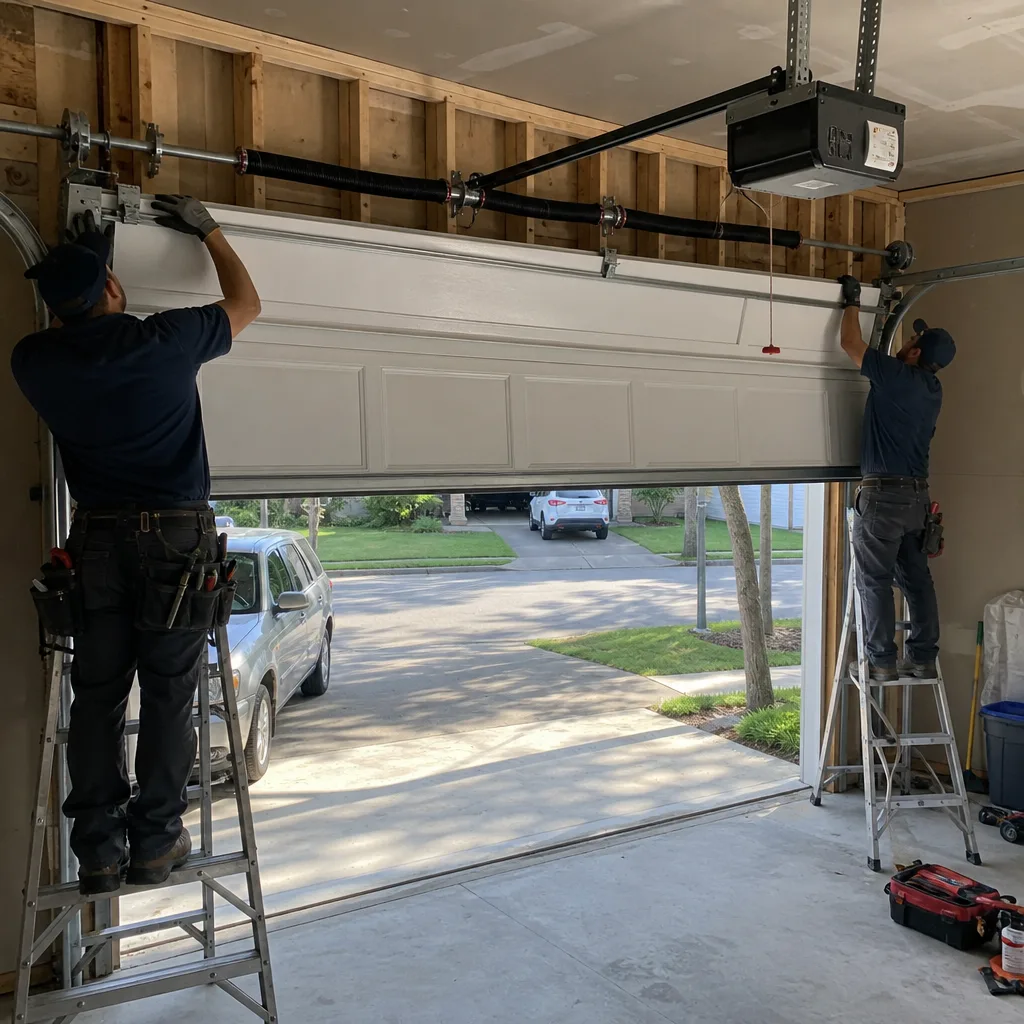
Here’s a reference list for what to check, what to look for, and what it means for your door in Carrollton.
- Torsion springs: look for gaps between coils, rust spots, and the door’s balance behavior. Springs in Carrollton last fewer years if the garage is non-climate-controlled, because heat accelerates creep. Typical replacement is $180 to $340 for two springs installed.
- Extension springs and cables: check for visible stretch, rust, and even cable tension on both sides. These are more common on pre-2000 Carrollton homes.
- Bottom seal: look for flattening, cracking, and daylight. The biggest enemy is slab heat in summer and freezing in winter. Replacement is $40 to $90 for the seal, $90 to $180 installed depending on door width.
- Rollers: look for flat spots, wobble, and accumulated debris. Nylon rollers are quieter and better suited to our heat cycle than steel. A full set is $60 to $140 installed.
- Hinges: check for looseness and cracking. A cracked hinge is a $20 part that destroys a $300 panel if ignored.
- Opener: test auto-reverse every season, listen for new noise, and note any intermittent behavior. Logic board issues in our climate are usually heat-related and begin as intermittency.
- Weatherstripping (sides and top): UV damage on south- and west-facing doors is the dominant failure pattern. Check for brittleness each May.
- Track alignment: check the gap between door edge and track at three heights. Uneven gaps at different heights indicate drift, which is usually shim-correctable.
Per The Haven Standard, Clause 4, the technician photographs the failed component before quoting a replacement. If you’re having us inspect, you’ll receive that photo record regardless of whether you approve the work.
Common Mistakes to Avoid
- Doing the spring inspection in December for the first time. By December, the heat damage from a Carrollton summer has already compounded through fall. The correct first inspection is in September or October, when corrections still matter for winter.
- Using WD-40 on door hardware. WD-40 is a solvent, not a lubricant. It strips existing lubricant and leaves moving parts drier than before. Use silicone or lithium, period.
- Ignoring intermittent opener behavior. An opener that refuses to respond in the afternoon but works in the morning is exhibiting heat-degraded logic board behavior. Intermittency in Carrollton is not random; it’s thermal.
- Lubricating a noisy door instead of inspecting it. A door that’s suddenly louder usually has a mechanical problem that lubricant temporarily masks. The noise is the diagnostic; don’t erase it, investigate it.
- Painting over panel-edge cracks without addressing the substrate. Homeowners sometimes paint over heat-caused paint cracks on west-facing doors, which seals moisture in and accelerates delamination. The correct fix is light sanding, an appropriate primer for the panel material, then touch-up paint.
- Opening the door repeatedly during an ice event to test it. Each forced open under ice load adds cumulative damage to the operator, seal, and cables. If the door won’t open on its own, once is enough to know.
- Assuming a 10-year-old door ends its useful life because one component failed. Most component failures on Carrollton doors are repairable without door replacement. A written scope from a technician who photographs the failure will tell you the difference.
When to Call a Professional
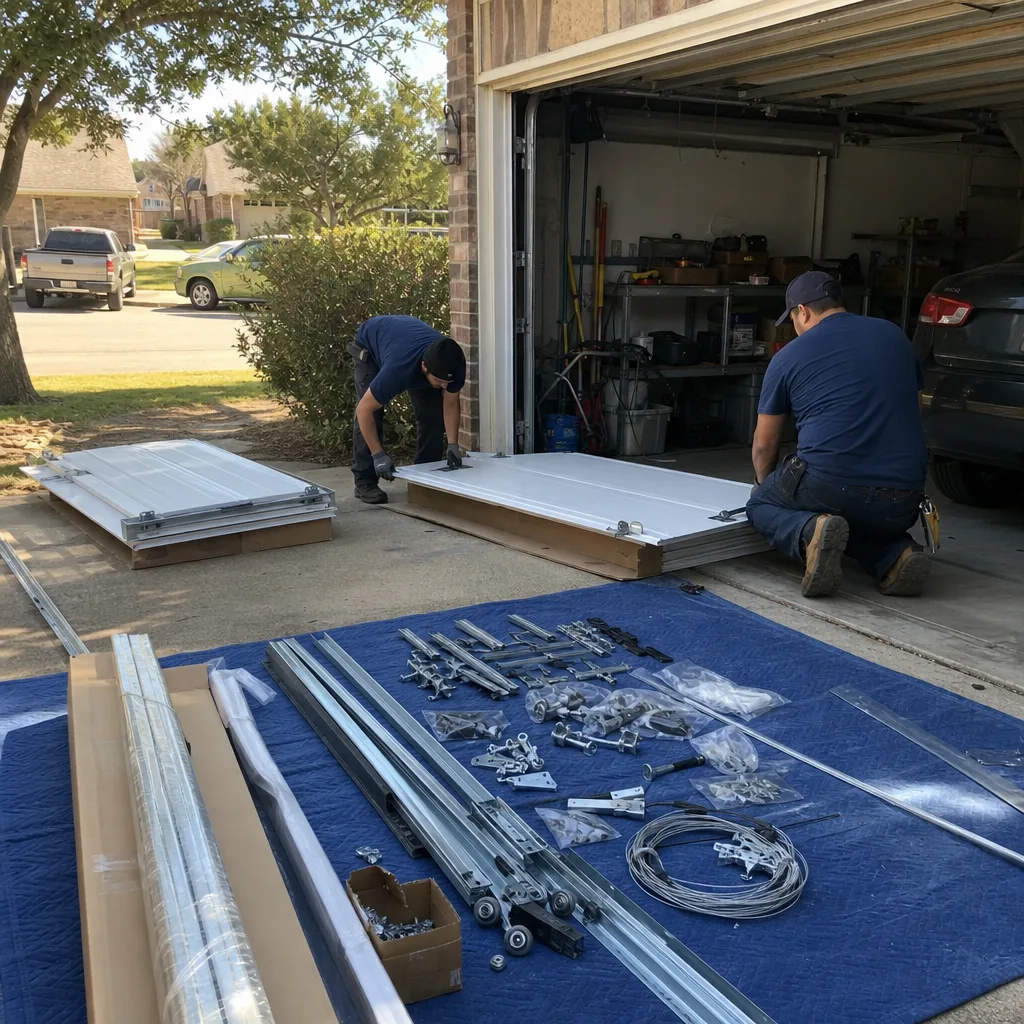
Some situations warrant a technician before further DIY attention. A torsion spring with a visible gap, a snapped spring, or a cable that’s off its drum all involve stored tension that can cause serious injury if mishandled. If the door is binding mid-afternoon but fine in the morning, have it evaluated before the heat cycle worsens the alignment. And any door that’s sagging, leaving daylight under one corner, or making new grinding noises is past the point of a checklist fix. Servo Garage Doors Carrollton offers free estimates in Carrollton, call (817) 527-9864, and every visit includes a photographed record of what was found and what was done.
Frequently Asked Questions
Twice a year is the minimum in Carrollton: once in late September or October for the pre-winter correction window, and once in March or April to address freeze-thaw effects on the slab and alignment. The fall visit matters more, because it’s when heat damage from summer gets corrected before cold weather compounds it. Call (817) 527-9864 to schedule.
Sustained garage temperatures above 120°F, common in non-climate-controlled Carrollton garages from June through August, degrade bottom seals, torsion springs, and operator logic boards. At the other extreme, ice events that bring surface temperatures below 20°F cause seal-to-slab bonding and frozen lock failures. Both extremes are manageable; the neglected middle is what causes most failures.
A seasonal inspection and basic tune-up in Carrollton typically runs $80 to $150, with parts priced separately and quoted in writing before any work begins. The common items that get added are bottom seals ($40 to $90), rollers ($60 to $140 a set), and spring replacement ($180 to $340 for a pair). Call (817) 527-9864 for an exact quoted price, per The Haven Standard, Clause 1: a written price before any work starts.
Afternoon-only noise usually means a component is expanding in the heat and binding or scraping. Common causes are track alignment drift, a worn roller that only binds when the steel door expands, or a door that’s marginally out of balance and only shows it at peak temperature. It’s a thermal pattern we see throughout Carrollton’s summer months, and it should be inspected before the wear becomes permanent.
Yes, for certain items: cleaning, visual inspection, applying lubricant, and manual balance testing are all homeowner-appropriate. Torsion spring adjustment, cable work, and track realignment involve stored tension or precise adjustment and should be handled by a professional. Not sure which path to take? Read our DIY vs Professional Garage Door: The Carrollton Homeowner’s Decision Guide. A dangerous repair done wrong costs more than a professional repair done once.
Yes. We provide seasonal service, repair, opener work, and installation across Carrollton, all under The Haven Standard: a flat written price before work starts, a documented photo record after the job, and the 365-Day Done Right Promise. Call (817) 527-9864.
The Bottom Line
Carrollton’s seasonal garage door calendar is not four equal quarters. It’s one high-stakes window, late September through early November, when you correct what summer heat did before the freeze reveals it, and three other seasons of watching for the consequences of that window. Fix the bottom seal in October, inspect the slab in March, prepare for solar load in May, and lubricate with the right product for the month. For more guides & resources on keeping your door running year-round, visit our blog. The door gives you signals. The work is noticing them early enough to act while the repair is still cheap and the failure is still a choice.
Written by Marcus Deller, Owner at Servo Garage Doors Carrollton, serving Carrollton since 2015.