
Last updated September 20, 2026
Full 25-point door and opener safety check with every visit - springs, cables, rollers, tracks, and your LiftMaster or Chamberlain opener included
You get a price before we start. It does not change when the truck arrives.
LiftMaster openers
 Before
 After
After Before
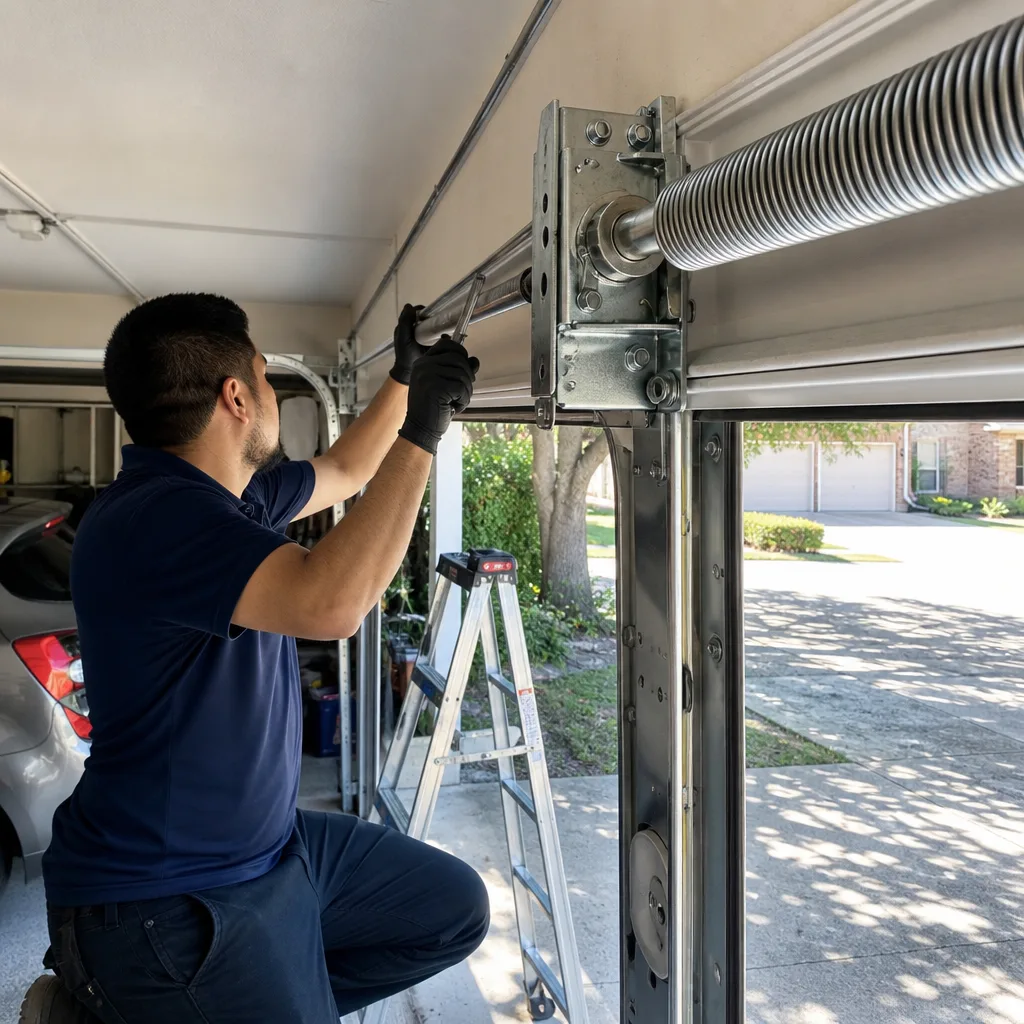 After
After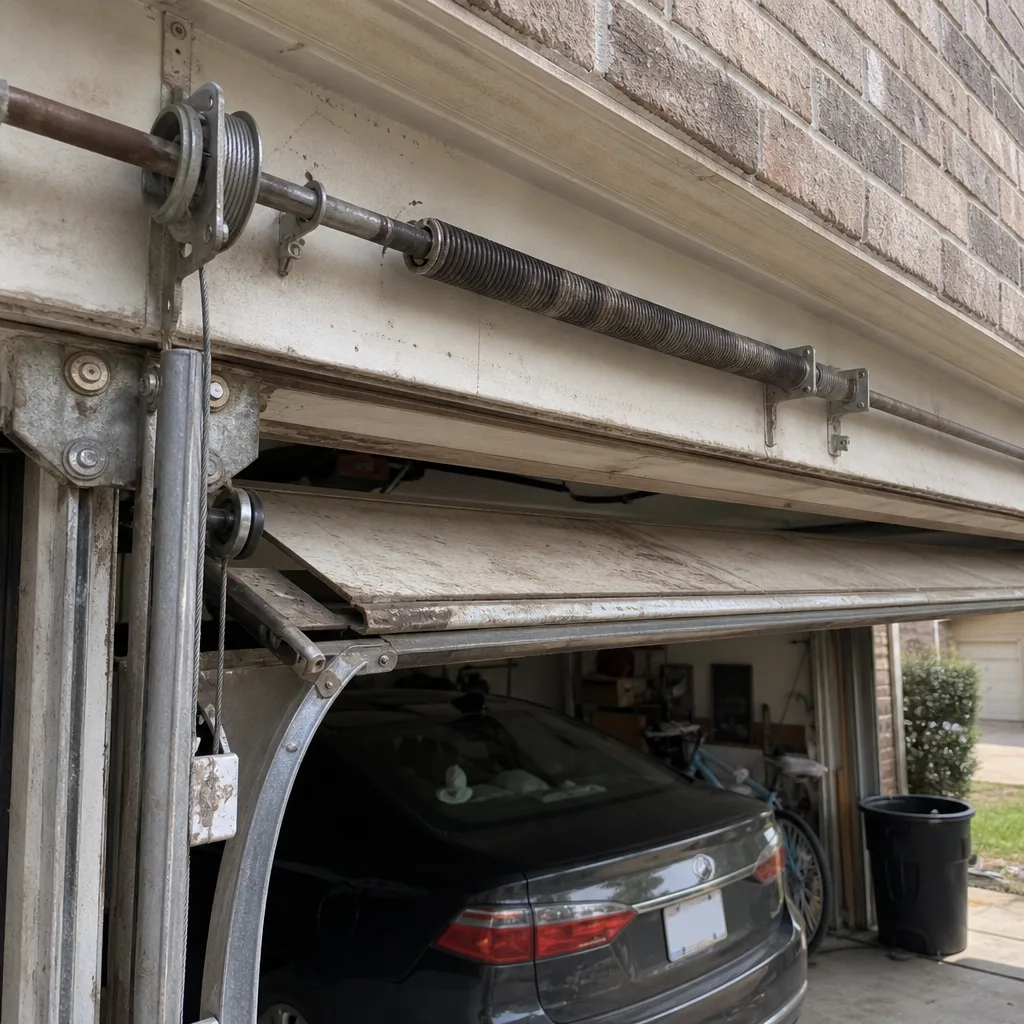 Before
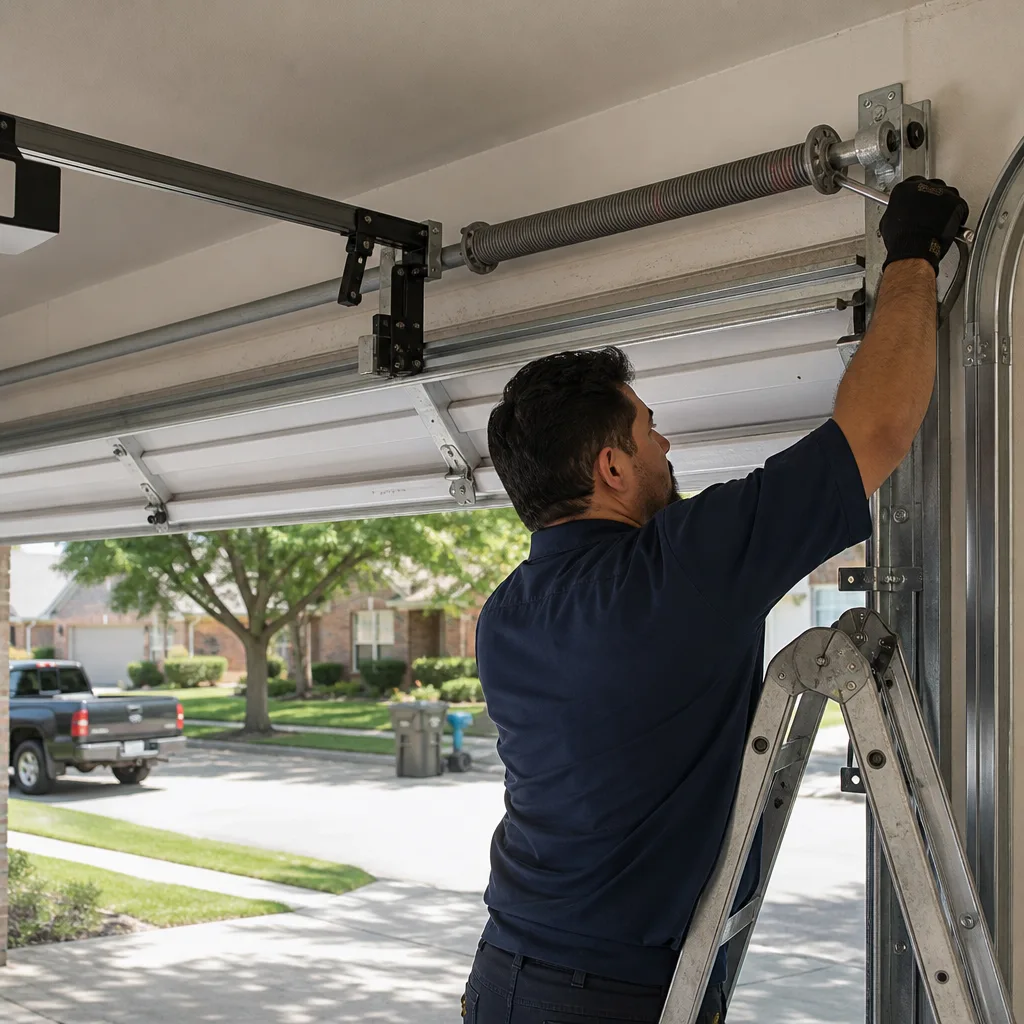 After
AfterGarage Door Permits, Codes & Inspections in TX: What You Need to Know
A garage door replacement in Carrollton that skips the permitting process doesn’t just risk a code violation. It creates what residential disclosure forms call a material fact: an alteration to the home’s exterior envelope that was never reviewed by the city, never entered into the property record, and never questioned until a buyer’s inspector or an insurance adjuster finds it four years later. By then, the door that took two hours to install can take six weeks and a few thousand dollars to retroactively legalize. This guide covers precisely when Carrollton requires a permit, which parts of the Texas building code actually govern your door, how HOAs operate as a separate approval layer, and what an unpermitted door does to an insurance claim. For Garage Door Warning Signs: A Carrollton Homeowner’s Reference Guide, see our companion resource. We’ve done this work in Carrollton since 2015, and we’ll give you the documentation trail, not just the door.
Quick Answer
For most Carrollton homeowners, a like-for-like garage door replacement, where the new door fits the existing opening and no structural changes are made, does not require a city permit. Structural opening modifications, such as widening the rough opening, relocating the door, installing a new header, or converting a single bay to a double bay, require a permit and inspection under Carrollton’s adoption of the International Residential Code with local amendments. If you live in an HOA-governed community like Mustang Park or Prestonwood, you likely need architectural approval from the HOA regardless of what the city says. Both systems matter, and they do not talk to each other.
Table of Contents
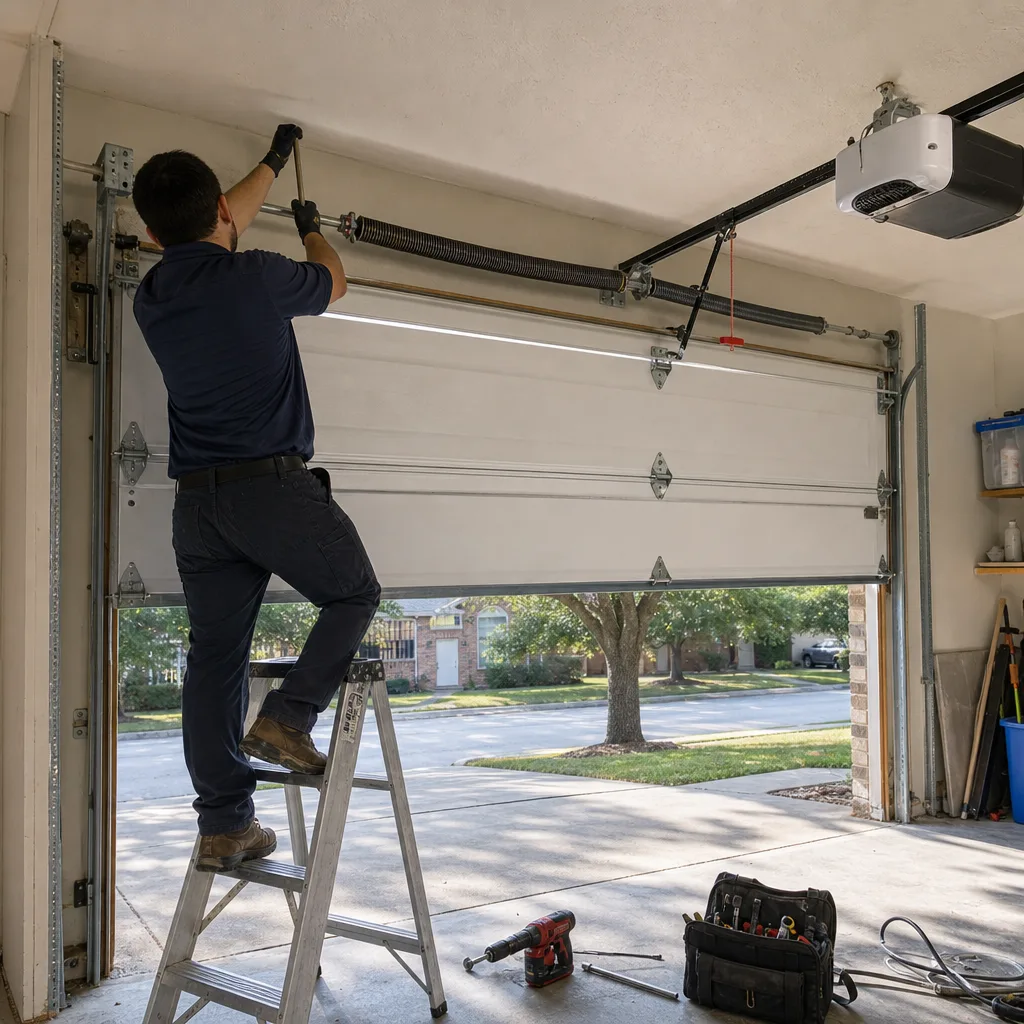
- Texas State Law vs. Carrollton’s Local Code: Who Actually Governs Your Door
- When Carrollton Requires a Permit for Garage Door Work
- Wind Load Compliance: What North Texas Actually Requires vs. What Manufacturers Advertise
- The HOA Layer: Architectural Review as a Parallel Permit System
- Unpermitted Doors and Homeowner’s Insurance: What the Adjuster Sees
- New Construction Rough Opening Inspections: What Carrollton Inspectors Check
- Documentation to Keep: The Paper Trail That Protects You
- Common Mistakes to Avoid
- When to Call a Professional
- Frequently Asked Questions
- The Bottom Line
BeforeAfterTexas State Law vs. Carrollton’s Local Code: Who Actually Governs Your Door
Texas is a home-rule state when it comes to building codes. That means the state sets minimum standards through the Texas Administrative Code, specifically via the Texas Industrialized Housing and Buildings program and the TDI’s windstorm standards, but the actual enforcement happens at the municipal level. The State of Texas does not issue garage door permits. Your city does, and only if your city has adopted a building code that applies to one- and two-family residential structures.
Carrollton operates under an adopted version of the International Residential Code, the same IRC that governs most of the Dallas-Fort Worth metroplex. The relevant section for garage doors is IRC Section R609, which addresses garage doors and skylights. In the base IRC, Section R609 requires garage doors to be tested and labeled, to resist wind pressure per the design wind speed for the location, and to be installed per the manufacturer’s instructions. Carrollton’s adoption of the IRC includes local amendments, which is where the nuance lives for a homeowner trying to figure out if their project needs paperwork.
The practical reading: Carrollton enforces R609 as a code compliance matter, not as a permit trigger. Code compliance means the door you install must meet the wind load rating and labeling requirements for North Dallas County. A permit trigger is a separate question: does the activity of installing or replacing that door require you to pull a permit first? For most replacements, the answer in Carrollton is no. For structural work, the answer is always yes. Understanding which question you’re answering is the difference between a Saturday project and a city-flagged nonconforming modification.
Marcus Deller, owner at Servo Garage Doors Carrollton, puts it plainly: “Half the calls we get about permits are from homeowners who already installed a door and got a letter from a title company or an HOA. The city was never the problem. The documentation gap was.” That gap is almost always preventable.
When Carrollton Requires a Permit for Garage Door Work
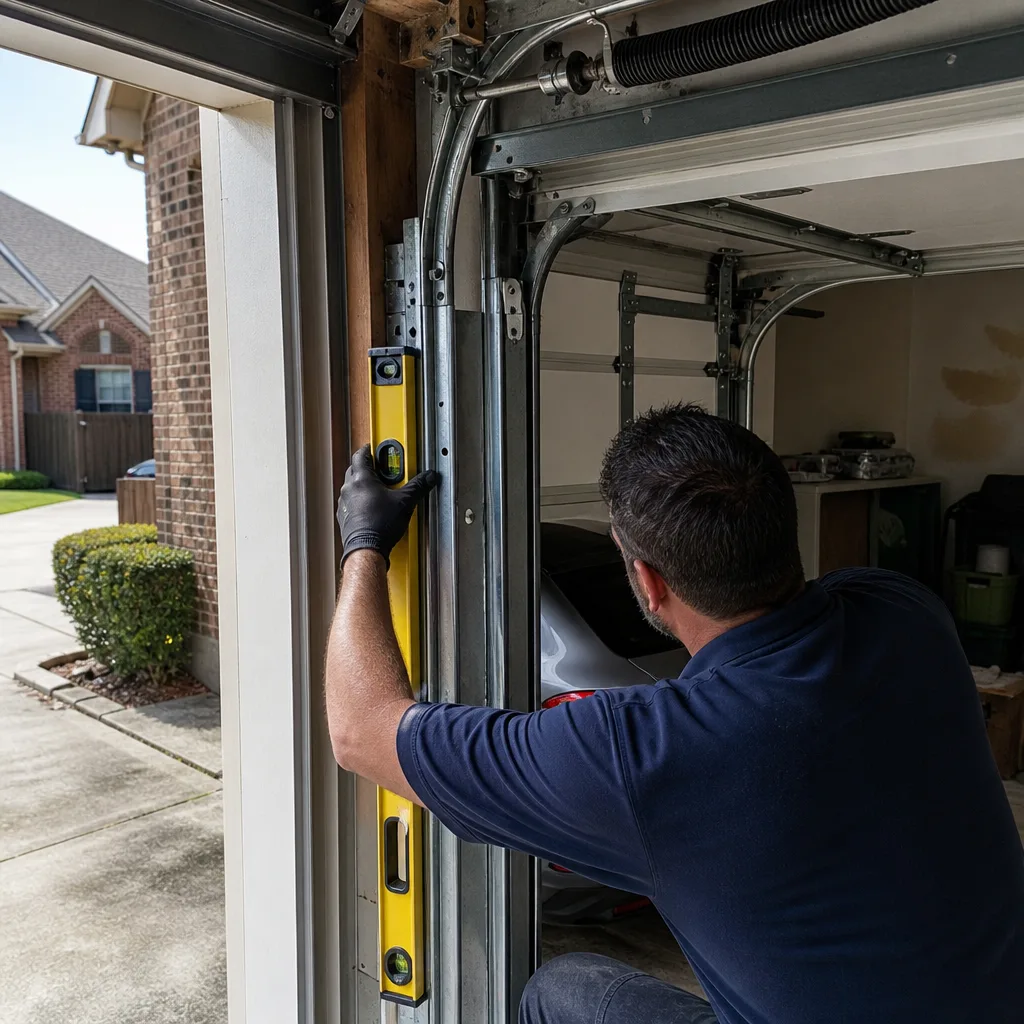
Here’s the line drawn by Carrollton’s Development Services, in plain language:
- Like-for-like panel replacement: No permit. If you’re replacing a sectional garage door with a new sectional garage door that fits the existing rough opening, uses the same track configuration, and does not alter any structural framing, the city does not require a permit. This covers almost all common replacement projects.
- Replacing a door with a different style that shares the same opening: No permit, but code compliance still applies. A roll-up door replacing a sectional, for example, may require different wind bracing, but if the opening is unchanged, no permit is triggered.
- Widening the rough opening: Permit required. Cutting into the wall to make a single-car opening into a two-car opening means modifying or replacing the header, and that is structural work. Carrollton treats this as an alteration requiring plan review and inspection.
- Converting a wall opening into a new garage door location: Permit required, always. This is new construction of the building envelope, not a replacement.
- Installing or altering a header beam above the garage door: Permit required. The header carries wall and roof load across the opening. Any work touching it falls under the structural provisions of the adopted code.
- Adding a door to an existing carport or converting a carport to a garage: Permit required. This changes the use classification of the space and triggers a full set of building, electrical, and possibly mechanical reviews.
The line is the rough opening. If your project touches the framing, sheathing, or foundation attachment points around the opening, Carrollton wants to see plans and an inspection. If your project only touches the door, track, springs, and operator equipment mounted inside that opening, it’s treated as finish work, which is exempt from the residential permit requirement under the current code adoption.
One point that confuses many homeowners: Garage Door Installation in Carrollton projects often involve removing an old door that was installed under a different code cycle. The city does not grandfather old non-compliant doors indefinitely. When you replace, the new door must comply with current wind load and labeling requirements, even if you aren’t pulling a permit. An installer who doesn’t know the current design wind speed for your specific Carrollton address can sell you a door that meets the manufacturer’s generic rating but not TDI’s territory-specific requirement.
Wind Load Compliance: What North Texas Actually Requires vs. What Manufacturers Advertise
Here’s a fact most Carrollton homeowners never hear from a big-box garage door retailer: the wind load rating printed on a garage door’s spec sheet is not an automatic pass for your address. The Texas Department of Insurance maintains windstorm territory maps that divide the state into designated catastrophe areas, inland zones, and nondesignated areas. Most of Dallas County, including Carrollton, sits in a nondesignated area for TDI windstorm insurance purposes, which sounds like a free pass. It isn’t.
The IRC, as adopted by Carrollton, assigns a design wind speed based on a detailed wind speed map in Chapter 3. For North Texas, that design wind speed typically lands around 115 miles per hour for a Risk Category II structure, with some microclimates and open-exposure parcels rated higher or lower. A garage door listed as “wind load rated” by a manufacturer might carry a rating of 90 mph, or 100 mph, or it might carry a Miami-Dade NOA for 150 mph. The relevant question is whether the door’s testing lab reports list a design pressure rating that meets or exceeds the requirement for your specific address in Carrollton, not whether the door has a wind load sticker.
Torsion spring systems are part of this conversation, too. A door’s wind resistance rating assumes the spring system is balanced and tensioned correctly. A spring that’s over-wound or under-wound changes the door’s behavior under negative wind pressure, which is exactly the condition that pulls doors out of their tracks during a straight-line wind event. We see this in neighborhoods across Carrollton: the door has a properly rated panel, but the spring measured at the wrong IPPT (inch-pounds per turn), and the entire wind rating is theoretical.
What the manufacturer advertises as a wind rating is a controlled-laboratory result, often from a test conducted on a specific size door at a specific aspect ratio with a specific track configuration. What Carrollton requires is a door that meets the code’s design pressure for the structure’s risk category and exposure. These are not the same number, and the difference shows up after the first severe thunderstorm with straight-line winds, which North Texas gets several times per year.
The HOA Layer: Architectural Review as a Parallel Permit System
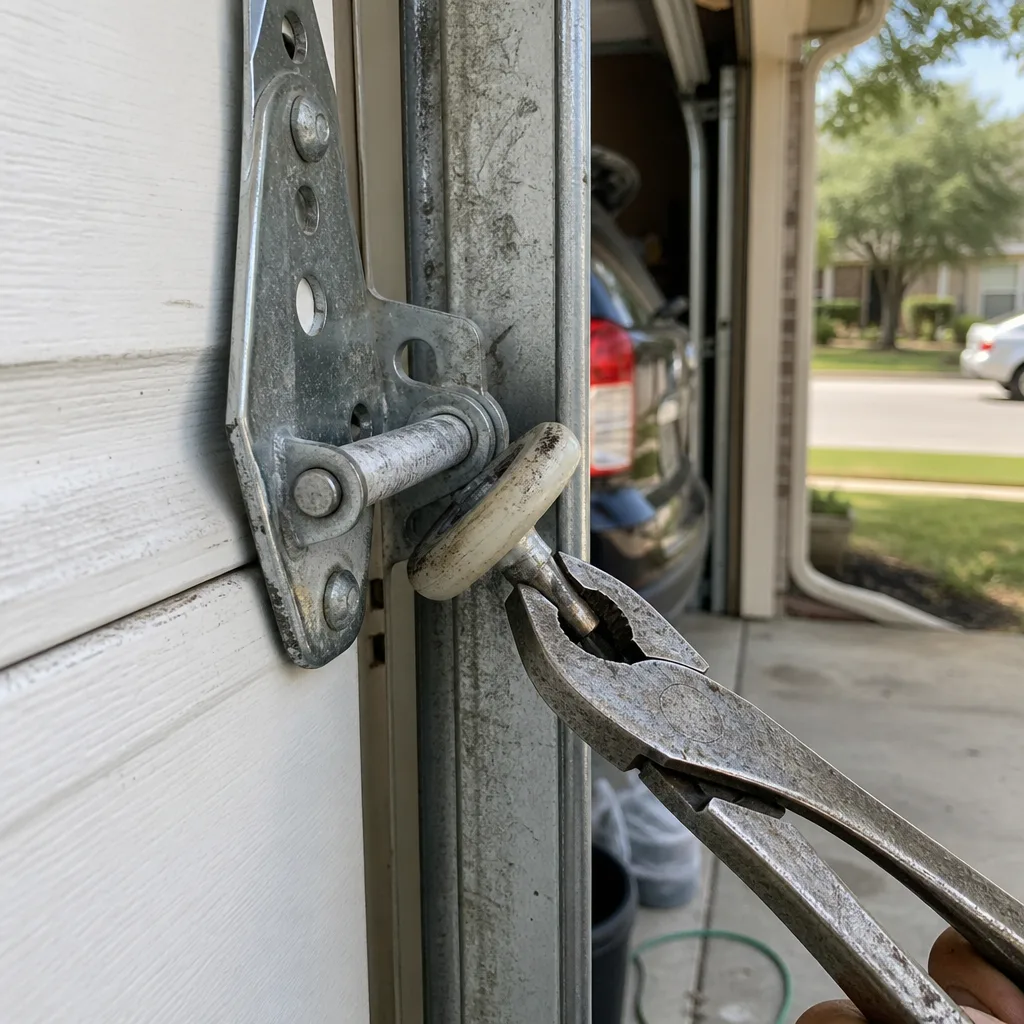
Carrollton has one of the highest HOA participation rates in the North Dallas suburbs. Communities like Mustang Park, Prestonwood, Indian Creek, and the estates along Hebron Parkway operate under deed restrictions filed with the Denton or Dallas County clerk, and those restrictions survive the sale of the home, attaching to the property rather than the owner. What that means for a garage door project is straightforward: the HOA’s Architectural Control Committee is a separate approval body, it does not care what the city of Carrollton says, and it can fine you even when your city permit is clean.
Typical HOA design standards we encounter in Carrollton communities cover:
- Door material and color palette: Many HOAs restrict door colors to a pre-approved set, often earth tones or muted neutrals, and may require repainting to match existing trim if a new door arrives in a factory white.
- Panel style continuity: A flush-panel door in a community that mandates raised-panel carriage-style doors can trigger an architectural violation, regardless of whether the city issued a permit.
- Window inserts and hardware: Decorative windows, wrought-iron hinges, and even the finish on the exterior handle can fall under design review.
- Replacement timing: Some HOAs require submission of a design review request 10 to 30 days before work begins, with fees ranging from $25 to $150 depending on the community.
The enforcement mechanism is the deed restriction. If you replace a garage door without HOA approval and then sell, the buyer’s title search typically surfaces any pending architectural violations, or the HOA’s resale certificate does. The sale can be delayed, the HOA can require removal of the new door, or the seller can be forced to escrow funds to correct the violation. This is not a code issue. It’s a contractual issue attached to the land.
Our team at Servo has handled replacement doors on homes in Mustang Park where the HOA required the homeowner to submit two color samples and a panel profile drawing before we even ordered the door. The city never saw the file. The HOA approved it, and that approval is what kept the sale on schedule when the owner moved two years later.
Unpermitted Doors and Homeowner’s Insurance: What the Adjuster Sees
The insurance conversation is where permit questions stop being theoretical. Here’s the sequence that plays out in Carrollton more often than anyone admits:
- A storm damages a garage door. The homeowner files a claim under the “sudden and accidental” damage provision of their HO-3 policy.
- The adjuster inspects the damage and, as part of standard protocol, checks the building file and the visible characteristics of the door against the home’s original construction records or prior claims history.
- The door was replaced two years earlier without a permit, and it does not match the door listed in the original builder’s specs or the most recent prior claim photos.
- The carrier asks for documentation: the installation invoice, the permit, the inspection report, the wind load documentation. The homeowner has none of it.
- The claim is denied or reduced, not because the door failed, but because the insured cannot document that the door was installed to code, which means the carrier cannot verify the property was maintained in an insurable condition.
Does this happen on every claim? No. Some adjusters process the claim without ever checking. But the moment a claim involves a suspicious failure pattern, like a door that lifts out of its track in a 60 mph wind event when the surrounding homes suffered no damage, the documentation request starts. And without a permit or a company invoice showing compliance with the current code, the homeowner is left explaining why the door they installed three years ago doesn’t appear in any city record.
The clause that matters in most Texas homeowners policies is the Concealment or Fraud provision, which allows the carrier to deny a claim entirely if an insured intentionally conceals or misrepresents a material fact. An unpermitted structural alteration that the homeowner knew about but did not disclose can be framed as a concealment. A like-for-like replacement with no structural change is much harder to characterize that way, which is precisely why the permit line matters. The closer you are to the line, the cleaner your claim file stays.
This is why Servo Garage Doors Carrollton home documentation starts before we touch the door: a written scope with the door’s wind load rating, the spring IPPT, and the code cycle we’re installing to. If an adjuster ever needs to see the paper trail, it exists. That’s Clause 1 of The Haven Standard in practice.
New Construction Rough Opening Inspections: What Carrollton Inspectors Check
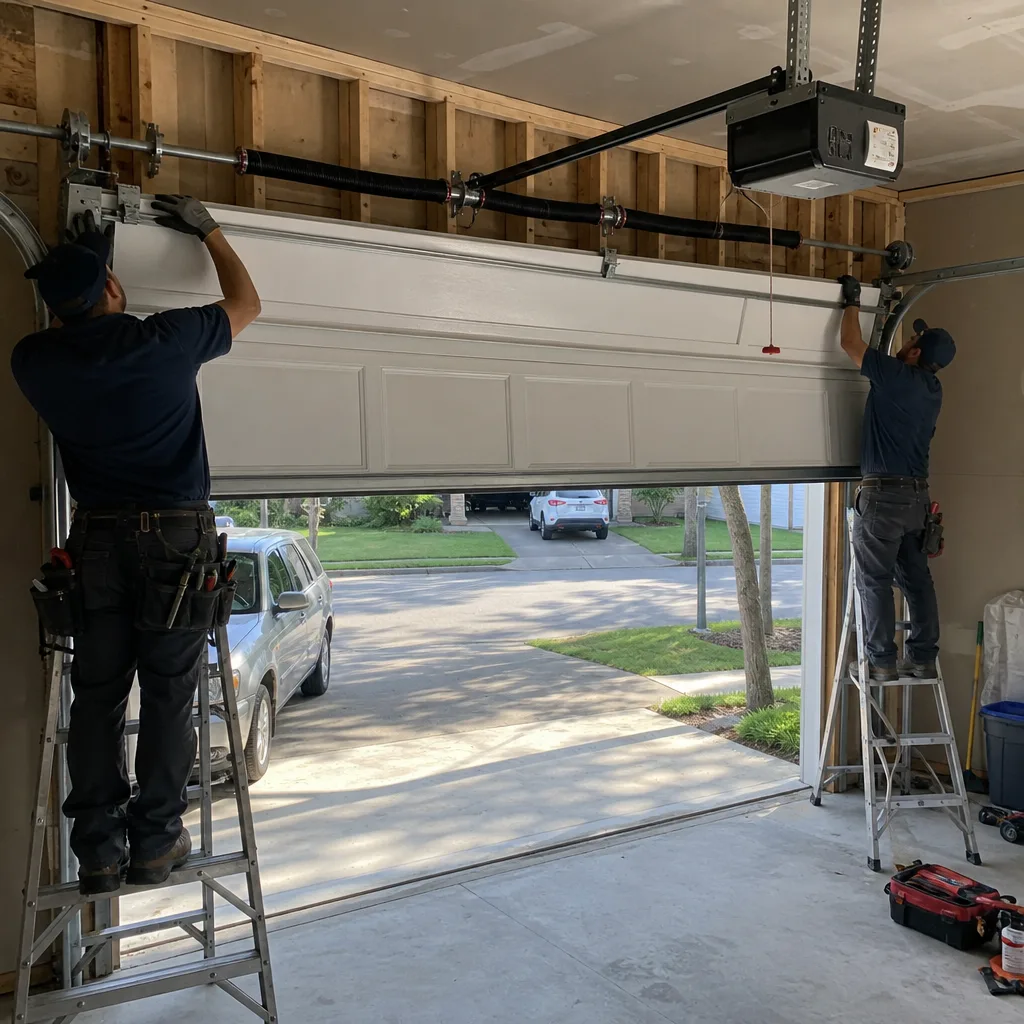
If you’re building a new home in Carrollton or adding a garage to an existing property, the garage door rough opening gets inspected as part of the structural framing inspection, usually at the same time as the wall and header inspections. Here’s what the inspector is looking at, and what commonly fails:
What the inspector checks:
- Header size and span: For a typical 9-foot-wide garage door opening, the header must be sized per the IRC’s span tables. An undersized header, usually a 2×10 where the table calls for a 2×12 or an LVL, is the most common failure.
- Header bearing: The header must bear on at least 1.5 inches of solid framing at each end. A header floating on a single jack stud or toenailed into the king stud will fail.
- King and jack stud configuration: For most single openings, one king stud and one jack stud per side is the minimum, but wider openings or two-story load conditions can require doubled or tripled studs.
- Rough opening dimensions: The opening should be sized to allow the door manufacturer’s specified side room and headroom. For standard radius track, that’s typically 3.75 inches of side clearance per side and 12 inches of headroom above the opening, but the manufacturer’s installation manual governs.
- Fastener spacing and sheathing: The inspector verifies that the wall sheathing overlaps the opening edges correctly and that the framing is nailed off per the approved plans.
What you should retain after the inspection passes:
- The signed inspection report or the inspection record number from Carrollton’s permitting portal.
- The approved plan set showing the garage door elevation and the specified door size.
- The garage door manufacturer’s installation manual and wind load documentation for the specific door installed.
- A photograph of the installed door showing the model number label. This is part of the documented photo record we include on every installation, because it ties the physical door to the paperwork.
A new construction rough opening inspection is a binary event. It passes or it fails. When it fails, the reasons are almost always in the framing, not in the door, because the door isn’t installed yet. The time to catch a header problem is during framing, not after the drywall is up and the door is in place, because retrofitting a header after the fact is a wall-dismantling project that no one budgets for.
Common Mistakes to Avoid
- Assuming the city permit is the only approval you need. If you live in Mustang Park, Prestonwood, or any deed-restricted Carrollton community, the HOA approval is a separate process with its own timeline. Skipping it can delay a future sale even if the city never knows the door was replaced.
- Buying a door based on the manufacturer’s advertised wind rating without checking the design wind speed for your specific Carrollton parcel. The sticker on the door and the code requirement for your address are two different numbers.
- Replacing a door with a different track configuration without considering the impact on the spring system. A low-headroom track kit changes the spring geometry and the door’s balance, and a misbalanced door fails early and voids the manufacturer’s warranty.
- Throwing away the installation documentation after a like-for-like replacement. Without the model number, wind rating, and installation record, you’re asking a future insurance adjuster or buyer’s inspector to take your word for it. That’s not documentation.
- Treating an unpermitted structural modification as a minor issue after closing escrow. In Carrollton, discovered structural work without a permit is a disclosure item, and the cure is often a full framing inspection on an open wall, which no one wants to pay for after the fact.
- Paying cash for a door with no written scope and no invoice. If the installer won’t write down what they’re doing, for what price, with what parts, you don’t have a record, you have a handshake. Handshakes don’t survive insurance claims.
- Installing a new door on an old spring system to save money. A new door is several hundred pounds moving on a spring system that’s been fatiguing for a decade. Reusing the old springs isn’t savings; it’s a deferred failure that usually lands on a holiday weekend.
When to Call a Professional
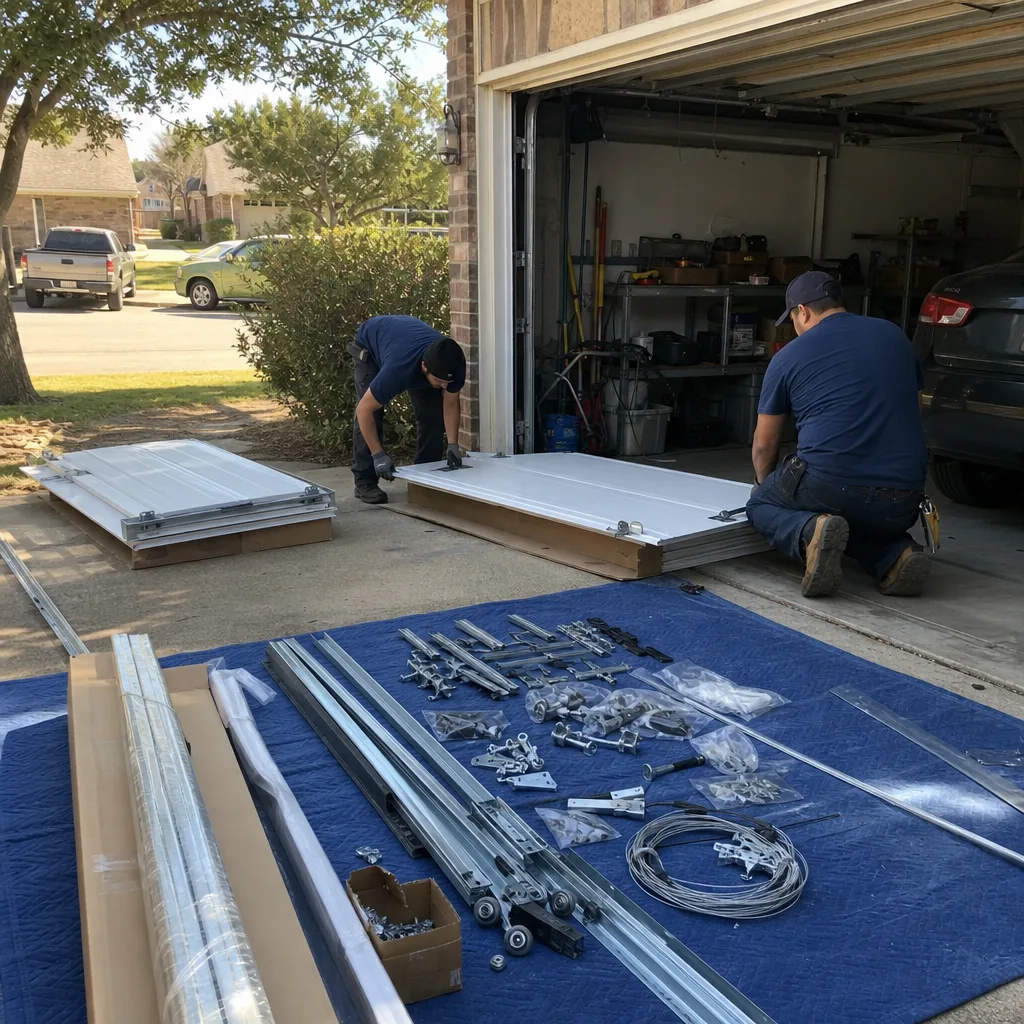
You should involve a licensed garage door company in Carrollton when your project involves anything beyond an exact like-for-like panel swap, and How to Hire a Garage Door Contractor in Carrollton: A Step-by-Step Guide can help you evaluate your options. That includes any structural opening change, any door where you need the wind load verified for your address, any HOA-governed property where you need documentation to support an architectural review application, and any scenario where a previous installation’s paperwork is missing and you need to establish a compliant record. Torsion springs carry enough tension to cause serious injury, and they should never be serviced by a homeowner following a video. We’ve photographed the failed part before quoting a replacement since our first day in business, and that photo is what makes the record real. Servo Garage Doors Carrollton offers free estimates in Carrollton, call (817) 527-9864.
Frequently Asked Questions
No, not for a like-for-like replacement that fits the existing rough opening and does not alter structural framing. The city only requires a permit if you’re modifying the opening, the header, or converting the space’s use.
For structural work requiring a permit, Carrollton’s fee schedule is based on the valuation of the work, typically starting in the $50 to $150 range for a simple residential alteration, but plan review and inspection fees can raise the total. Call (817) 527-9864 and we can tell you whether your specific project even requires one.
It can, if the replacement involved structural modifications and the buyer’s inspector flags it during the due diligence period. A like-for-like replacement with documentation rarely does, but structural work without a paper trail often forces a retroactive inspection before the title transfers.
Yes, under the adopted IRC Section R609, the door must be tested and labeled to resist the design wind pressure for your location. For most North Dallas County parcels, that’s based on a design wind speed near 115 mph, which not all off-the-shelf doors meet.
Yes, if your community’s deed restrictions require architectural review and you skip it. The HOA can issue fines, require the door’s removal, and in a resale situation, the violation may appear in the resale certificate and delay closing.
Your insurance claim may be denied or reduced if the carrier requests installation documentation and you can’t produce it. An undocumented door makes it harder for the insurer to verify compliance, which shifts the burden to you. Call (817) 527-9864 before you file and we’ll help you build the record.
In many cases, yes for a common-size like-for-like replacement. However, structural changes, HOA-required approvals, or doors outside standard size ranges need measurement, ordering, and scheduling. We’ll always confirm the written price and scope before any work begins, per Clause 1 of The Haven Standard.
The Bottom Line
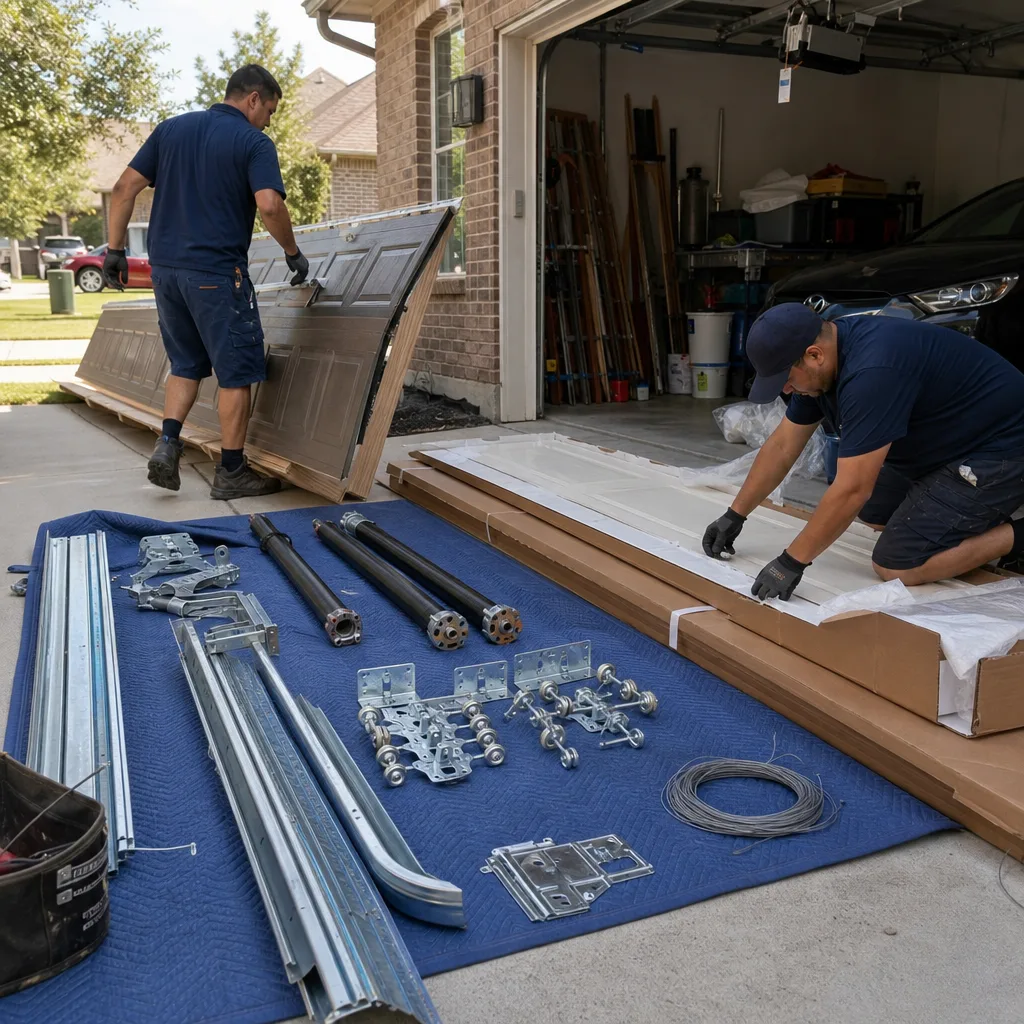
The garage door permit question in Carrollton is not one question. It’s three: what the city requires, what your HOA requires, and what your insurer will be able to verify later. Like-for-like replacements skip the city permit desk but still must meet code for wind load and labeling. Structural changes go through permits and inspections, period. HOA approvals operate independently, and they bite at sale time if they’re skipped. Documentation is the common thread, because a door with a paper trail is an asset, and a door without one is a liability you don’t discover until someone else asks for the file. Marcus Deller and the team at Servo Garage Doors Carrollton have served Carrollton since 2015, and we photograph the failed component before we quote a replacement because that photo is what makes the record real. For garage door work in Carrollton, call (817) 527-9864 and get a written price before any work starts.
Written by Marcus Deller, Owner at Servo Garage Doors Carrollton, serving Carrollton since 2015.