
Last updated September 20, 2026
Full 25-point door and opener safety check with every visit - springs, cables, rollers, tracks, and your LiftMaster or Chamberlain opener included
You get a price before we start. It does not change when the truck arrives.
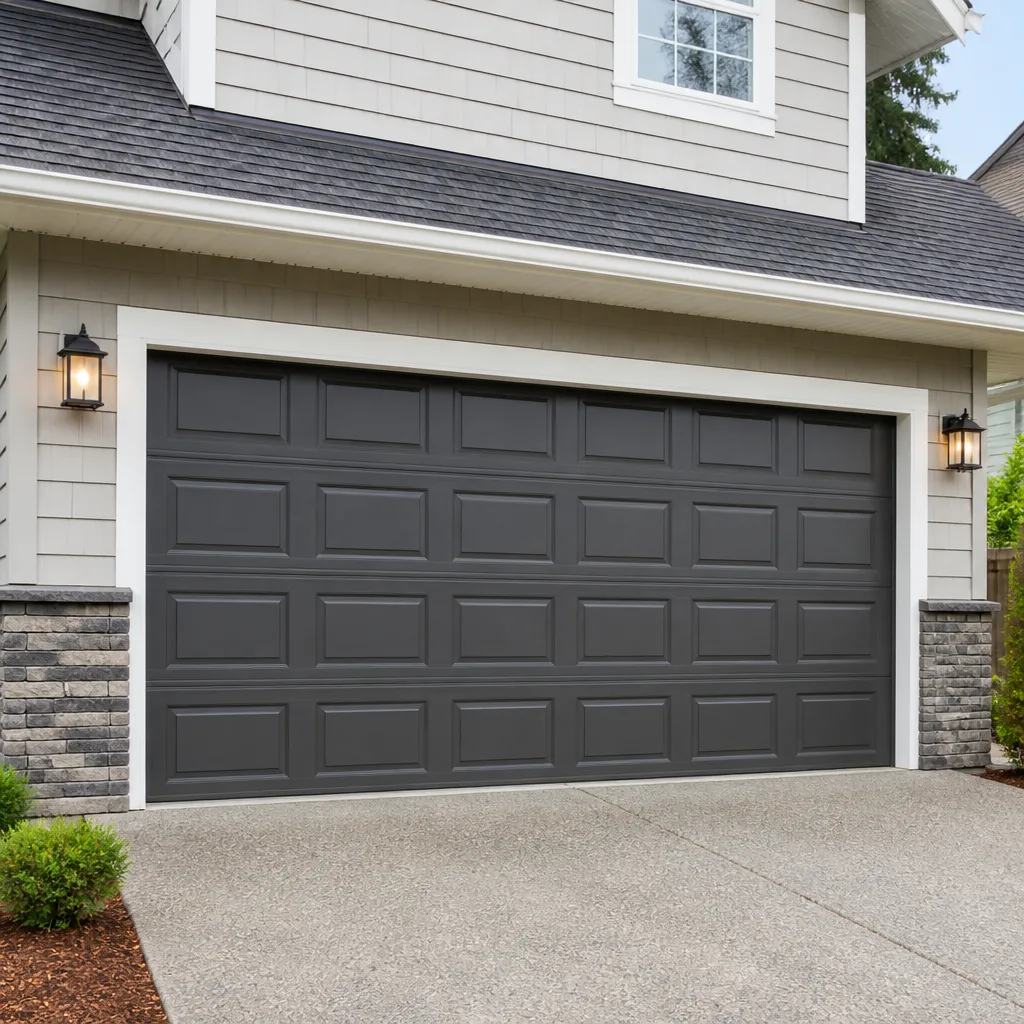
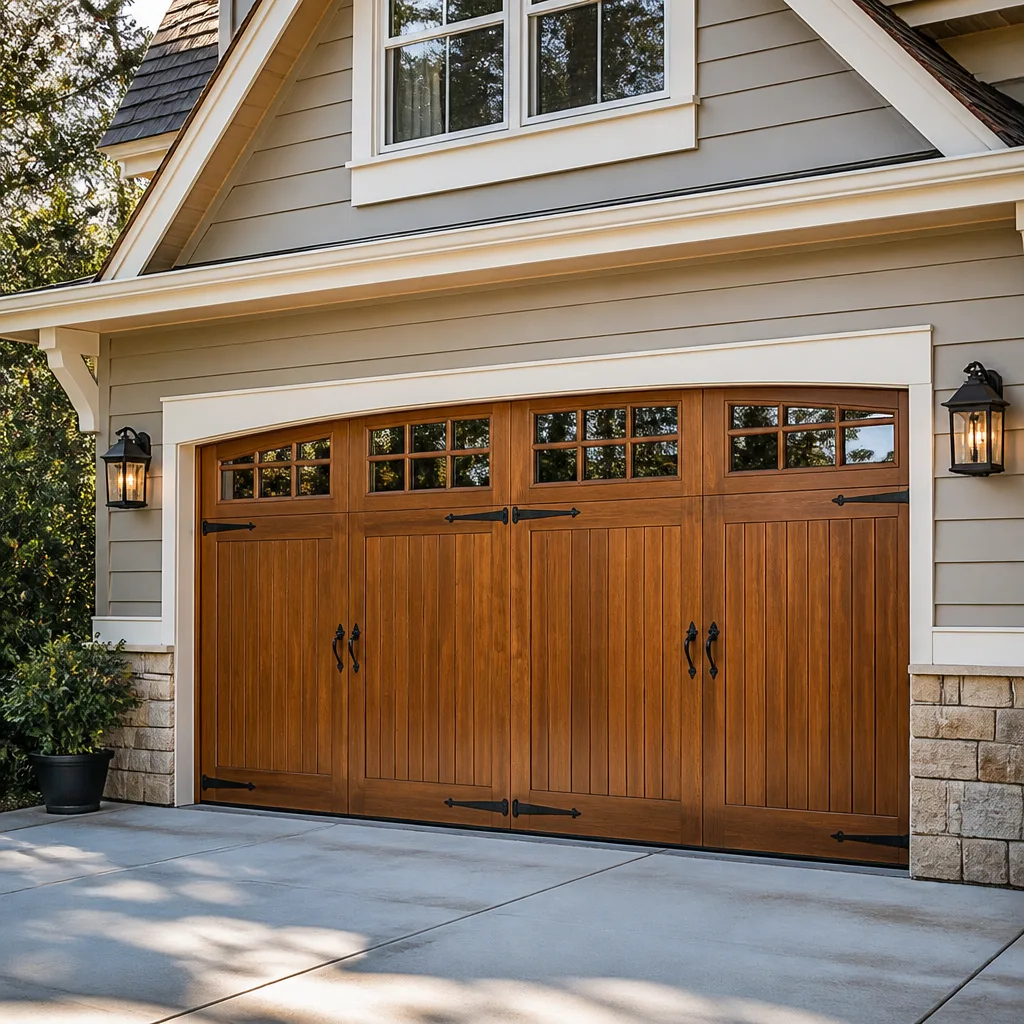
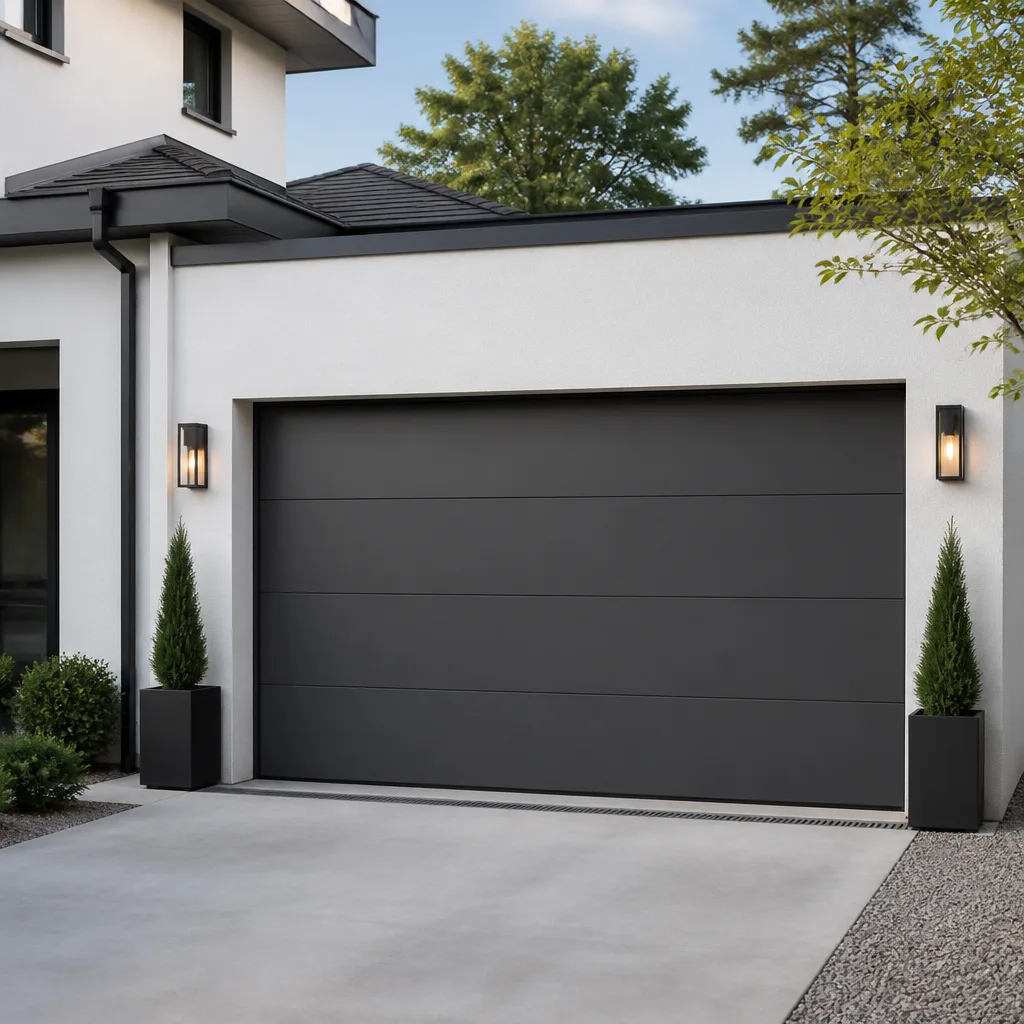
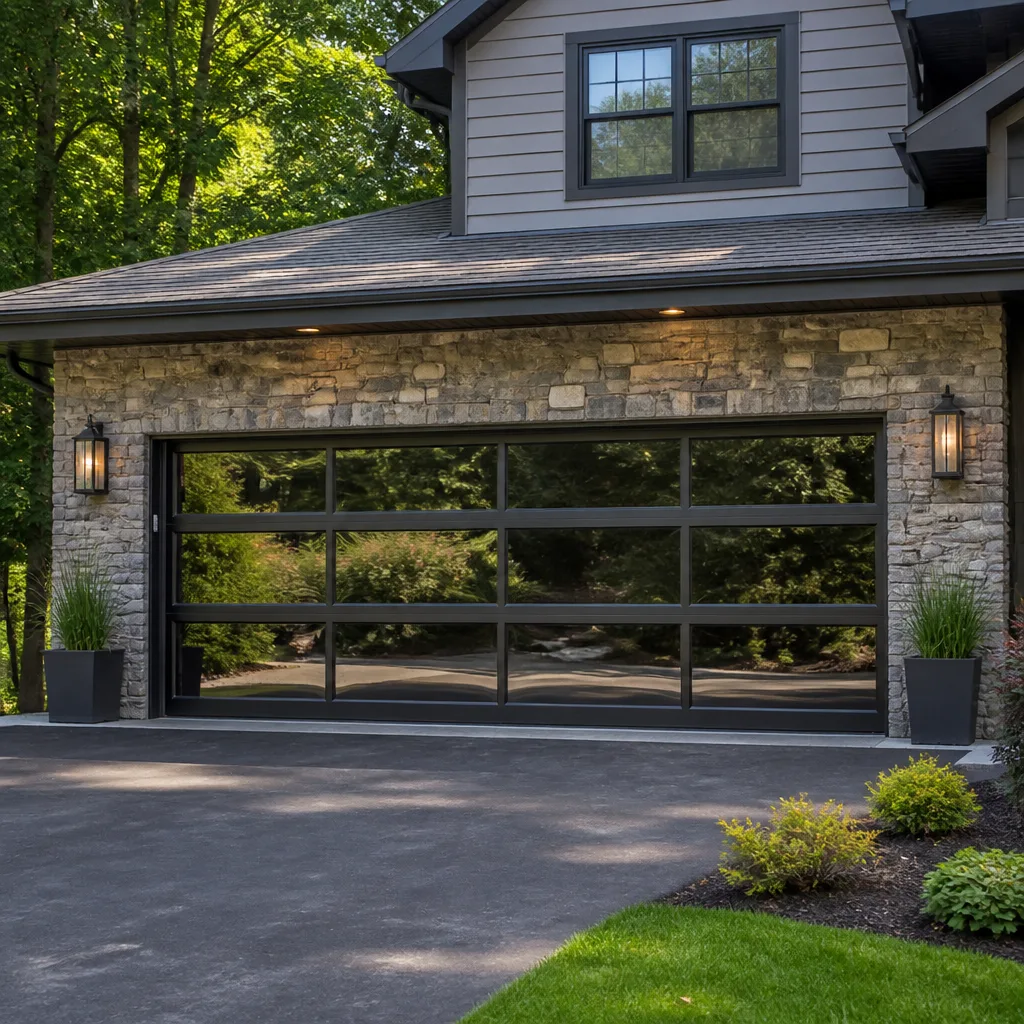
LiftMaster openers
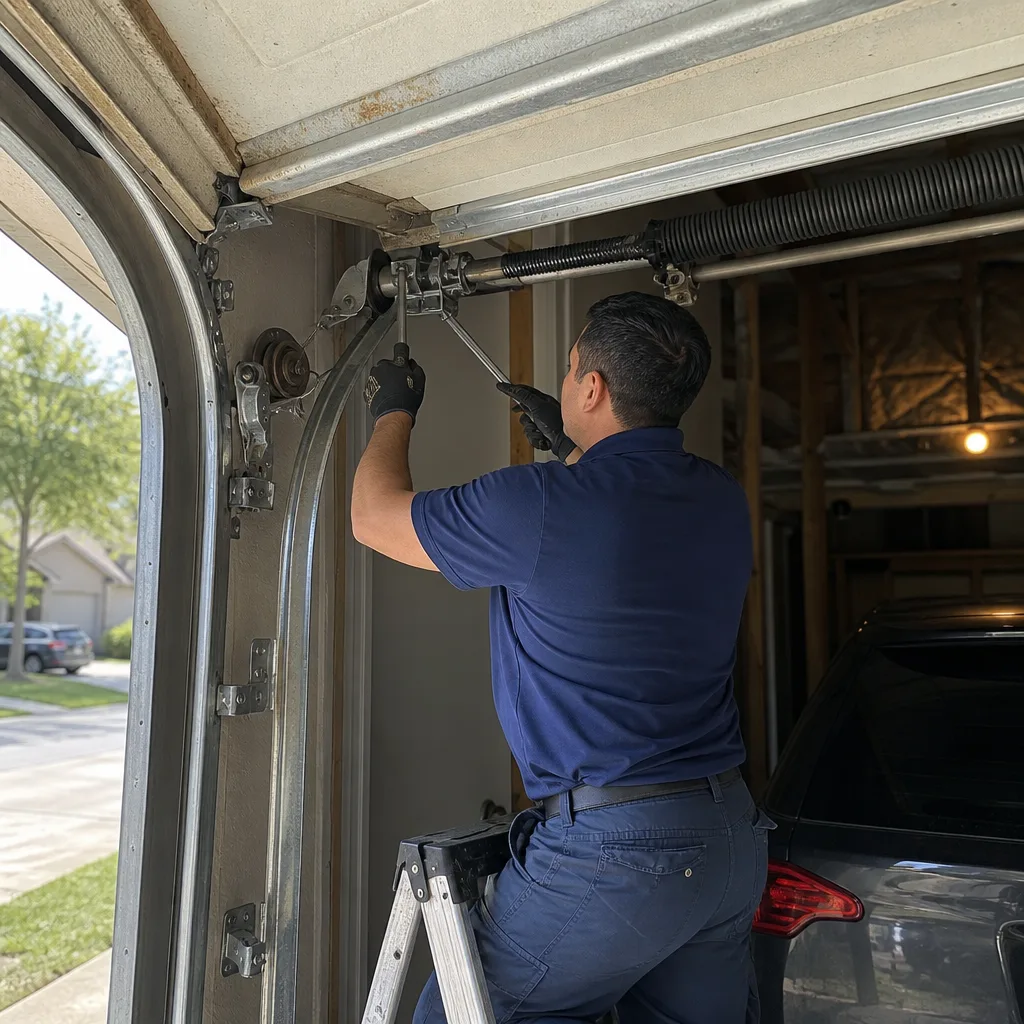 Before
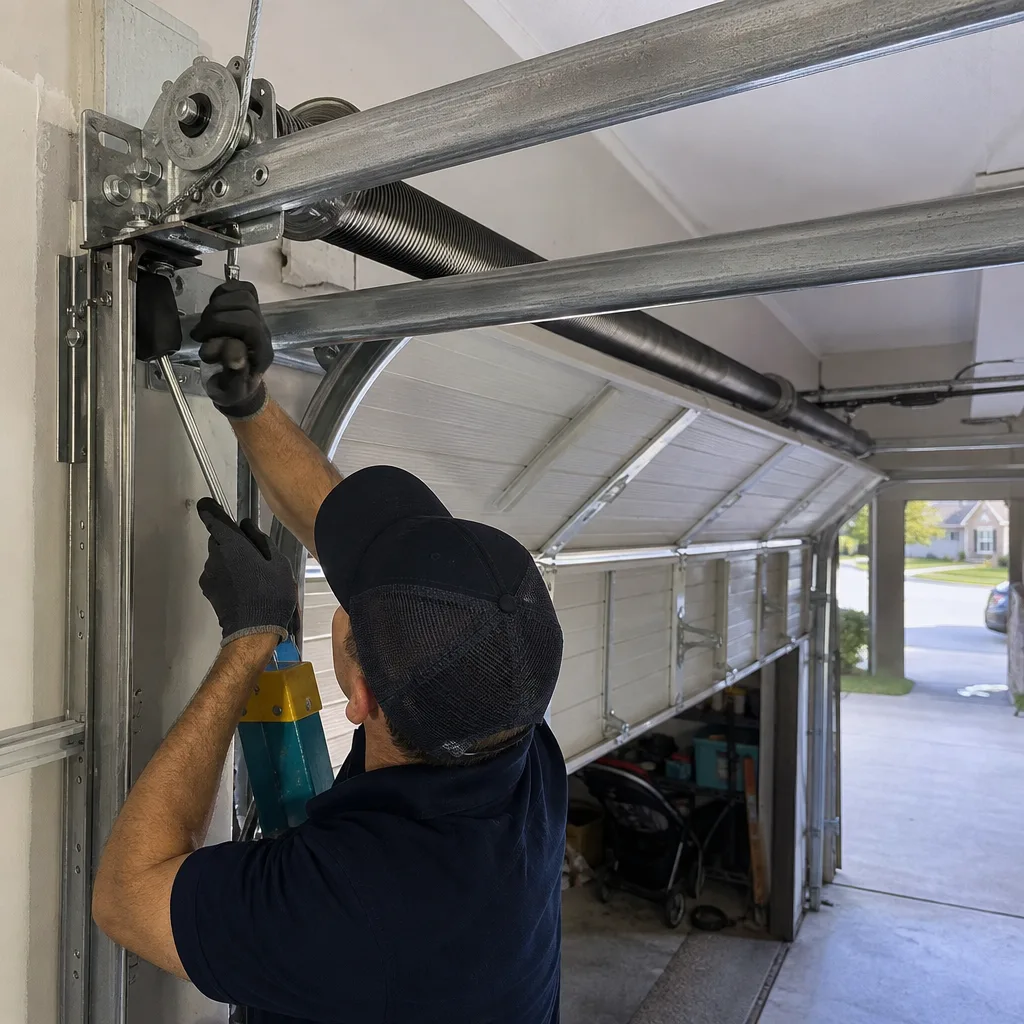 After
After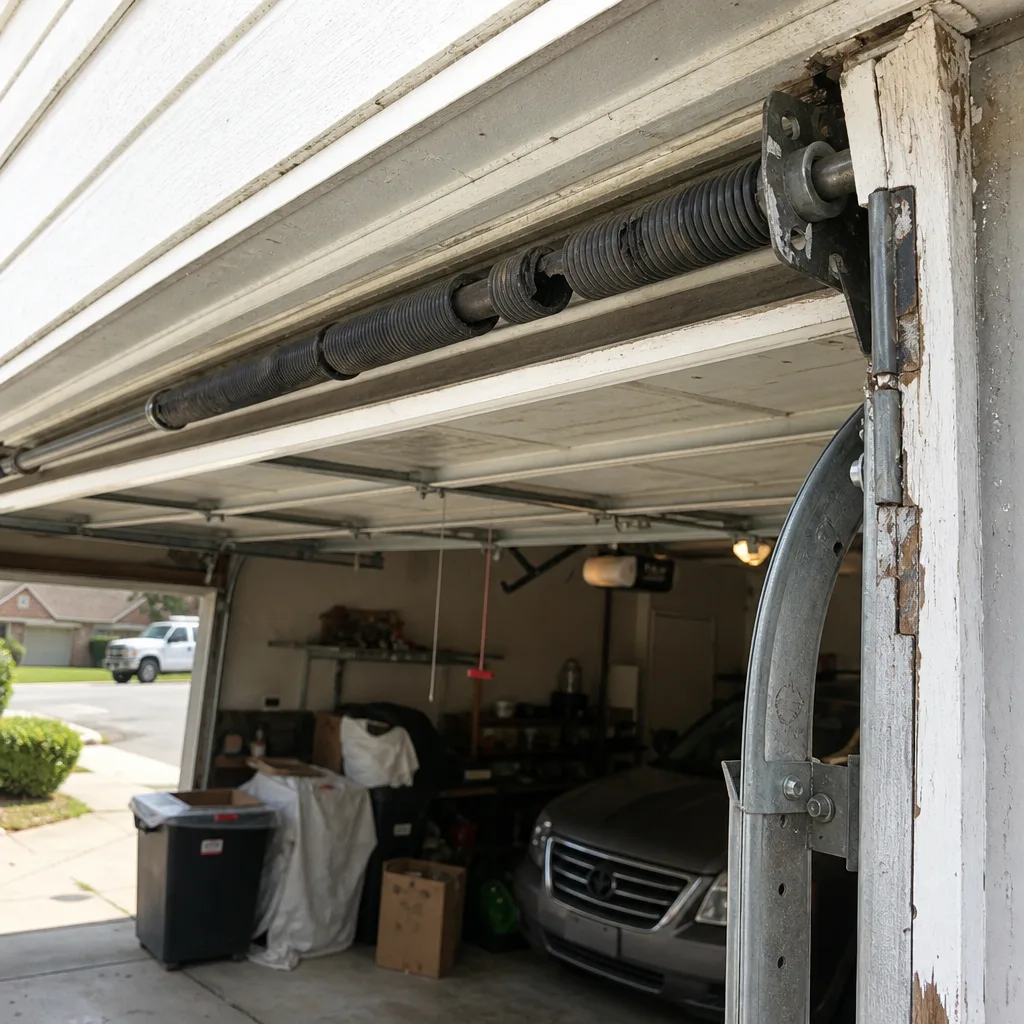 Before
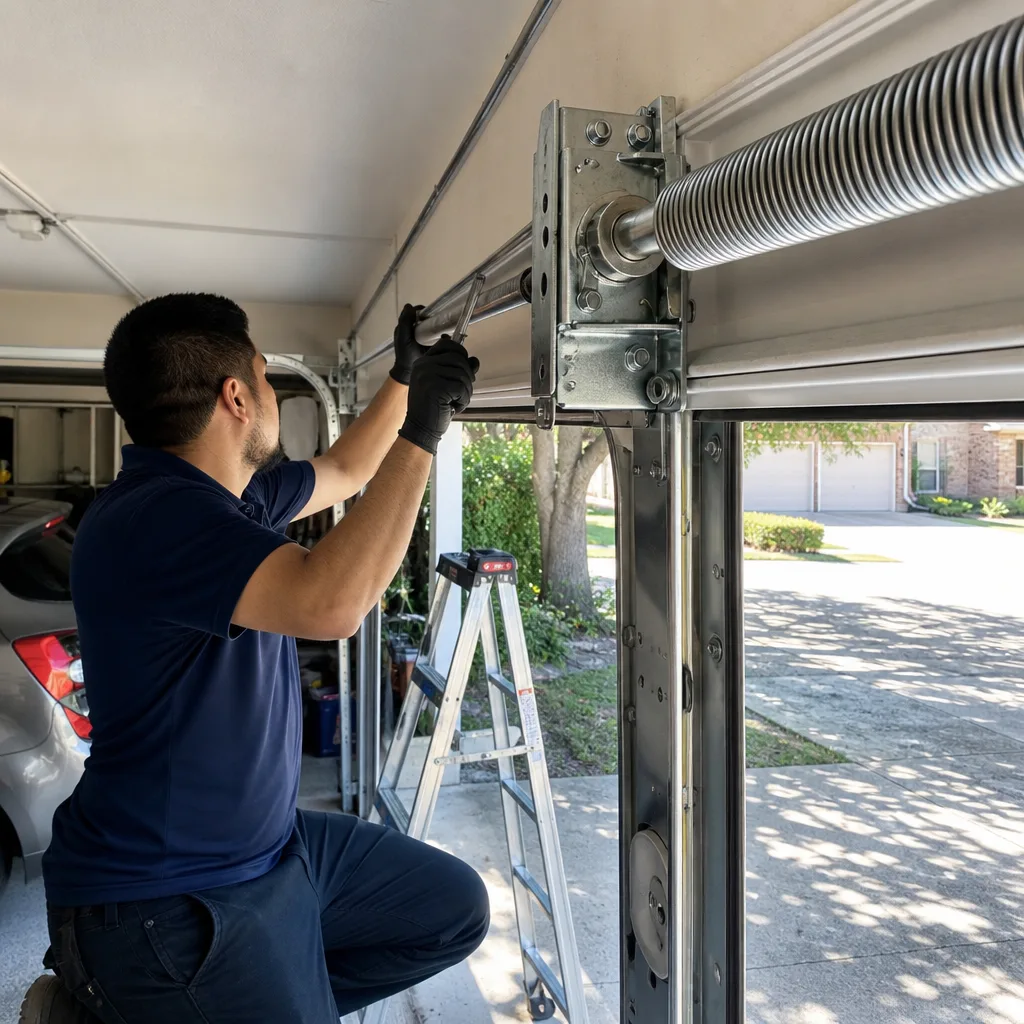 After
After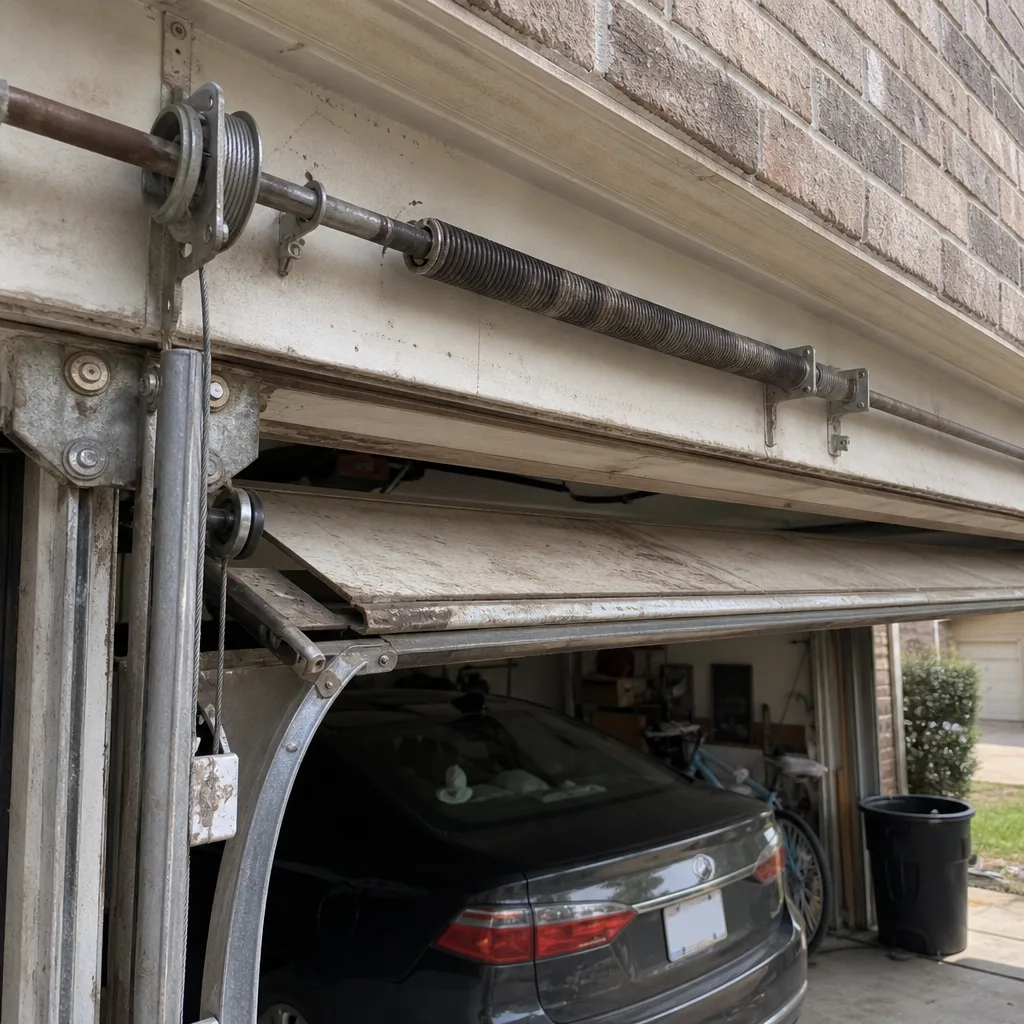 Before
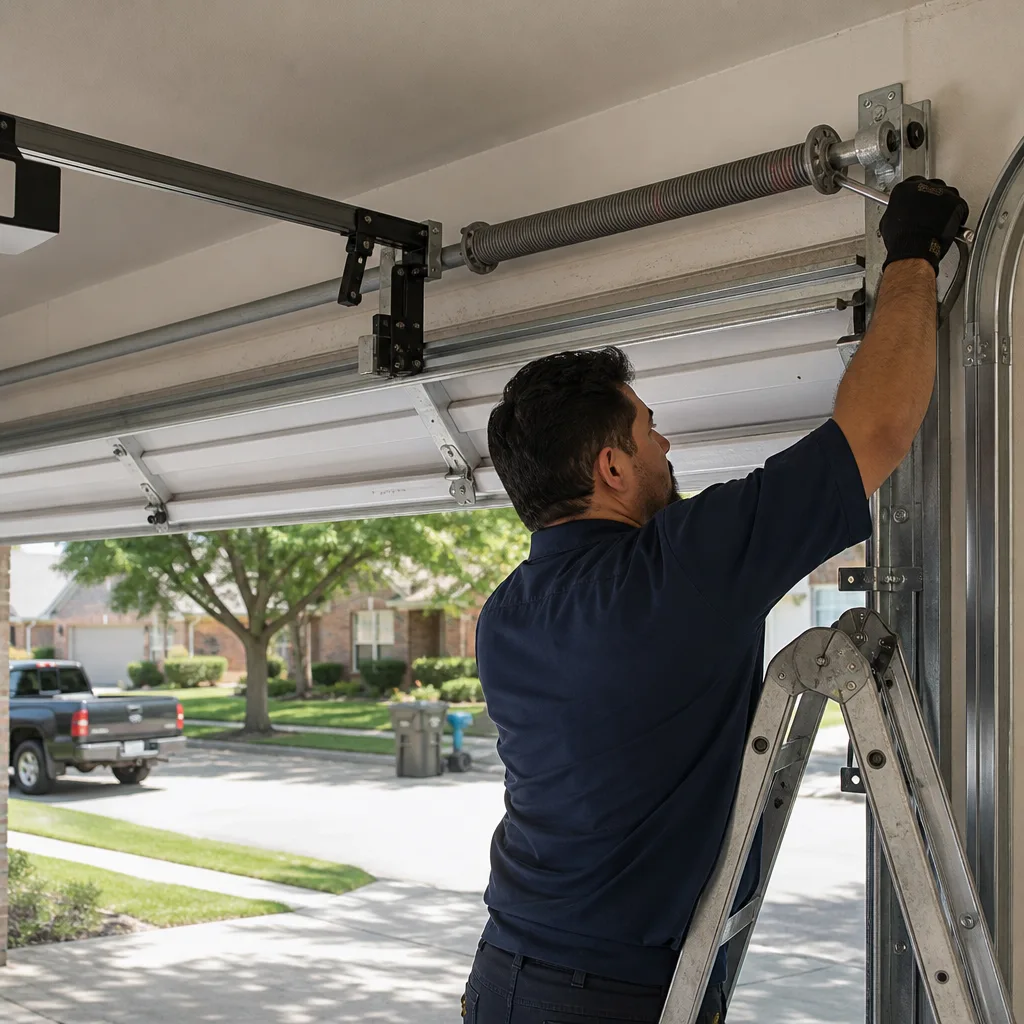 After
AfterDIY vs Professional Garage Door: The Carrollton Homeowner’s Decision Guide
Most Carrollton homeowners don’t get hurt because they lack mechanical skill. They get hurt because the part they decided to fix was holding back more energy than a full-size pickup truck moving at highway speed. The DIY-versus-professional question for garage doors is actually simpler than most people think. It comes down to one variable: whether the component you’re considering touching is under stored mechanical tension. That single distinction matters more than your tool collection, your YouTube history, or how confidently you fixed the disposal last spring.
This guide walks through every major garage door component, separating the genuinely homeowner-serviceable tasks from the ones that should never be attempted without a licensed technician, and points you to more guides & resources for ongoing upkeep. We’ll cover the real math behind torsion spring energy, what a responsible DIY project actually looks like, and how to talk to a professional without getting a scripted upsell pitch.
Quick Answer
DIY makes sense for components that aren’t under mechanical load: weather seals, photo-eye alignment, remote programming, track lubrication, and light bulb replacement. Professional service is non-negotiable for anything involving torsion springs, lift cables under tension, bottom brackets, or opener logic boards that interact with these systems. In Carrollton, where temperature swings and clay soil movement stress garage door hardware more than most markets realize, the line matters even more-especially given Garage Door Permits, Codes & Inspections in TX: What You Need to Know. If a component stores energy, it requires a trained professional. If it just transfers or senses, most competent homeowners can handle it.
Key takeaways:
- Torsion springs store 150-300 foot-pounds of energy: the failure mode is immediate, not gradual
- DIY eligibility is determined by stored energy, not skill level
- Homeowner-safe tasks are narrow but real: seals, sensors, remotes, lubrication
- Manufacturer warranties get voided when unlicensed hands touch opener logic boards
- A competent DIY job includes documentation, correct torque values, and sourced parts
- Carrollton’s soil conditions and temperature swings accelerate spring fatigue
Table of Contents
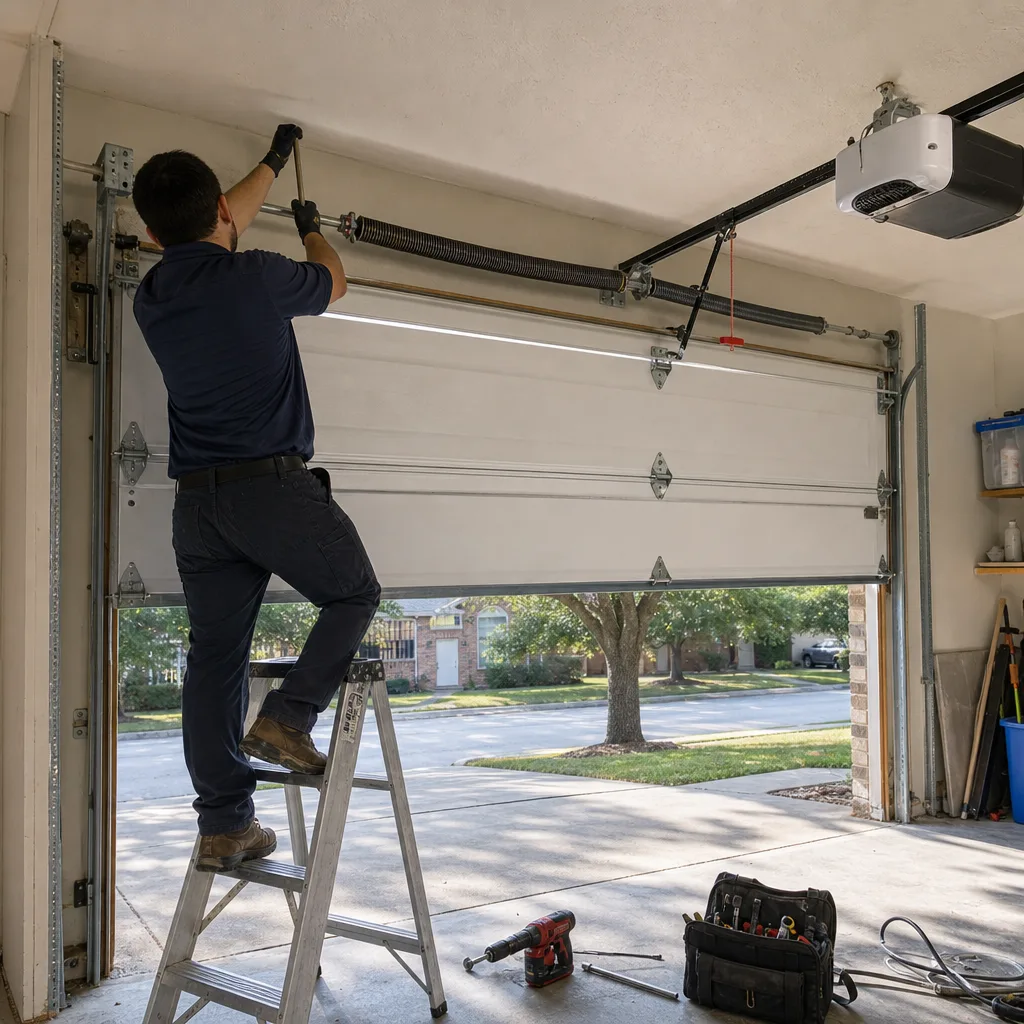
- The Stored Energy Line: What Actually Separates DIY From Professional
- Component-by-Component DIY Eligibility Table
- The Torsion Spring Calculation: How Much Energy Are We Talking About
- What a Competent DIY Garage Door Job Looks Like (The Tasks That Are Actually Yours)
- The Hidden Costs of DIY on Professional-Scope Work
- Carrollton-Specific Factors That Change the Calculus
- How to Talk to a Professional When You’ve Already Done Your Research
- Common Mistakes to Avoid
- When to Call a Professional
- Frequently Asked Questions
- The Bottom Line
BeforeAfterThe Stored Energy Line: What Actually Separates DIY From Professional
The garage door is not one machine. It’s a collection of systems, and those systems fall into two clean categories: components that store energy and components that don’t. This distinction matters more than skill level because the two categories fail differently. A worn roller degrades gradually. It gets noisier. It wobbles. You have weeks or months to notice it. A torsion spring under load doesn’t degrade gradually in a way you can safely observe. It either holds or it breaks, and when it breaks, it releases every stored foot-pound instantly.
In our experience across Carrollton, including the neighborhoods east of I-35 and the newer developments along Hebron Parkway, we’ve seen the full range. Homeowners who successfully replaced their own weather seals and programmed their own openers. And homeowners who attempted spring work and ended up with a garage door that looked like a car accident. The dividing line was never intelligence or effort. It was always the same: whether the part they touched was under tension.
Here’s the framework we use when someone asks us whether a job is safe to attempt:
- Identify the component. Name it. Ball bearing roller? Hinge? Torsion spring? Cable drum?
- Ask one question: does this component store mechanical energy when the door is closed? If yes, stop. Call a professional.
- If the answer is no, ask a second question: does this component interact with, support, or release the stored-energy components? If yes, call a professional. If no, the task is likely DIY-eligible with proper tools and patience.
That third question catches the tasks most guides get wrong. The bottom bracket, for example, doesn’t look like a stored-energy component. It’s a metal bracket bolted to the door’s bottom panel. But the lift cable attaches to it, and that cable is under full spring tension when the door is closed. Removing that bracket without first unwinding the spring system transfers that stored energy directly to whatever tool, and whatever body part, is nearest. This is why the component-by-component table matters. The dangerous parts don’t always look dangerous.
Component-by-Component DIY Eligibility Table
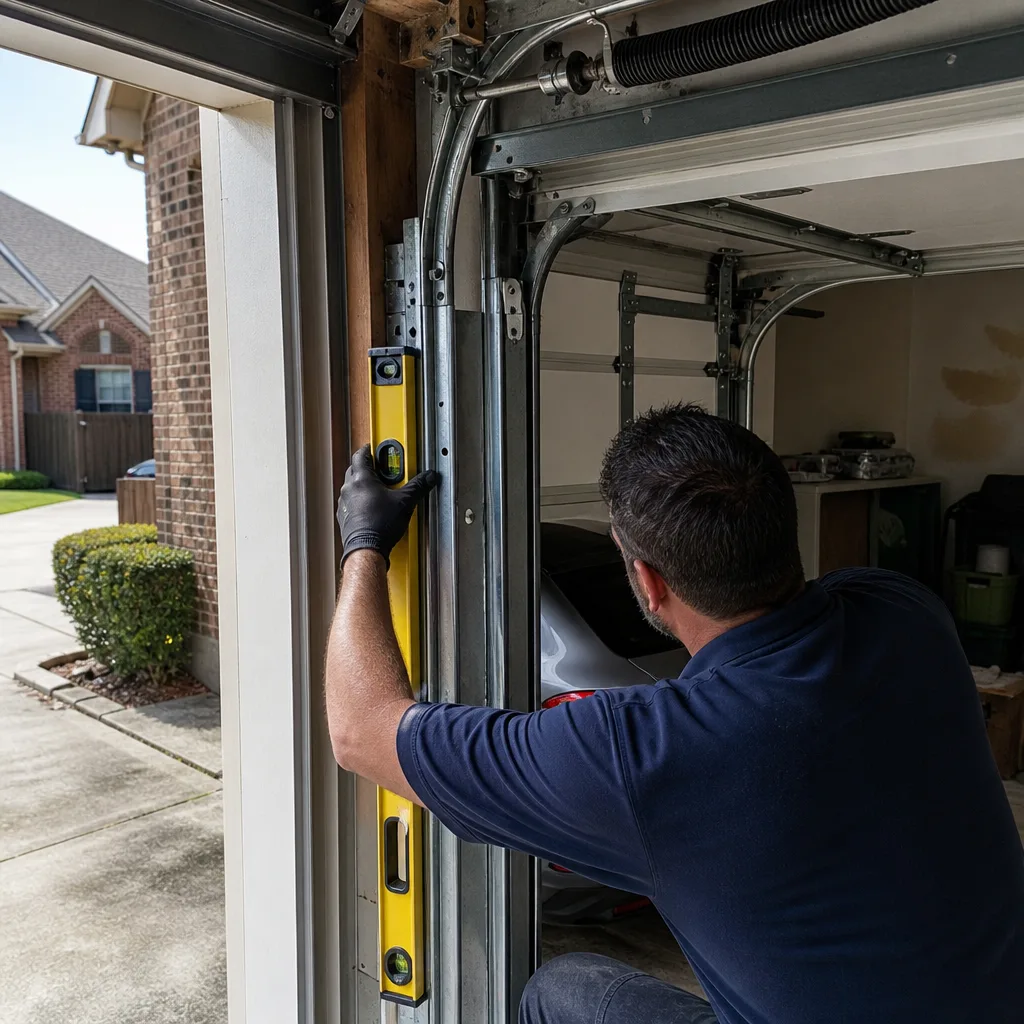
Here’s the full breakdown of the garage door’s major components, classified by whether a homeowner without specialized training should attempt service. This table is specific to standard residential systems: sectional steel doors, seven to eight feet high, either extension springs or torsion springs, with an automatic opener. That’s what most Carrollton homes have, whether they were built in the 1980s near Josey Lane or last year in a new development off Rosemeade Parkway.
| Component | DIY Eligible? | Reason | Typical Carrollton Failure Pattern |
|---|---|---|---|
| Weather seal (bottom and side) | Yes | No stored energy. Modular replacement part. | Perishes faster due to UV exposure and heat. Replacing every 2-3 years is normal in Carrollton. |
| Remote / keypad programming | Yes | Electronic only. No mechanical interaction. | Opener programming issues spike after power surges during spring storm season. |
| Photo-eye sensor alignment | Yes | Electronic adjustment only. Low voltage. | Door sensor misalignment after foundation shift knocks the sensor brackets slightly out of line. |
| Track and roller lubrication | Yes | Routine maintenance on non-tension components. | Dry tracks and rollers from Carrollton’s low-humidity summer conditions. |
| Hinge replacement (non-bottom) | Conditional yes | Bolted components not under direct spring tension, but the door must be fully open and securely blocked. | Interior hinges wear from repeated cycling: the average Carrollton garage door cycles 1,500-2,000 times per year. |
| Roller replacement (non-bottom) | Conditional yes | Requires bending the track slightly. The door must be braced. Adjacent rollers stay under modest spring tension. | Nylon rollers crack in the heat and fail on the up/down transition season in October. |
| Opener remote control replacement | Yes | Off-the-shelf universal or brand-matched remotes pair without tool work. | Genie and Chamberlain remotes both get replaced regularly in Carrollton; our Garage Door Opener Repair and Installation in Carrollton page covers which brands pair most reliably with older units. |
| Opener logic board / internal electronics | No | High-voltage capacitor on the board retains charge even when unplugged. Board also interfaces with force settings tied to the spring system. | Logic board failures after lightning strikes in May and June. The capacitor holds a charge that can still deliver a serious shock after power is disconnected. |
| Trolley carriage / chain tension adjustment | No | The carriage travels on a rail under opener tension and interacts with the door’s spring balance. | Carriage stripping presents like a spring problem. Diagnosing the difference requires testing the door alone under manual operation. |
| Lift cables | No | Under full spring tension whenever the door is open or closed. | Cable drum unwinding on the torsion shaft is a common failure mode after bearing wear from years of temperature cycles. |
| Bottom brackets | No | Attached to lift cables under full spring load. | Rust at the bracket point where the cable meets the bottom fixture, particularly in homes near creeks or on slab foundations with moisture wicking. |
| Torsion springs | No | Stored energy of 150-300 foot-pounds per spring. Severe injury or death on uncontrolled release. | Spring fatigue from the full temperature swing range. A spring that measures 0.225-inch wire diameter typically lasts 8-10 years in Carrollton before breaking, but clay soil foundation shift accelerates that timeline. |
| Extension springs | No | Stored energy with a violent release path. Requires containment cable expertise. | Older homes along Old Denton Road built before the mid-1990s may still have extension spring systems instead of torsion. |
| Spring winding / unwinding | No | This is the task most directly responsible for garage door emergency room visits. Requires winding bars and a specific procedure. | Improper winding leads to uneven door balance, cable slack on one side, and eventual spring re-break within months. |
| Panel replacement (individual section) | No | Each panel carries weight and interacts with the spring counterbalance. Removing a panel changes the door’s load calculation. | Hail damage in March and April. Carrollton gets its share of severe thunderstorm events, and panel replacement is one of our most common Garage Door Installation in Carrollton requests after spring storms. |
This table is the clearest version of the line. The tasks marked “Yes” require no special training, no special tools beyond what a reasonably equipped homeowner already owns, and no risk of a sudden energy release. The tasks marked “Conditional yes” are achievable but require care with door weight and bracing, plus the discipline to verify the door’s balance afterward. The tasks marked “No” are the ones where the spring or cable system could release stored energy without warning.
The Torsion Spring Calculation: How Much Energy Are We Talking About
A standard residential torsion spring for a seven-foot, double-car garage door in Carrollton is typically wound to between seven and eight full turns from its unwound state. That winding stores between 150 and 300 foot-pounds of energy in each spring. What does that mean in plain terms? A foot-pound is the energy required to lift one pound a distance of one foot. So a spring storing 200 foot-pounds is holding enough energy to throw a 10-pound sledgehammer 20 feet, or to shatter a forearm, or to turn a wrench into a projectile that moves faster than a person can react.
The non-intuitive part is that the spring looks inert. It’s just a coil of steel. It doesn’t vibrate. It doesn’t glow. It sits there, quietly holding tension, for years. That’s the trap. The human brain is wired to assess risk by visible cues, and a torsion spring offers none until the moment it releases.
Here’s the sequence when a wound torsion spring is improperly handled:
- One winding bar slips or the spring breaks while under partial load.
- The spring unwinds in a fraction of a second, rotating the cone and any inserted bar at high velocity.
- Anything in the rotational path receives the full 150-300 foot-pounds. That’s not a bruise. That’s a compound fracture or worse.
- The door, now unbalanced, drops. For a double-car steel door, that’s 150-200 pounds falling without the spring’s counterbalance.
- The cables lose tension simultaneously, whipping and snapping at the drum.
The reason professional garage door technicians use winding bars that are exactly the right diameter, never screwdrivers or rebar or random rods, is that the bar’s diameter must match the cone’s winding holes precisely. A bar that’s slightly undersized will slip under torque. A bar that’s slightly oversized won’t seat correctly. Both failure modes result in the same thing: the bar becomes a projectile. And the reason professionals also count quarter-turns and mark the spring before touching it is that the stored energy calculation is precise. Getting it wrong by a single quarter-turn changes the door’s balance enough to cause premature wear on the opener, the hinges, and the other spring.
This is the line. Not skill. Not tool ownership. Not confidence. The stored energy calculation. It’s why the answer to “can I do this myself” is not a judgment on the person asking. It’s a question about the physics of the component they’re considering touching.
What a Competent DIY Garage Door Job Looks Like (The Tasks That Are Actually Yours)
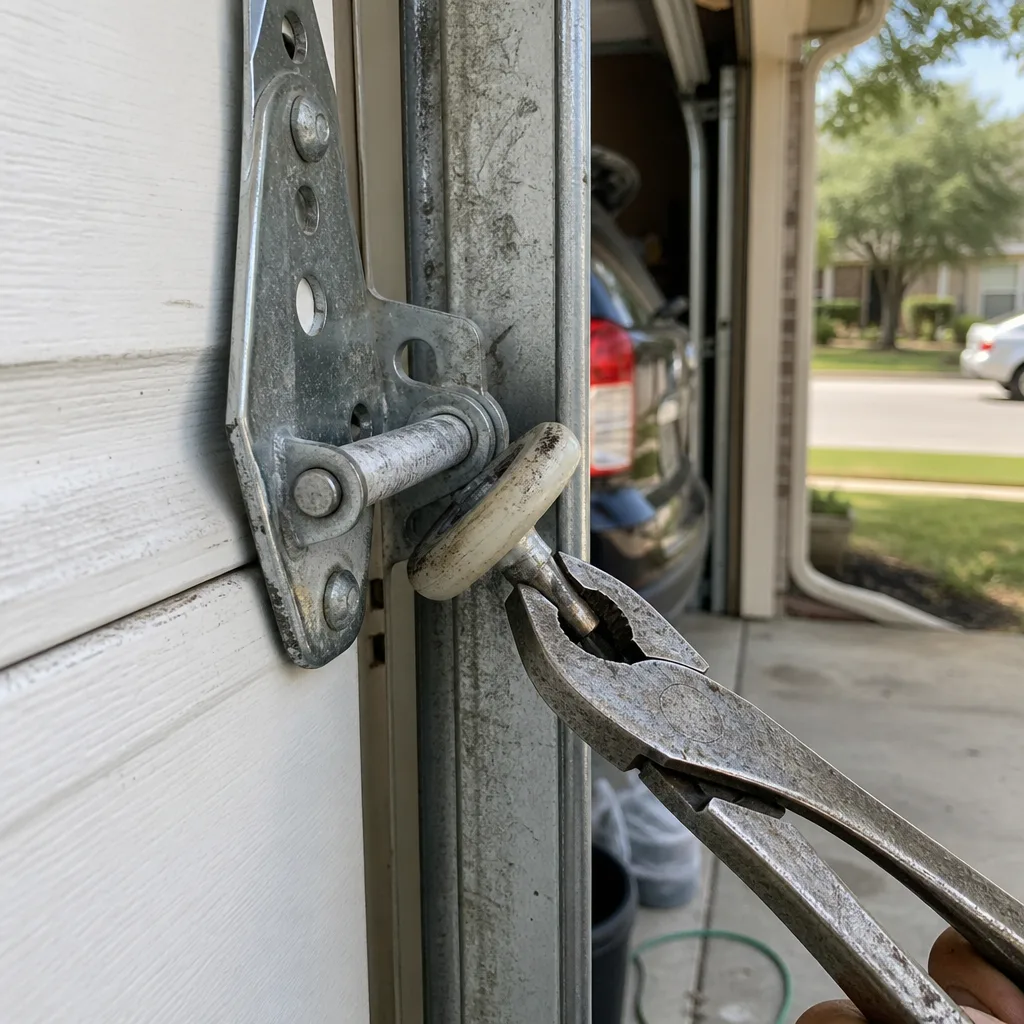
This guide is not going to over-caution. There are garage door tasks a competent Carrollton homeowner can absolutely handle, and pretending otherwise would be insulting to the person who’s comfortable with basic tools and honest about their limits. Here’s what a well-executed DIY garage door project looks like for the tasks that are genuinely in scope.
Weather Seal Replacement
The bottom seal on a sectional garage door slides into a retainer channel that runs along the bottom panel. The old seal pulls out. The new one slides in. Tools required: a pair of pliers, a utility knife, and silicone spray for lubrication. Time: 20-30 minutes. Parts cost: $15-40 depending on door width and whether you buy a universal kit or a brand-specific seal from Clopay or Amarr. Side seals are similar: they screw or nail into the door frame, and replacement is straightforward. This is the highest-value DIY task in Carrollton because our heat and UV exposure destroy seals faster than most markets, and a failed seal means conditioned air escaping, dust intrusion, and water pooling at the door base during heavy rain.
- Measure the existing seal’s T-channel or U-channel profile. Most box stores carry both.
- Pull the old seal free from one end. If it’s stuck, spray silicone lubricant into the channel.
- Slide the new seal in from one side. Cut to length with the utility knife.
- Test the door’s operation. The seal should compress slightly against the floor but not bind.
What a competent DIY job includes: taking a photo of the finished seal, noting the replacement date, and confirming the door’s auto-reverse still functions correctly after the new seal is installed. A seal that’s too thick can interfere with the photo-eye beam at the bottom of the track, which triggers the opener’s safety reverse. The competent DIYer checks for this. The careless one discovers it the first time the door refuses to close.
Photo-Eye Alignment
When the opener’s safety sensors get knocked slightly out of line, usually by a broom, a bike, or foundation movement, the door won’t close and the opener lights blink. This is a DIY-eligible task. The fix is simple: loosen the wing nut on the sensor bracket, adjust the sensor until the indicator light glows steady, and retighten. Many Genie and Chamberlain openers use a steady green or amber LED on the sensor to indicate alignment. No special tools required. In Carrollton, we see this more often than homeowners expect because clay soil shift nudges the sensor brackets a tiny amount that’s invisible until the door stops closing one morning.
- Check both sensors. One should show a steady light, the other a light that indicates the beam is received.
- If one sensor’s light is flickering or off, loosen the bracket’s wing nut.
- Adjust the sensor’s angle until the indicator goes steady. Tighten the nut.
- Test the door. If it still reverses, check for an obstruction or a dirty lens.
What a competent DIY job includes: cleaning the sensor lenses with a dry cloth, checking the wire connections at the back of each sensor, and verifying that the sensors are mounted no higher than six inches off the floor, which is the code requirement in Carrollton and everywhere else the International Residential Code applies.
Remote Programming and Keypad Setup
Programming a replacement remote is a five-minute task on most modern openers. Chamberlain, Genie, and Craftsman units all use a learn button on the opener motor head. You press the button, then press the remote button, and the opener stores the code. Universal remotes require setting DIP switches or following a brand-specific sequence. No tools, no tension, no risk. The only caveat: if the opener’s logic board is failing, a new remote won’t solve the problem, and the homeowner who spends $40 on a remote before diagnosing the board has wasted the money. We address this pattern in more detail on our Garage Door Opener Repair and Installation in Carrollton page.
Track and Roller Lubrication
Every six to twelve months, depending on how much dust and heat the door deals with, the rollers, hinges, and track contact points need lubrication. The right product is a silicone-based garage door lubricant, not WD-40, which displaces moisture but doesn’t provide lasting lubrication, and not grease, which collects dust. The DIY version: spray the roller bearings, hinge pivot points, and the track where the rollers travel. Wipe off excess. Cycle the door twice. This task is safe, it extends the life of every moving component, and it’s the single most underperformed maintenance item we see in Carrollton, where dry, dusty summers accelerate roller and hinge wear.
These four tasks cover the legitimate DIY scope for a garage door. They require no special training, no interaction with stored energy, and no risk of a sudden failure. But they also represent the ceiling. The moment a task requires touching a spring, a cable, a bottom bracket, or any component that those parts attach to, the calculus changes completely.
The Hidden Costs of DIY on Professional-Scope Work
The visible cost of a DIY attempt on a spring or cable system is the risk of injury. That’s the important cost, and it’s the one that should end the conversation on its own. But there are quieter costs that don’t make the dramatic YouTube compilations, and they matter to the Carrollton homeowner who’s trying to make a rational decision rather than an emotional one.
Voided Manufacturer Warranties
Every major opener manufacturer, including Chamberlain and Genie, includes language in their warranty documentation that voids coverage if the unit has been serviced or installed by someone other than a qualified professional. This matters because the opener’s logic board, which controls the motor’s force settings, is calibrated to the door’s spring balance. When a homeowner installs their own springs and gets the balance wrong, the opener compensates by working harder. The motor burns out faster. The manufacturer’s response, when the opener fails at 18 months instead of 8 years, is to point to the warranty exclusion and deny the claim. The homeowner who saved $250 on spring installation now eats a $400 opener replacement.
Insurance Claim Complications
If a garage door falls on a car, or a spring breaks and damages a vehicle, the homeowner’s insurance company will ask who last serviced the door. If the answer is “I did it myself,” the claim gets complicated. If the door’s balance was altered and the safety reverse feature was disabled or misadjusted, the claim may be denied outright. This isn’t a hypothetical. Insurance adjusters in the Dallas-Fort Worth metroplex, including Carrollton, have seen enough garage door damage claims to know exactly what questions to ask. A professional service record, including the documentation of what was done and when, answers those questions cleanly. A DIY job with no record leaves the homeowner arguing with an adjuster about what they did and whether it contributed to the failure.
Diagnostic Masking
This is the cost that most DIY guides never mention, and it’s the one that costs Carrollton homeowners the most money over time. When a partial DIY job addresses a symptom without addressing the underlying cause, the original problem keeps developing underneath. The classic case: a homeowner replaces their own rollers because the door is noisy. The noise gets quieter for a few weeks. Then it comes back, because the real issue was a spring that lost tension and was pulling the door out of balance, which put uneven wear on the rollers. The homeowner has now spent money and time on a repair that masked the actual problem, and by the time a professional sees the door, the spring damage and roller damage are both worse than they would have been with an earlier diagnosis. This is the hidden cost that doesn’t show up on a receipt.
In our experience in Carrollton, where foundation movement from clay soil puts continuous stress on garage door systems, the diagnostic masking problem is unusually common. The door’s balance drifts slowly as the foundation shifts, and a homeowner’s DIY fix addresses a symptom while the structural issue advances. By the time a professional is called, the repair is more extensive and more expensive than it needed to be.
Carrollton-Specific Factors That Change the Calculus
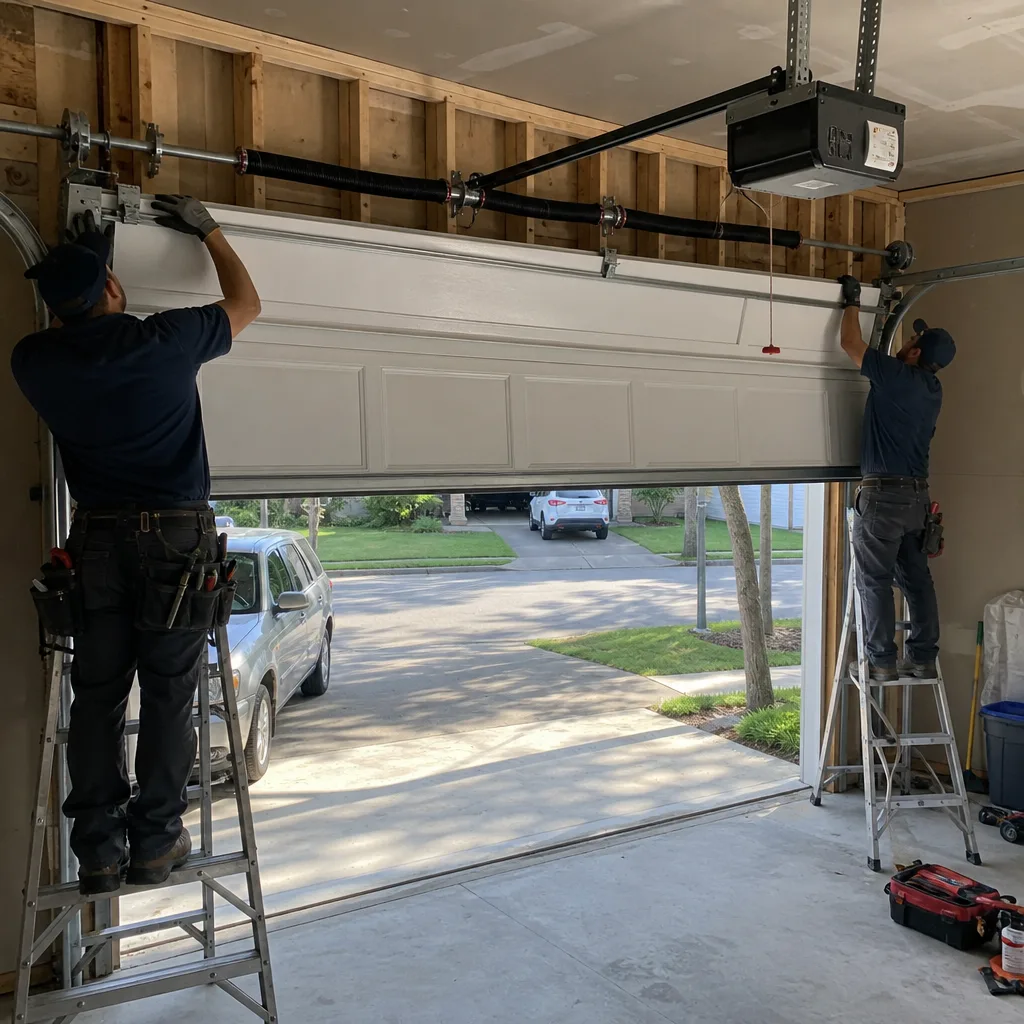
Every market has its own profile of weather, soil, and building stock, and those factors change what fails and how fast. Carrollton’s profile is specific, and a homeowner making a DIY decision should understand the local conditions that affect their door.
First, the soil. Carrollton sits on the Blackland Prairie, a band of expansive clay soil that runs through North Texas. This clay swells when wet and shrinks when dry, and that movement puts continuous, uneven pressure on foundation slabs. When a foundation shifts even a fraction of an inch, the garage door’s tracks, which are bolted to the slab and the header, shift with it. The door’s balance changes. Springs that were perfectly wound at installation now carry slightly more or less tension than they should. This is why we see spring failures in Carrollton homes that are only seven or eight years old, when the same spring in a different market might last twelve. It’s also why we see more cable drum issues, as uneven tracks cause uneven cable spooling.
Second, the temperature range. Carrollton swings from freezing in a February cold snap to above 105 in August. That range puts metal fatigue on springs through repeated expansion and contraction cycles. A spring that cycles through 100 degrees of temperature change every day is accumulating stress even when the door isn’t moving. This is a factor that a homeowner can’t control and shouldn’t try to compensate for by adjusting the spring themselves. The spring’s wire diameter and winding spec are calculated for the door’s weight at installation. When the temperature and soil conditions have altered the system, the correct fix requires recalculation, not just rewinding.
Third, the storm season. Carrollton gets significant thunderstorm activity in April, May, and June, with frequent lightning strikes. Opener logic boards are susceptible to surge damage during these storms, and the failure pattern is often intermittent: the opener works sometimes, then doesn’t, then works again. A homeowner who tries to diagnose this as a remote problem or a sensor problem will spend money on parts that don’t address the actual issue. A professional diagnostic, which includes testing the board directly, is faster and cheaper in this scenario.
Fourth, the age of the housing stock. Carrollton has a mix of homes built in the 1970s and 1980s, concentrated near Josey Lane and Belt Line Road, and newer construction concentrated to the west and north. The older homes are more likely to have extension spring systems, which are arguably more dangerous than torsion systems because the spring’s release path is less contained. The newer homes are more likely to have torsion systems, which are more serviceable by professionals and more dangerous for amateurs. The DIY calculus is different depending on which side of town you’re on, and a homeowner who’s not sure what they have should find out before attempting anything.
How to Talk to a Professional When You’ve Already Done Your Research
The Carrollton homeowner who reads this guide is the customer most contractors wish they had. They know what questions to ask. But there’s a right way and a wrong way to bring that research into a professional conversation. The wrong way is to present your diagnosis and ask the technician to confirm it. The right way is to present your observations and ask the technician to explain what they see.
The distinction matters because it changes the dynamic of the conversation. When you present a diagnosis, you’re asking for a yes or no answer, and a technician who disagrees with your conclusion has to argue with you, which is a bad starting point for any service relationship. When you present observations, you’re inviting the technician to do their job, and you’ve established that you’re paying attention. That changes what happens next.
Here’s a practical script for the homeowner who’s researched their garage door problem and wants a professional to take them seriously:
- Describe the symptom, not the cause. “The door makes a grinding noise on the way up, louder on the left side” is better than “I think the left spring is bad.” The former is an observation. The latter is a diagnosis. Let the technician form the diagnosis.
- Share what you’ve already checked. “I tested the auto-reverse and it still works. The photo-eyes are aligned. I replaced the weather seal six months ago.” This establishes that you’re competent and that you’re not going to be an easy upsell target.
- Ask about the written quote before any work starts. “Can I get the price in writing before you start?” This is a completely reasonable question, and the answer should always be yes. If a company hesitates, that’s information.
- Ask to see the failed part. “Can you show me what failed before you replace it?” This is the question that separates documentation-first companies from sales-first companies. At Servo Garage Doors Carrollton, this is built into our process as Clause 4 of The Haven Standard: the technician photographs the failed component before quoting a replacement. It’s not a special request. It’s the standard.
- Ask about the warranty. “What does the warranty cover, and is it in writing?” The answer should be specific: which parts, for how long, and what the process is if something goes wrong. The 365-Day Done Right Promise is our version: if a repair isn’t right, we make it right. It’s documented, and it’s in writing.
What’s not in this script: apologies for asking questions, justifications for wanting documentation, or any attempt to prove you know more than the technician. The homeowner who’s done their research doesn’t need to prove anything. They need to ask the right questions and watch how the answers come back. A company that answers with specifics, shows the documentation, and quotes a flat written price before starting is operating the way every company should. Our Garage Door Repair in Carrollton page walks through exactly what our written quote process looks like on a typical call.
Common Mistakes to Avoid
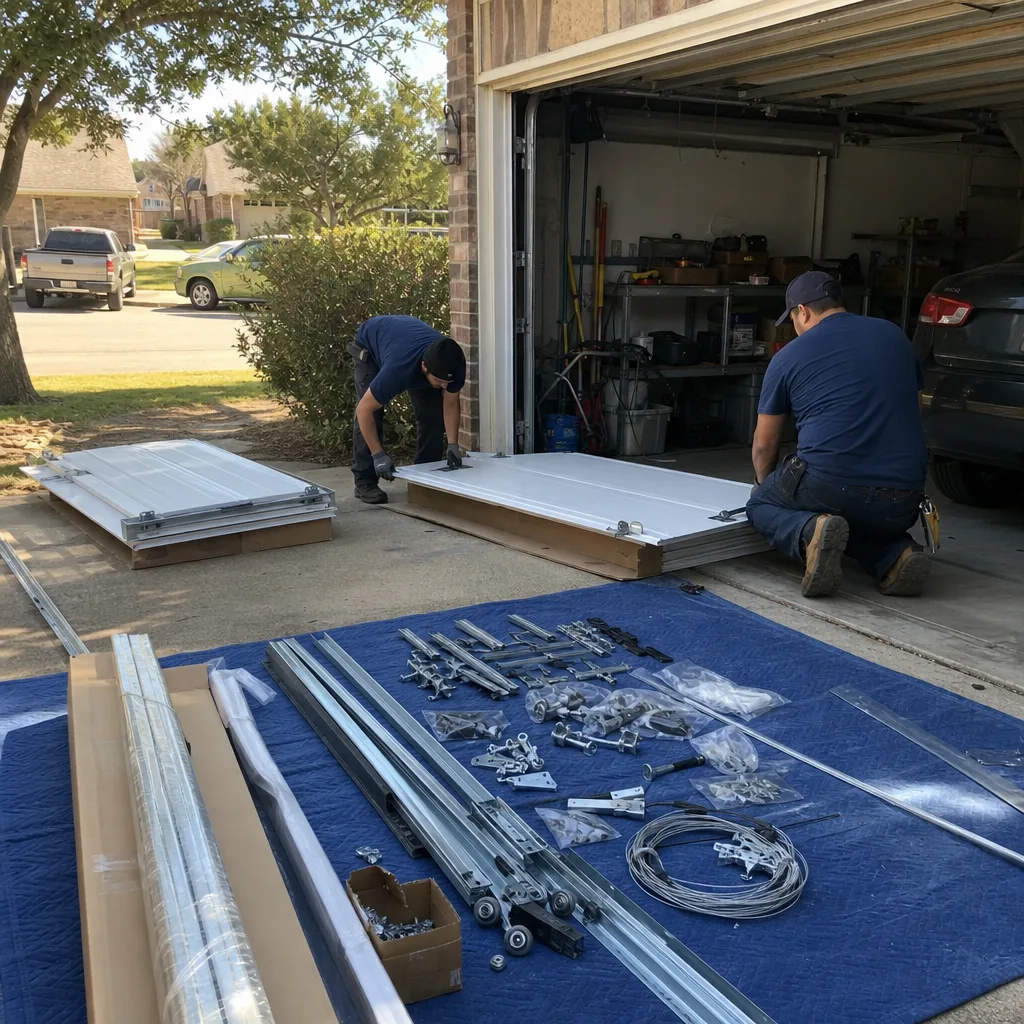
- Using a screwdriver as a winding bar. A screwdriver inserted into a torsion spring’s winding cone will slip under the first rotation. The spring’s stored energy then turns that screwdriver into a projectile. This is the single most common cause of garage door ER visits. The correct tool is a pair of solid-steel winding bars matched to the cone’s hole diameter.
- Disconnecting the opener with the door open. The emergency release cord exists to disconnect the opener from the door, but if the door is up when you pull it, and the spring system is compromised, the door falls. Always disconnect with the door fully closed, or brace the door before pulling the release.
- Replacing one spring on a two-spring system. When a double-car door has two torsion springs and one breaks, replacing only the broken one creates an immediate imbalance. The old spring has lost some of its cycle life and won’t match the new spring’s tension curve. Both springs should be replaced at the same time.
- Adjusting the opener’s force settings to compensate for a failing spring. The force adjustment dials on the opener exist to compensate for minor environmental changes, not to mask a spring problem. When a homeowner cranks up the force setting to make a heavy door move, they’re telling the opener to override its safety resistance detection. The result is a door that can close on a person or a car because the auto-reverse threshold has been defeated.
- Lubricating the wrong parts. The track is not meant to be greased. Greasing the track puts a sticky film on the contact surface, which collects dust and grit and accelerates roller wear. The track should stay clean and dry. Lubrication goes on the roller bearings and hinge pivots.
- Ignoring a door that suddenly feels heavier. When a door starts feeling noticeably heavier to lift manually, that’s the spring losing tension. The correct response is to stop using the door and have the spring inspected. Continuing to use a door with a failing spring puts the opener’s motor under escalating load and increases the chance of a cable snap or bracket failure.
- Buying parts before the diagnosis is complete. A homeowner who buys a new opener remote because the door won’t close, then discovers the photo-eye sensor is misaligned, has wasted $40 and a week of inconvenience. The diagnostic comes first. The parts purchase comes after. That’s why we photograph what we find before we ever quote a replacement.
When to Call a Professional
Call a professional when the component you’re considering touching stores energy or interacts with something that does. That covers torsion springs, extension springs, lift cables, bottom brackets, and the opener’s logic board, which ties into the spring balance through its force settings. Call a professional when the door’s balance has changed: it feels heavier than it used to, it drifts open or closed on its own, or it stops unevenly on the way down. Call a professional when a cable has visible fraying, or when the door has come off its tracks, or when any component has failed in a way that you don’t fully understand. In Carrollton, where clay soil movement and temperature swings stress these systems more than most homeowners realize, the threshold for calling is lower than you might think. Servo Garage Doors Carrollton offers free estimates in Carrollton. Call (817) 527-9864 and ask for a written price before any work starts. If you already have a written estimate from another company, bring it. We’ll give you a free second opinion, and we’ll photograph everything we find.
Frequently Asked Questions
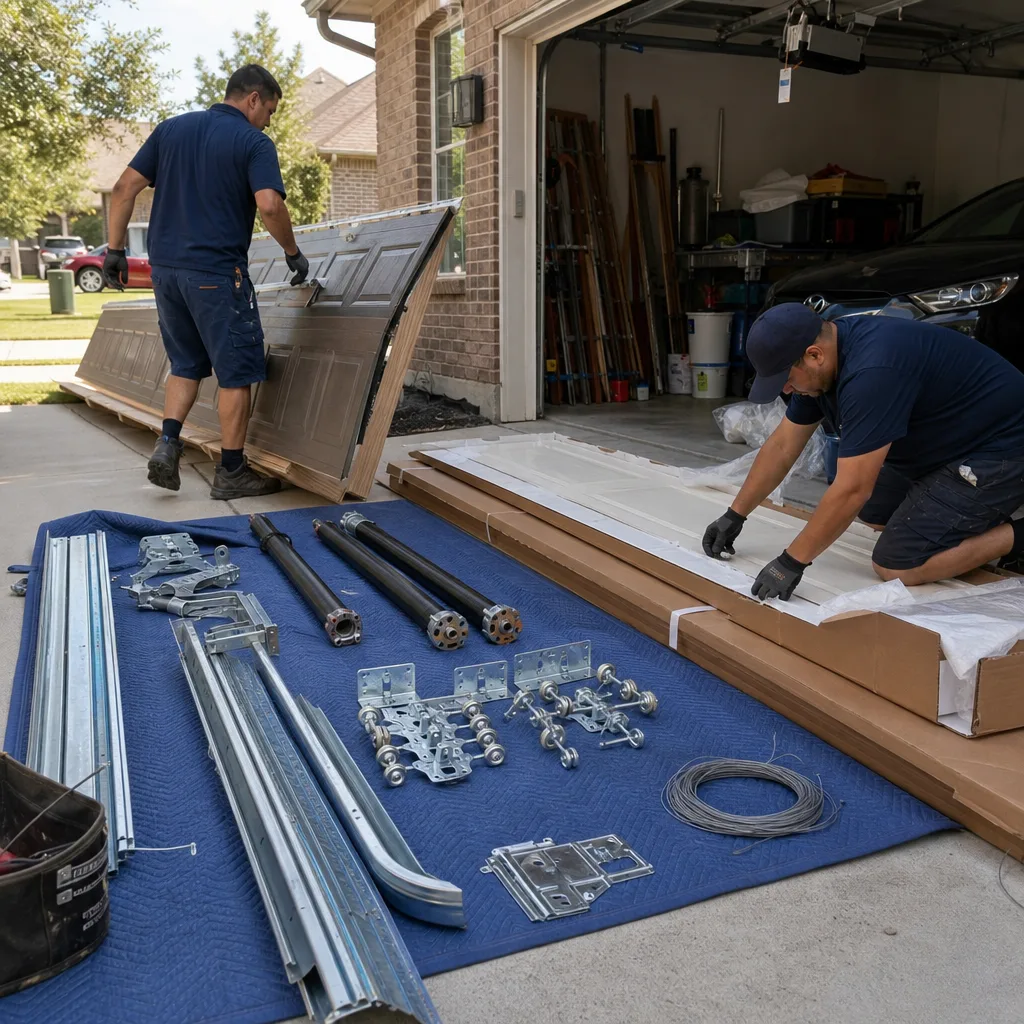
Torsion spring replacement in Carrollton typically ranges from $180 to $340 for a single spring and $300 to $500 for a pair, including labor. The exact price depends on the spring’s wire diameter, which is determined by the door’s weight and height. At Servo Garage Doors Carrollton, you get a flat, written price before any work starts, per Clause 1 of The Haven Standard. Call (817) 527-9864 for an exact quote. The estimate is free.
No. Torsion springs store 150 to 300 foot-pounds of energy, and the failure mode is immediate and severe. The tools required are specialized, the procedure is unforgiving of error, and getting the winding count wrong by a single quarter-turn changes the door’s balance enough to damage every other component. This is the one task where the risk calculus doesn’t depend on your skill level. Call a professional.
Weather seal replacement, photo-eye sensor alignment, remote and keypad programming, and roller and hinge lubrication are all DIY-eligible tasks that don’t involve stored mechanical energy. Each requires basic tools and under an hour. Anything involving springs, cables, bottom brackets, or the opener’s internal electronics should be handled by a licensed professional.
In Carrollton, a standard torsion spring typically lasts 8 to 10 years on a door that’s used two to four times a day. The local factors that shorten spring life are clay soil foundation movement, which alters the door’s balance, and the wide temperature swing between February and August, which accumulates metal fatigue through repeated expansion and contraction cycles.
A door that feels heavier is losing spring tension. The springs are rated for the door’s weight, and when they fatigue, they can’t fully counterbalance the door anymore. The correct response is to stop using the door and have the spring system inspected, because continuing to operate a door with a failing spring overloads the opener motor, accelerates roller and hinge wear, and increases the chance of a cable snap or bracket failure. Servo Garage Doors Carrollton offers free estimates, and we’ll show you the failed component before quoting a replacement. Call (817) 527-9864.
Yes. It’s Clause 1 of The Haven Standard, the documented standard that Servo Garage Doors Carrollton operates under. You get a flat, written price and written scope of work before any repair begins, always. No exceptions. The idea that you should “call for a quote” without seeing the price on paper contradicts everything the company was founded on in 2015. Marcus Deller’s founding rule, now codified as Clause 4 of The Haven Standard, is that a customer sees a photo of the failed part before anyone quotes a replacement. The documentation is the point.
The Bottom Line
The DIY-versus-professional decision for garage door work is not a test of skill or courage. It’s a question about the